Heat Turns into Electricity Even in Ordinary Glass express
Heat a nail in a fire, and it will lengthen — everyone knows that. But heat only the tip and leave the other end cold, and the nail doesn't just get longer: it bends, because hot metal expands more than cold metal. It's this very bending, but at the atomic level, that physicists have turned into electricity.
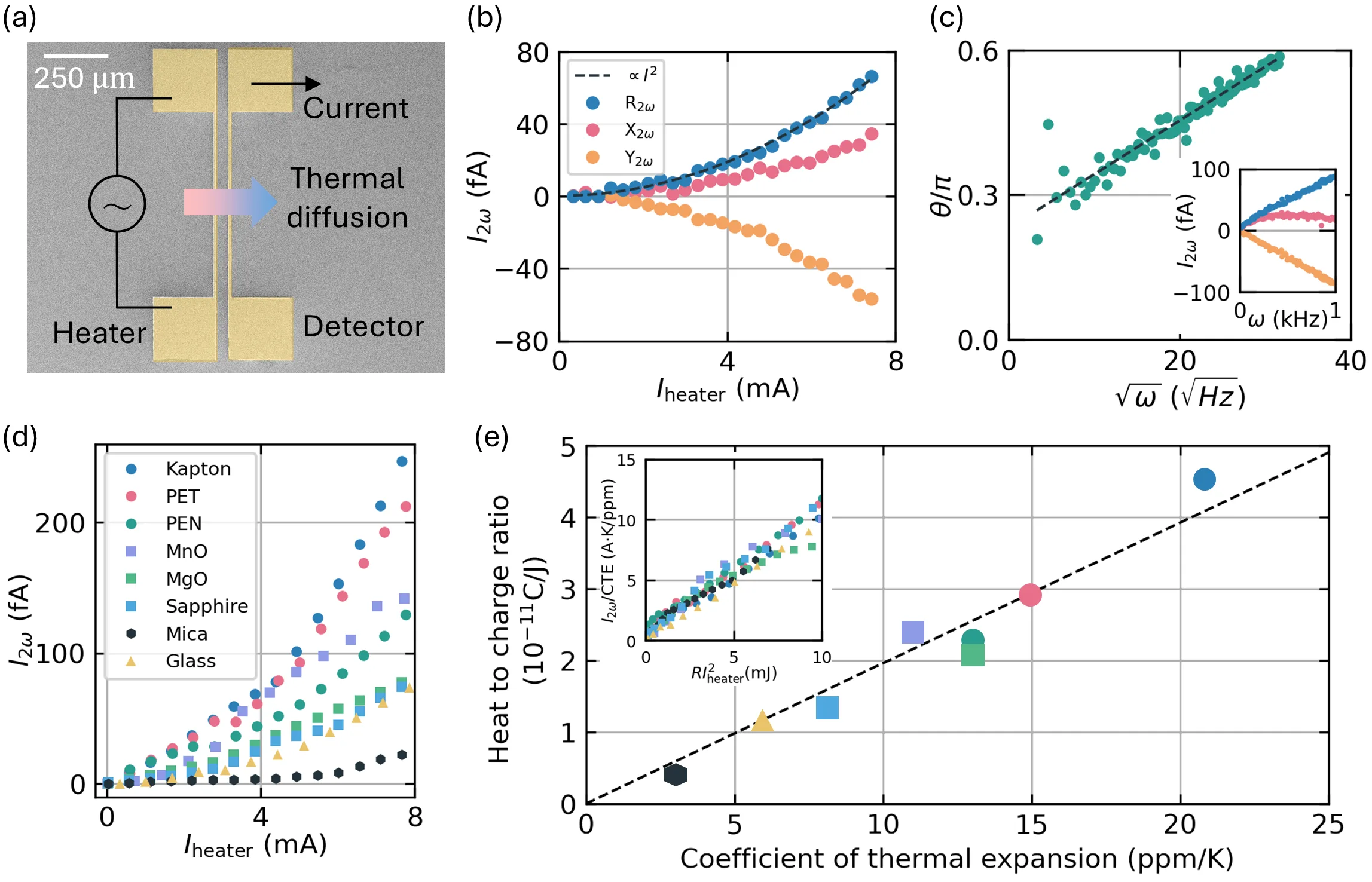
In insulators (glass, plastic, ceramics) there are almost no free electrons, so the usual thermoelectric effect doesn't work there. The authors made heat create voltage differently: the temperature difference caused uneven thermal expansion, the atomic lattice bent, and any bending in an insulator generates a weak electric field. This phenomenon is called flexoelectricity (from Latin for "to bend"). The chain is: heat → lattice bending → electric charge.
The strongest response came from thin samples — after all, a thin plate is easier to bend than a thick one. But the real surprise was near phase transitions: when glass softened or a magnetic material lost its magnetic properties, thermal expansion sharply increased. The electrical signal jumped by more than ten times.
This mechanism doesn't depend on crystal symmetry, so it works in any insulator. That means waste heat from a processor or an exhaust pipe could be turned into electricity right inside the device's casing — without metals or complex semiconductor structures.
Ordinary window glass, if one edge is heated just a couple of degrees hotter than the other, produces an electric voltage — tiny but quite measurable. Previously, it was thought that glass couldn't do this.