Electricity and Magnetism Swap Roles — Black Holes Don't Notice the Switch express
Two electrically charged spheres attract each other with a certain force. If you replace their charges with magnetic poles, a spring scale shows exactly the same force. Black holes, it turns out, behave the same way — except instead of springs, the fabric of spacetime itself does the work.
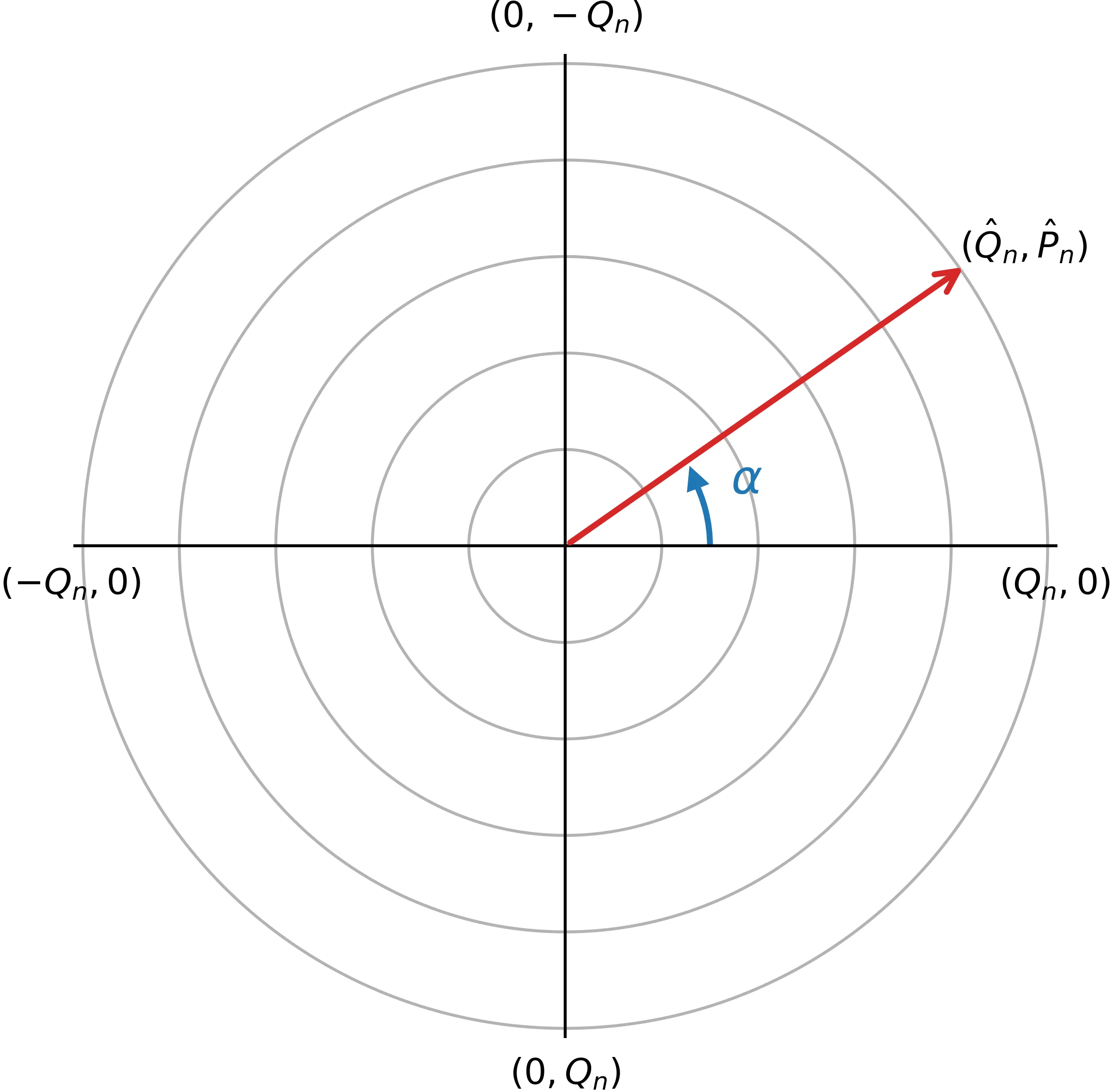
The authors of the new study simulated, for the first time, the collision of two black holes carrying electric charge. Then they performed a mathematical trick: they rotated the fields so that electricity became magnetism. And they ran the simulation again. The gravitational waves, ripples in space that detectors like LIGO pick up, came out identical. It's like a translator who conveys the meaning of a conversation without noticing what language the speakers are using — the language of electric fields or magnetic ones.
The difference showed up only in the light emitted during the merger. This light, electromagnetic radiation, was rotated by exactly the same angle as the fields themselves. It's like filming fireworks through a rotating polarizer: the pattern of flashes stays the same, only the glints on the water change orientation. For astronomers, this means that from gravitational observations alone, you can't tell an electrically charged black hole from a magnetic one: you also need radio telescopes that catch polarization (the direction of oscillation of the light wave).
This "duality rotation" was previously known only for weak fields, but now it's confirmed in the most violent regime — where space trembles and twists near the event horizon. This isn't just mathematical elegance: the symmetry tells you which solutions of the Einstein–Maxwell equations can be obtained from one another by a simple rotation, saving years of computation.
Original abstract
as written by the authors arXiv:2605.20493
Electromagnetic duality is a symmetry of the source-free Einstein-Maxwell equations that rotates electric and magnetic fields while leaving the stress-energy tensor invariant. We present the first fully nonlinear realization of this symmetry in dynamical strong-gravity regimes by performing numerical relativity simulations of charged black hole mergers across a continuous duality family. Starting from electrically charged binaries, we generate dyonic and magnetically charged configurations via duality rotations and evolve them within a common numerical framework. We find that all dual configurations exhibit identical spacetime dynamics, while the emitted electromagnetic radiation is related by a rotation of its polarization equal to the duality angle. Our results demonstrate a degeneracy of gravitational observables under electromagnetic duality and provide a concrete mapping between dual configurations at the level of radiation, establishing electromagnetic duality as an organizing principle for dynamical Einstein-Maxwell solutions.
Magnetic charge (a monopole) hasn't been found in nature yet, but Maxwell's equations become more beautiful and symmetric if you add it, as in this simulation.
In Greg Bear's novel "Vortex," aliens used magnetic black holes for travel — now we know they are gravitationally indistinguishable from ordinary ones.