Tiny Thermonuclear Explosion on a White Dwarf ✛ ✦
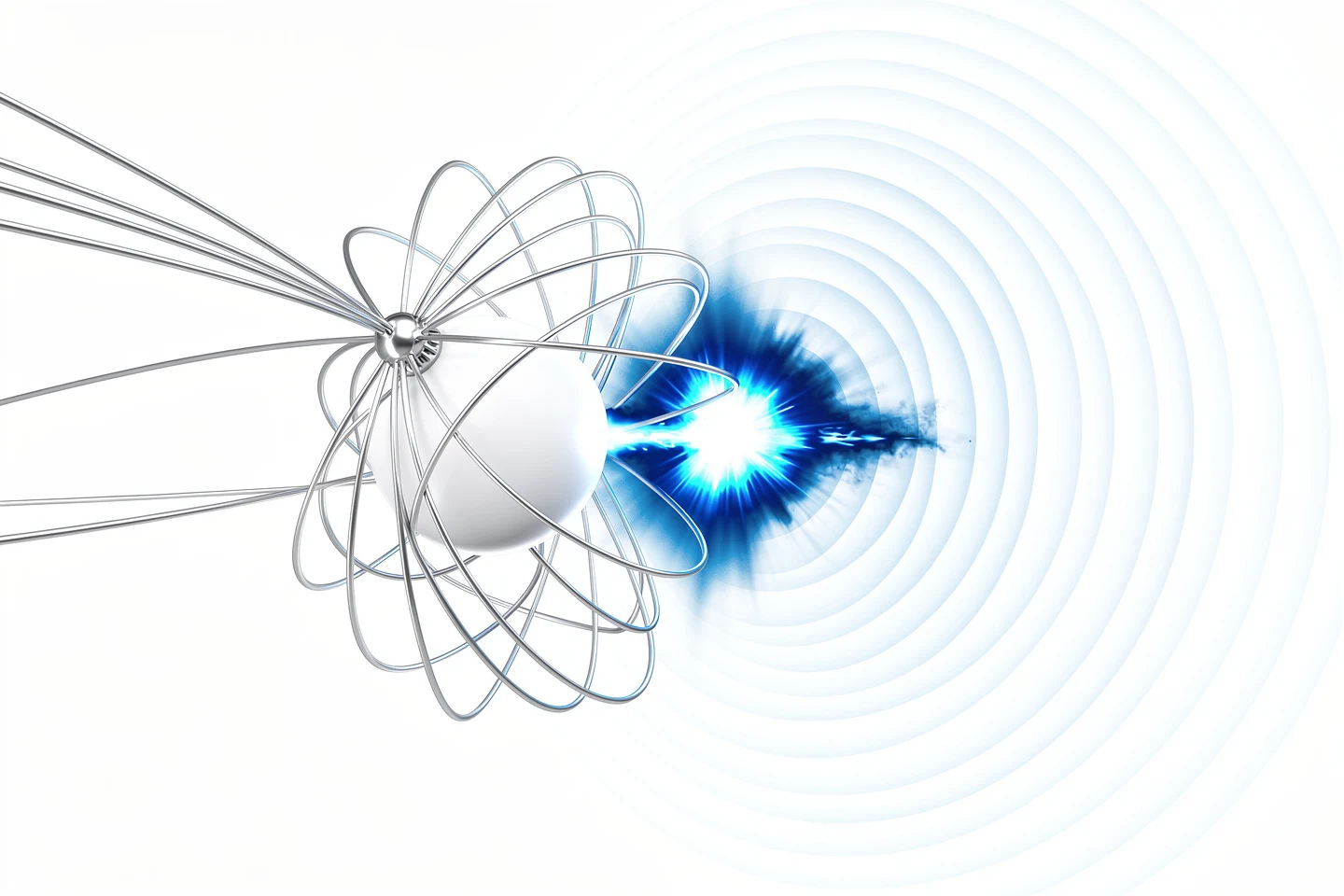
A white dwarf, as dense as an Earth-sized diamond, glows like a hot ember. Its companion star feeds it hydrogen — a vapor that the magnetic field funnels into a thin stream at the poles. That’s where the micronova sparks. Chandrasekhar and Payne-Gaposchkin explained the nature of such stars and the recipe of their fuel. The TESS telescope caught such a burst in IGR J17014-4306. Photometry showed the dwarf shone thousands of times brighter for a day and a half. Yet it consumed no more fuel than a snowflake. The blast beams like a lighthouse, visible only in a narrow ray, and repeats every 20 days. Carbon and oxygen speed up the flash, and archives revealed 16 more events. Spectroscopy will soon unveil the debris’ makeup. The same physics drives explosions on neutron stars — even denser stellar corpses. A tiny spark in a magnetic trap speaks volumes.
This explosion needs only as much hydrogen as a single snowflake to ignite.