Acoustic Masking: Sound Substitutes Reality express
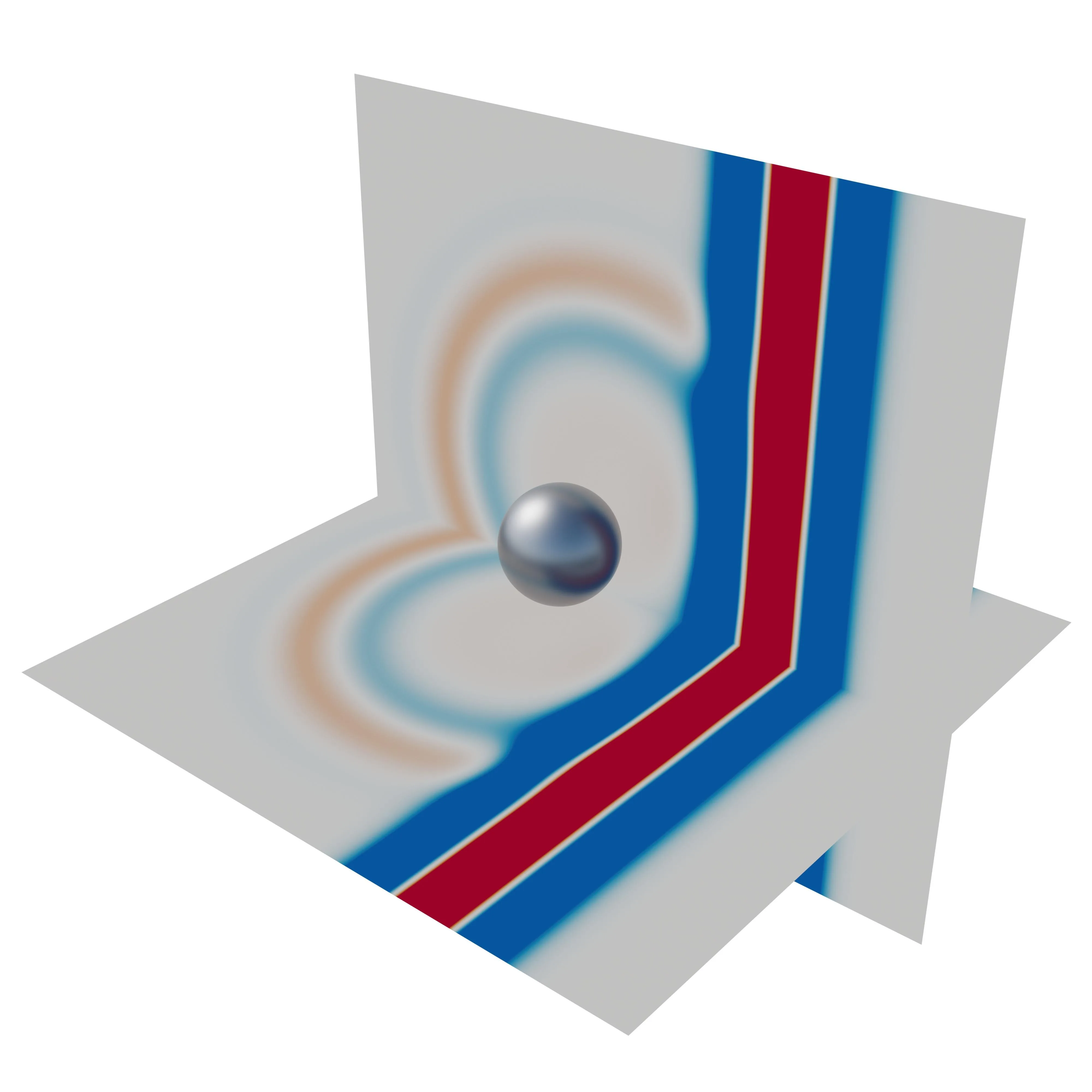
If you clap your hands in an empty room, the echo will tell you about its size and shape. Every object (a chair, a book, a person) adds its own signature to this echo: sound reflects off it in a particular way. The authors of the paper have figured out how to completely rewrite this acoustic signature. They surrounded a region of space with a closed surface of microphones and loudspeakers. The microphones capture the incoming sound, and the speakers immediately respond with a signal that creates silence inside the region, as if nothing were there.
The underlying idea is simple. If you know exactly how sound spreads from a source: this is called the Green's function (a kind of "fingerprint" of a point burst)—you can choose a response signal that cancels any external wave. This trick makes everything inside invisible to sound. That is acoustic invisibility. But the wonders don't stop there.
If, instead of a "canceling" signal, you feed the speakers another, precomputed signal, any incoming sound will reflect as if inside there were not a hidden object but something completely different. Say, a wooden box would sound like a glass sphere. That's acoustic holography. And if you combine both approaches, you can make one object sound exactly like another — a kind of sonic metamorphosis.
The researchers tested the method in three-dimensional computer simulations. Sound waves propagated step by step, like ripples on water. They used short pulses, sharp clicks, and showed that the system works in real time. Moreover, the required signals for the speakers could be extracted directly from the data, without complex preliminary calculations. This paves the way for practical devices: from soundproof rooms to concert halls where acoustics change at the push of a button.
The human ear can discern the direction of a sound source with an accuracy of one degree — thanks to the tiny difference in arrival time of the wave at the left and right ears.
In the novel "Harry Potter and the Philosopher's Stone," the invisibility cloak hides the hero from sight; acoustic masking does the same for ears.