Gravity Entangles Light and a Rotating Object express
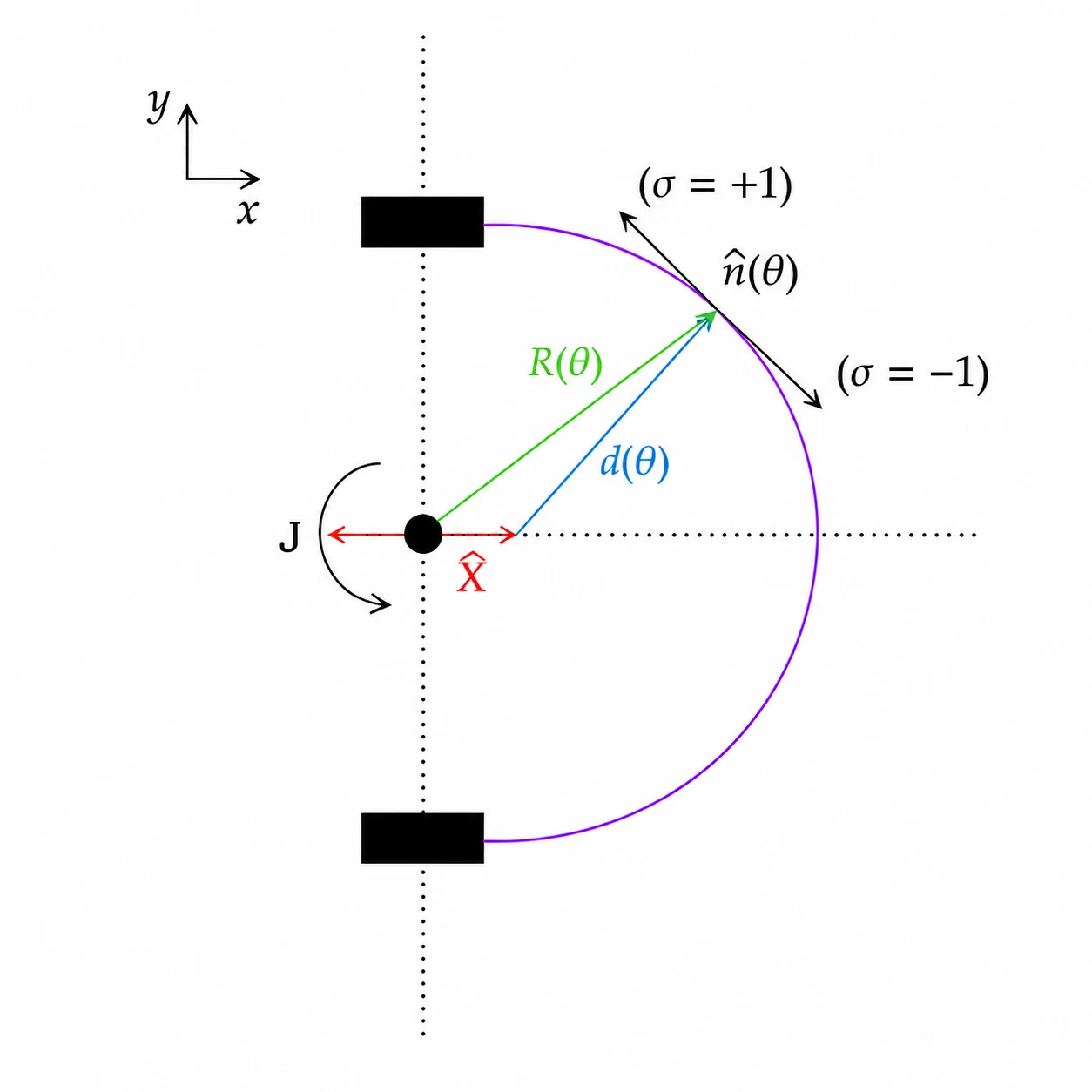
Spacetime can be imagined as a tightly stretched fabric. A massive body dents it, guiding light. Rotation twists the fabric into a spiral. Such a gravitational funnel can entangle a passing photon with the very source of rotation — say, a tiny mirror. Quantum entanglement springs up: an invisible thread binding their fates. Even the weakest of forces, gravity, reliably weaves the particle of light together with a tangible object. The strength of this bond directly depends on the direction of rotation — clockwise or counterclockwise.
By measuring entropy, a measure of entanglement, for both cases, scientists can test the conjectures of Einstein and Wheeler about the quantum nature of curved spacetime. Such experiments will show whether gravity is truly woven from elusive quanta, gravitons, that give rise to gravitational waves.
A single graviton is so weak that to detect it, you'd have to build a detector the size of Jupiter.