Faint Galaxies: The Primary Light Sources of the Early Universe ✛
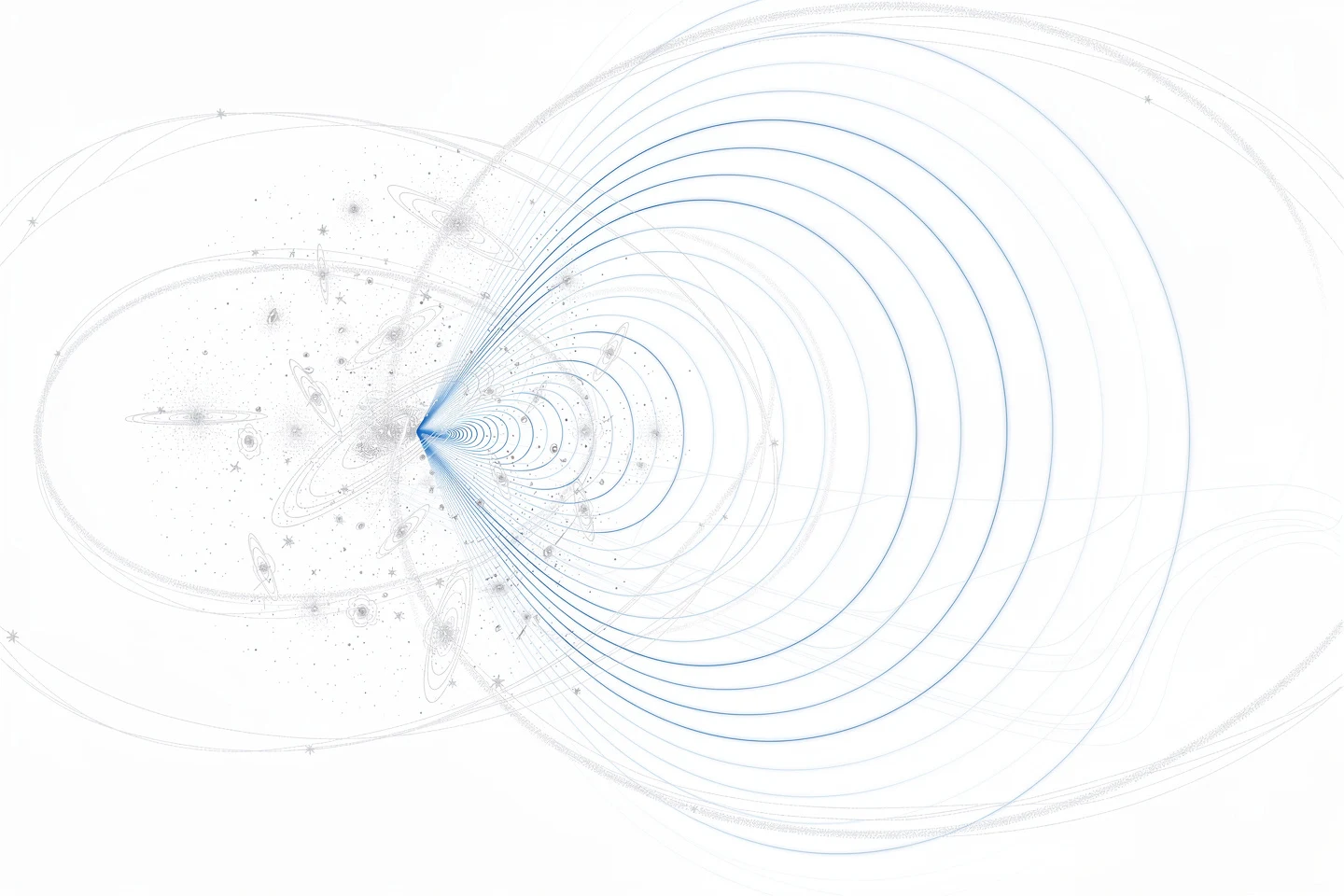
Right after the Big Bang, an idea developed by Georges Lemaître, the universe was filled with opaque hydrogen. Observing those times is difficult: due to the time dilation effect, light from distant objects is stretched, and events appear to us as if in slow motion. It took the epoch of reionization for the first stars and galaxies to make the cosmos transparent.
Spotting these 'firefly galaxies' was helped by gravitational lensing — the ability of massive objects, predicted by Fritz Zwicky, to bend and amplify light. The galaxy cluster Abell S1063 acted as a natural telescope. Along with archival images from Hubble and precise distance measurements (spectroscopy on JWST), scientists found ultra-faint objects, amplified by the lens by tens of times.
The calculations showed: more than half of the ionizing light came from galaxies fainter than a certain threshold. Even assuming that star formation in such dwarfs fades, their contribution remains huge. This is important for the entire standard model of cosmic evolution, and also brings us closer to unraveling dark matter, whose existence was discovered by Vera Rubin. Without accounting for tiny galaxies, the epoch of reionization simply could not have ended, and we would still be living in darkness.
A gravitational lens amplified one of the faint galaxies 25 times — without that cosmic magnifying glass, it would have remained unnoticed forever.