Invisible Threads Between the Stars express
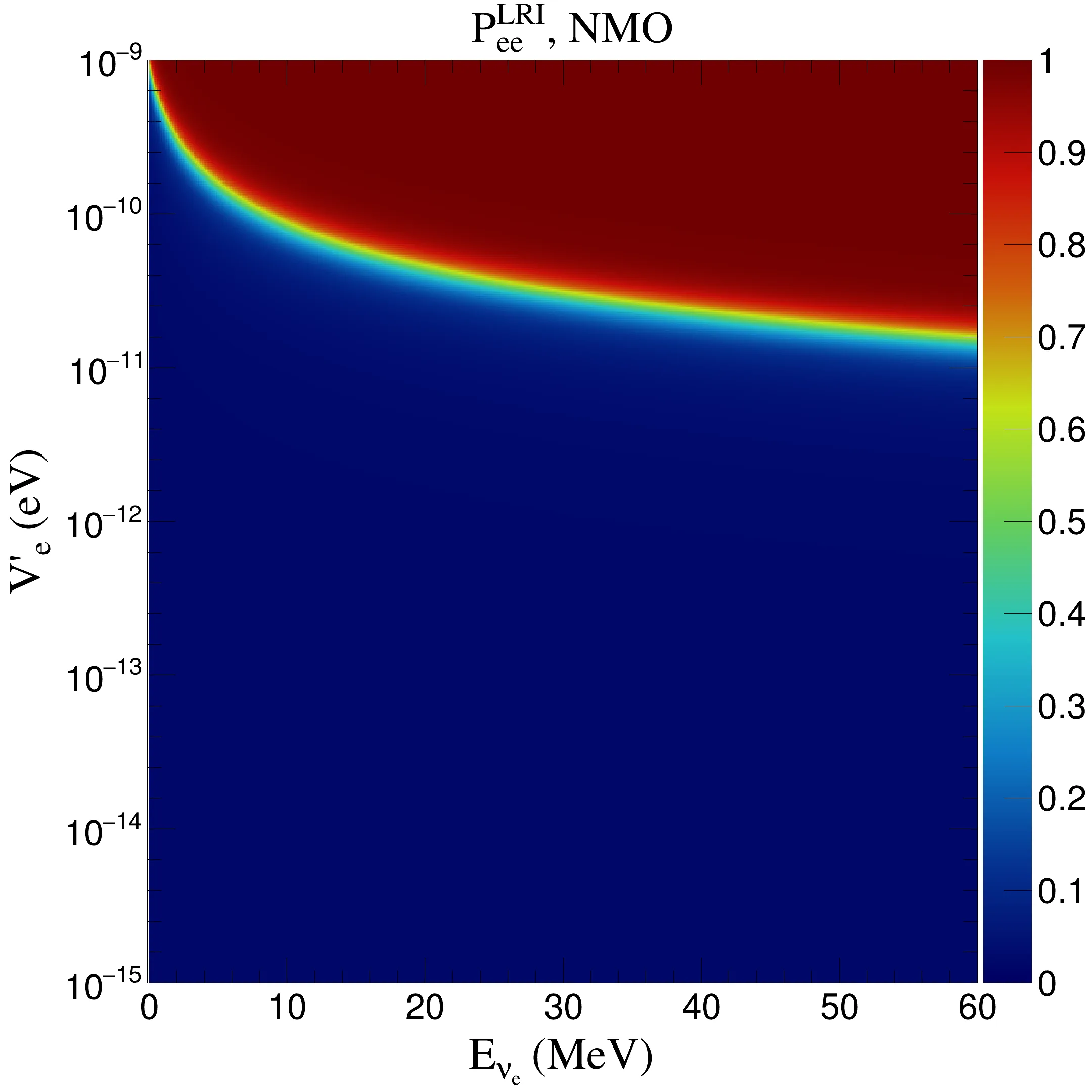
A massive star exhausts its fuel, and its core collapses in a fraction of a second. A supernova is born, along with a brief but powerful shower of neutrinos. These particles barely interact with matter, so they fly away freely, carrying information about the catastrophe. But over a journey of thousands of light-years, their transformations from one type to another could be altered by a new long-range field.
The authors considered hypothetical ultralight particles associated with different types of leptons (electrons, muons, tau neutrinos). Such particles create a field that, over vast distances, can interfere with neutrino oscillations in the Standard Model. They took a specific version of the theory, one without anomalies, and calculated how the neutronization burst signal (the first sharp neutrino emission during collapse) would be distorted in the DUNE detector. This is a 40-kiloton liquid argon reservoir that captures rare neutrino collisions with atoms.
It turns out that if the long-range field is comparable in strength to ordinary vacuum oscillations, the survival rate of electron neutrinos changes noticeably. This leaves an imprint on the arrival times and energies of particles at the detector. The distortions could be seen even for a single event if a supernova goes off close enough — for example, the star Betelgeuse in the constellation Orion. This method complements the search for new forces that are invisible in laboratory experiments.
The long-range field here acts like an invisible hand, gently nudging neutrinos along their entire path. Without it, particles transform according to one scenario; with it, according to another. And if one day the DUNE detector records a signal that doesn't match the standard picture, astrophysicists will have a key to physics beyond the Standard Model.
Neutrinos from supernova 1987A traveled 168,000 years to reach Earth, and detectors caught only about two dozen particles, but that was enough to confirm the collapse theory.
In Peter Watts's novel Blindsight, neutrinos are used as an interstellar communication channel — much like in this work, where they carry hidden messages about new forces.