Quantum Waves in the Macroworld: A Hair-Thin Wire express
A thin silver thread nearly as long as a hair's width, and inside it, pristine quantum laws hold sway. Physicists built a conductor where electrons can only move forward or backward, like on a perfectly straight single-lane road with no shoulders. On such a road, any pothole or pebble would normally destroy the fragile quantum state. But here, the road turned out to be surprisingly smooth.
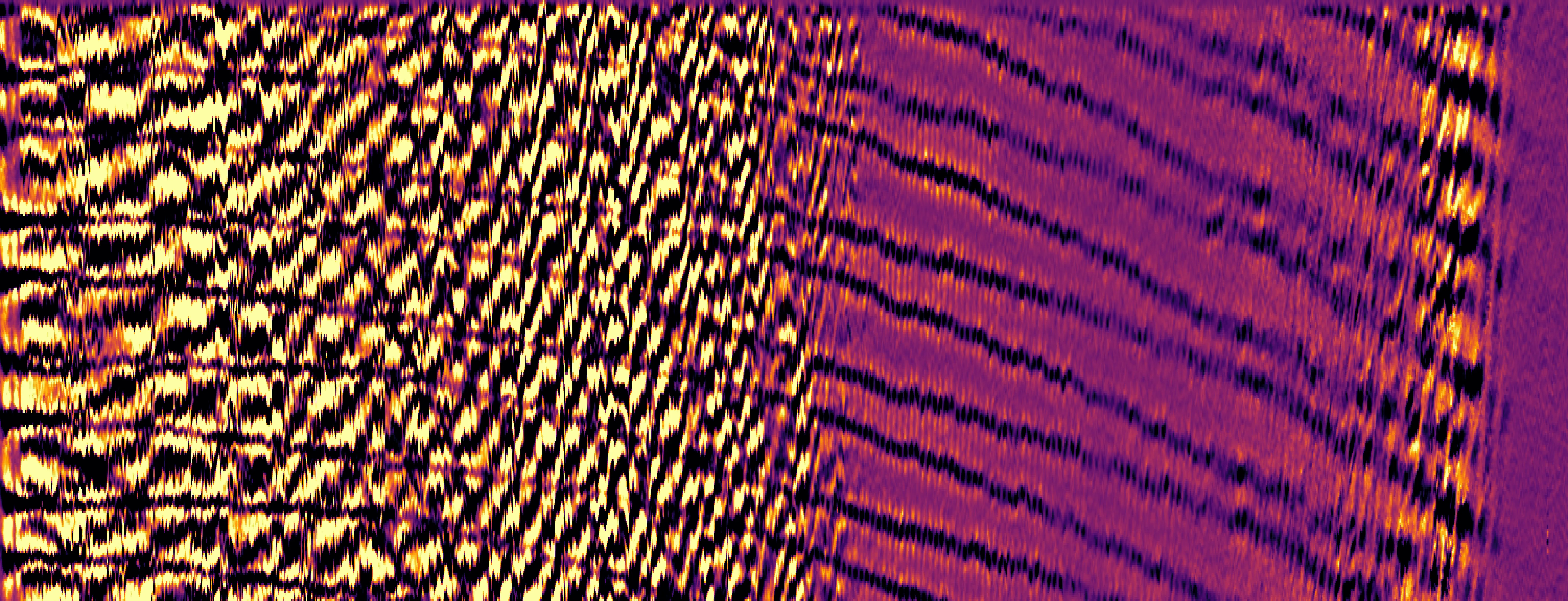
The researchers cooled the system to near absolute zero and measured how current tunnels (leaks through a barrier) between two parallel wires. In a magnetic field, a complex interference pattern emerged — electron waves overlapped, reinforcing and canceling each other. Computer simulations with no adjustable parameters matched the experiment perfectly. This means a conductor up to 18 micrometers long behaves as an impeccable quantum system.
But the most astonishing part was hidden at low voltage. They didn't just detect Coulomb blockade (the energy required to add an extra electron); they clearly resolved individual orbital and spin states. A hundred electrons filled the wire in strict sequence: spin up, spin down, spin up again — without a single glitch. High spin states never appeared.
Such order in a system of a hundred particles, nearly as long as a hair, is a true bridge between worlds. Quantum mechanics of a single electron suddenly applies to an object you can see with a good microscope. This isn't just a pretty experiment. It's a hint of where to look for the boundary where quantum strangeness gives way to familiar reality.
Original abstract
as written by the authors arXiv:2608.02431v1
Increasing the size of a system showing quantum effects is a difficult task limited by decoherence, a diminishing quantum level spacing, and the effects of disorder spoiling the quantum behavior when growing in size. Systems in 1D offer very strong confinement in the transverse directions, thus generally enhancing quantum effects, but are notoriously sensitive to disorder. In this work, we present a system of 1D electrons exhibiting discrete quantum levels and fully ballistic coherent quantum interference with lengths of up to 18\,$$\mu$$m. Tunneling spectroscopy between two parallel quantum wires with a central gated segment shows intricate interference patterns exhibiting several different periods in magnetic field and density. An analysis over three different wire lengths and a comparison with single particle numerical simulations without any free parameters remarkably explains the full pattern including the observed periods. Therefore, these wires are essentially ideal 1D systems with aspect ratios approaching 1'000. In addition, at low bias, we also observe not only the Coulomb charging energies but can clearly resolve the discrete orbital and spin states in up to 10\,$$\mu$$m long wires when filling 100 electrons with the center gate. This is made visible by a state-of-the-art low temperature and low noise measurement system. The spin filling sequence is completely regular, strictly alternating spin up and down, avoiding high spin states, while the peak conductance is modulated in accordance with the previously discussed interference patterns. These striking results show that single particle Schr\"odinger quantum mechanics such as ballistic quantum interference and discrete quantum states may be observed, under the right conditions, in systems of up to 18\,$$\mu$$m length, thus approaching macroscopic sizes.
18 micrometers is about one-fifth the thickness of a human hair. For the quantum world, which usually operates in nanometers, this length is like a journey across an entire city.
In Greg Egan's novel "The City of Permutations," virtual copies of people exist thanks to flawless quantum computations that require preserving interference over long distances — much like in these wires.