A Laser Switch for Magnetic Storms ✛
Inside a solar flare, magnetic field lines snap like stretched rubber bands and reconnect — releasing in minutes enough energy to power humanity for millions of years. In the lab, this process, magnetic reconnection, could long be triggered but not stopped. Now physicists have a switch.
At the OMEGA-EP facility, two laser pulses lasting 2.5 nanoseconds vaporized a plastic target. Two plasma clouds emerged, each with its own magnetic field pointing toward the other. When the clouds collided, a thin layer formed between them where the fields reconnected. Into this layer struck a third pulse—250 times shorter but incredibly powerful: its intensity of $10^{19}$ watts per square centimeter accelerated electrons to nearly the speed of light.
But timing proved key. If the pulse arrived 900 picoseconds after the start of irradiation, the layer already existed, and the switch accelerated its destruction. If the pulse hit earlier, at 300 picoseconds, its magnetic field was compressed by the incoming fields, creating a high-pressure region. This pushed the plasma away, preventing the layer from forming altogether. Reconnection was not just slowed: it was canceled.
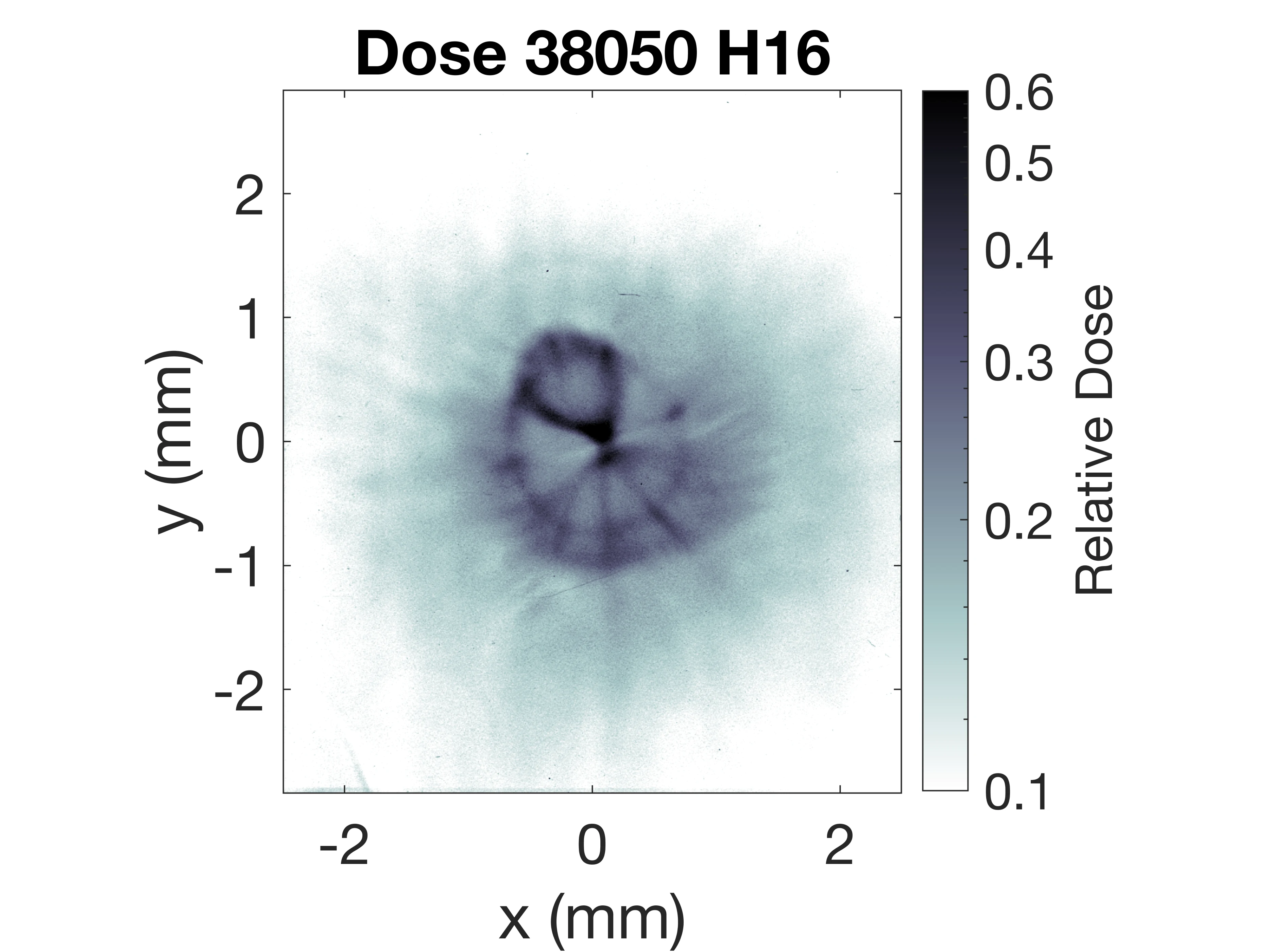
The process was monitored using proton deflectometry: a proton beam probed the plasma, and its deflection reconstructed a map of the magnetic fields with picosecond resolution. Simulations with two different codes (one describing plasma motion, the other tracking individual particles) matched the observations.
This is the first time reconnection has not just been observed but switched on and off on command. Previously it was a force of nature; now it is a tool. In fusion reactors, where uncontrolled reconnection can disrupt magnetic confinement, such a switch would be useful today. And in laboratory astrophysics, it allows reproducing conditions that were previously out of reach.
A solar flare remains uncontrollable, but its miniature lab counterpart now obeys a flick. The next step is learning to flick in the right direction.
The short laser pulse was 250 times shorter than the long pulses that created the plasma, yet its energy sufficed to completely alter the course of the process.