A Tabletop Light Maze Captures Gravity express
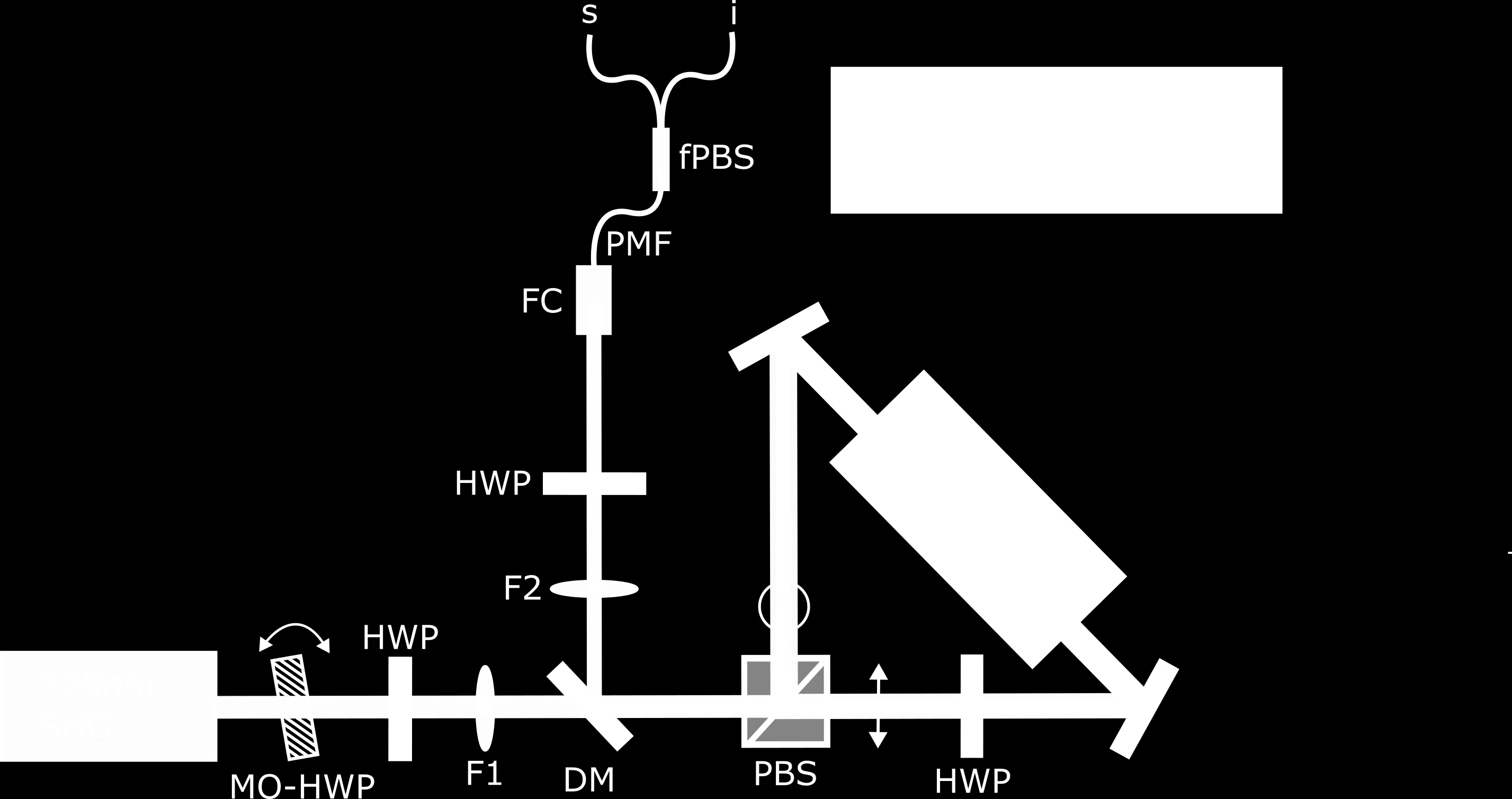
The theory of gravity by Einstein — general relativity — rarely intersects with quantum physics in direct experiments. Here, scientists built a 50-kilometer glass labyrinth on a table and sent single photons through it. Gravity slightly bends the space inside this maze, and on the way out the light's wave rhythm changes — a tiny delay appears, as if one corridor had imperceptibly lengthened.
To avoid confusing gravity with Earth's tremors, the table was suspended on shock absorbers — even a distant train would have ruined the experiment. The device compared two halves of the photon wave and caught a split of millionths of a radian. Thus, for the first time in a lab, they captured gravitational redshift for individual light quanta. This breakthrough will allow testing how quantum particles feel curved space. One day, such tabletop detectors might even hear gravitational waves at the microscale.
Gravity affects light so weakly that rising just one meter changes its frequency by only $10^{-16}$. In this experiment, they caught a phase shift of 0.06 milliradians, like noticing a wheel turn by the width of a hair.
In Interstellar, characters sent signals through gravity. Real tabletop light labyrinths already show how quantum particles get tangled in curved space.