Donut Beam Locks Mirrors with Subatomic Precision ✛
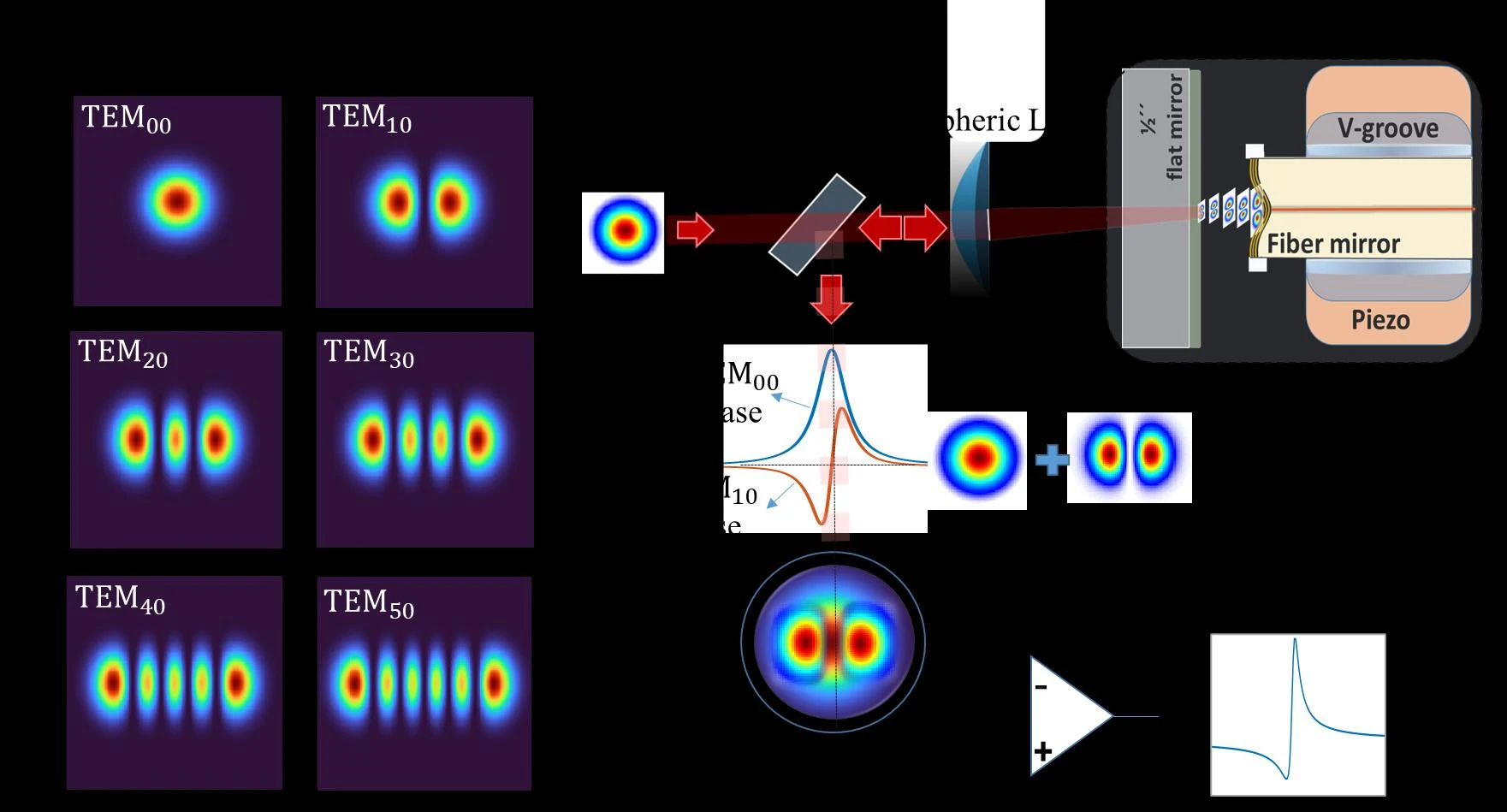
To see the glow of a single atom, scientists build a corridor from two micromirrors. Light bounces between them, amplifying the faint flash. But any jitter ruins everything. Previously, they fixed the distance with a regular laser beam — however, it hit the camera like a flashlight in the eyes when watching fireflies.
Now they use a donut beam. Its bright ring holds the mirrors, and at the center, where light waves cancel each other out, is perfect darkness. The camera sees only the atom, and stray light is weakened hundreds of times. This beam, devised by the followers of Charles Townes, opens the door to quantum devices where every photon counts.
The stability achieved is such that if you scaled the gap to the Moon, vibrations would be thinner than a human hair.