How the Quantum Vacuum Blurs Time express
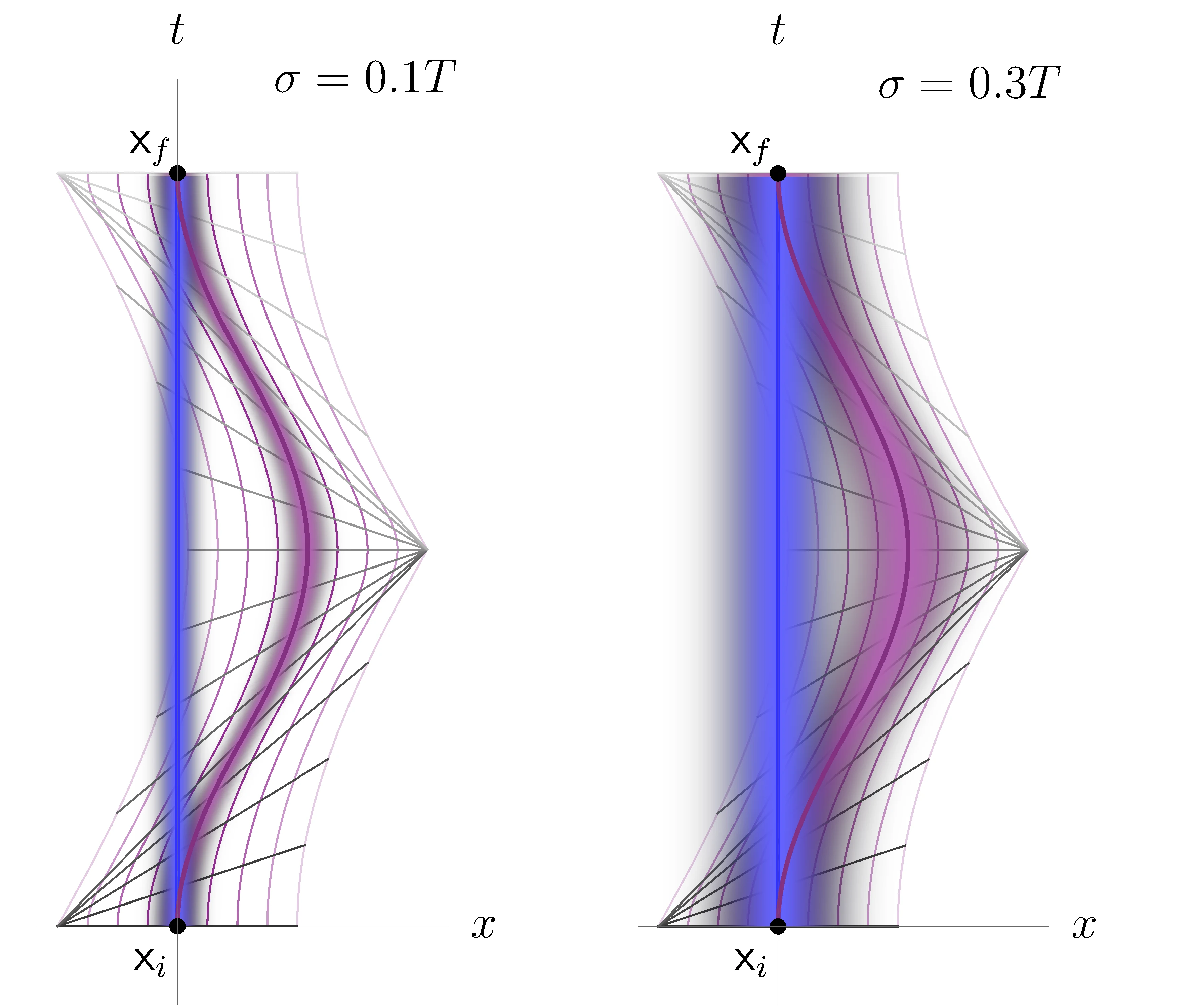
Time is like a highway: from afar it looks flawlessly paved, but zoom in and every pothole appears. These bumps are the quantum fluctuations of the vacuum, making it impossible to measure the journey exactly. Physicists built a clock model whose operation relies on spontaneous particle creation from the void. It turned out that different clocks, even when placed side by side, run at different rates — everything depends on how their design interacts with the fluctuating background. This is how the micro-world blurs time. This effect resembles the twin paradox from Einstein's theory of relativity, but here aging depends not on speed or gravity, but on internal design. The culprit is the sea of virtual particles that constantly pop in and out of existence even in absolute emptiness, as proved by Feynman in quantum field theory. This seething cannot be stopped by cooling to absolute zero or by complete isolation. It is an inherent property of space, and for anything smaller than a speck of dust, time ceases to be uniform. The most precise clocks will drift simply because they live in a bubbling world.
Quantum noise cannot be eliminated by cooling or shielding — it is etched into the foundation of the cosmos, making any clock eternally imprecise.