The Galaxy's Halo Is Lumpy: A Map from Hundreds of Radio Bursts express
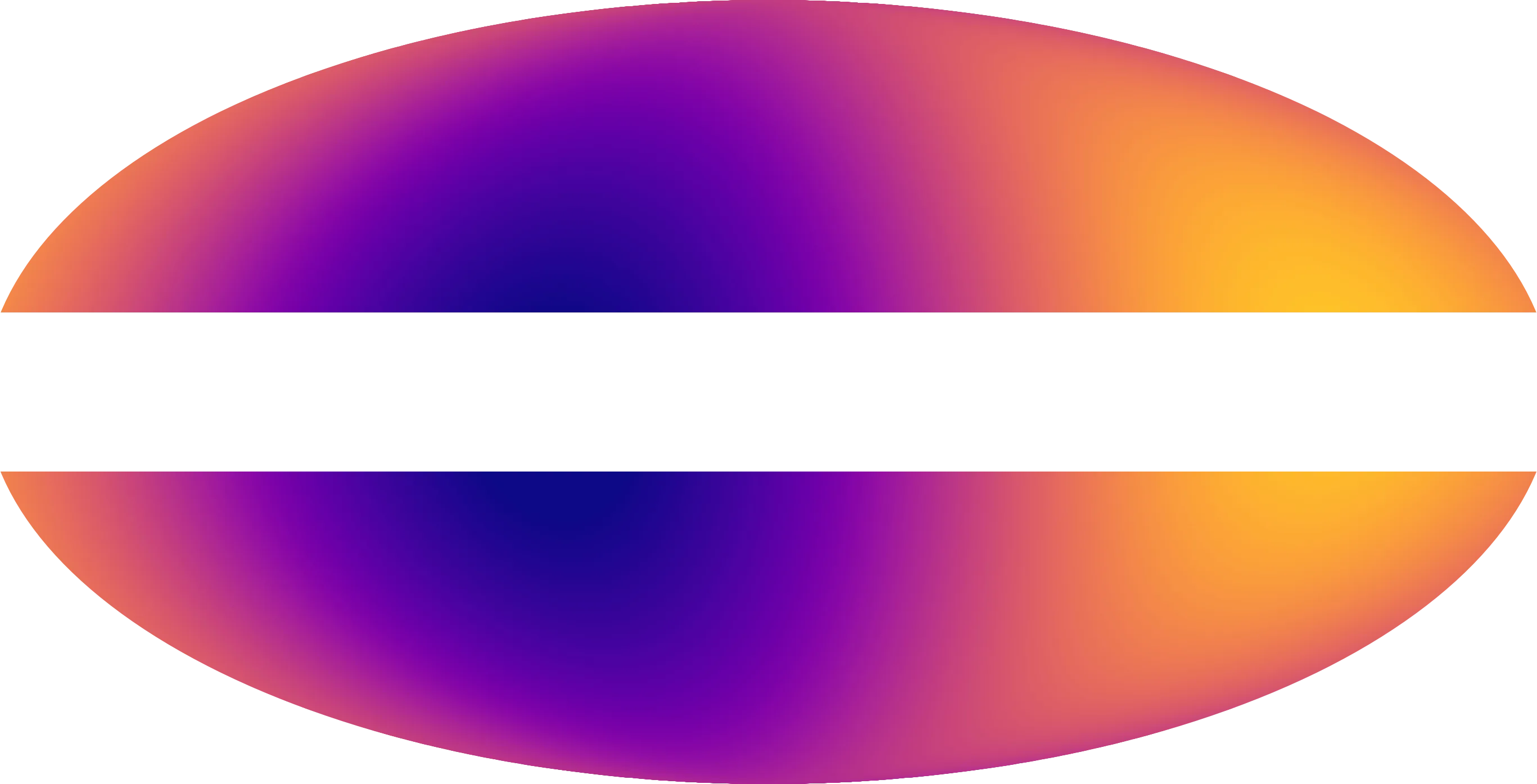
A distant radio signal travels toward us through gas, and the more gas it encounters, the more the signal is 'slowed down.' Astronomers use this to weigh the invisible envelope of our Galaxy: its halo. But if the halo is uneven, like a thick scarf draped over the shoulders, measurements in different directions will differ.
A team of researchers used data from hundreds of fast radio bursts — powerful millisecond-duration radio pulses from distant galaxies. Each burst, as it plows through the halo, leaves an 'imprint' on the signal: the denser the gas, the greater the delay. The scientists compared these imprints and found that in one region of the sky, the delay is noticeably larger than the average across the sky. It's as if the scarf turned out to be thicker on one side.
The direction points to a constellation close to the Galactic plane. The result holds even under strict data selection: when only bursts with precisely known positions were kept, the pattern remained. This suggests the lumpiness is unlikely to be a coincidence or a measurement error.
If the halo is indeed thicker on one side, it changes our understanding of how the Galaxy accumulated matter. Perhaps a dwarf galaxy passed nearby, and its gas 'stuck' to ours. Or magnetic fields within the halo pulled gas to one side. For now, it's a mystery, but new radio telescopes that detect thousands of bursts will help solve it.
Original abstract
as written by the authors arXiv:2601.02849
We propose a data-driven approach to reconstruct the all-sky distribution of the dispersion measure contribution from the Galactic halo ($$\mathrm{DM_{halo}}$$) through a spherical harmonic expansion, enabling an investigation of its possible anisotropies. Based on the NE2001 model and using 92 localized and 574 unlocalized non-repeating fast radio bursts (FRBs) at Galactic latitudes $$|b|>15^\circ$$, we find a significant dipole anisotropy in $$\mathrm{DM_{halo}}$$, pointing toward $$(l=130^\circ,\, b=+5^\circ)$$ with a $$1\sigma$$ uncertainty of approximately $$28^\circ$$. The $$\mathrm{DM_{halo}}$$ value in this direction is $$63\pm9~\mathrm{pc~cm^{-3}}$$, exceeding the all-sky mean by about $$2.6\sigma$$. This result is not significantly affected by the choice of Galactic ISM models. Furthermore, even when using a refined sample of 62 localized FRBs (excluding CHIME detections, repeaters, and unlocalized events), the dipole anisotropic structure persists, with a direction of $$(l=141^\circ,\, b=+51^\circ)$$ and a larger 1$$\sigma$$ uncertainty of $$\sim 44^\circ$$. Model comparisons using the Akaike Information Criterion and Bayesian evidence yield consistent preferences, and together they suggest that current FRB data slightly favor the existence of a dipole structure in $$\mathrm{DM_{halo}}$$. If this feature is not a statistical fluctuation or systematic error, its physical origin requires further investigation. Future FRB samples with larger sizes and more complete sky coverage will be essential to confirm or refute this possible anisotropic structure.
A fast radio burst lasts milliseconds but carries as much energy as the Sun emits in several days.