Popular

Yang Liu

6 articles · 30 co-authors · latest: 2026-07-05

Tiny chip tames quantum entanglement

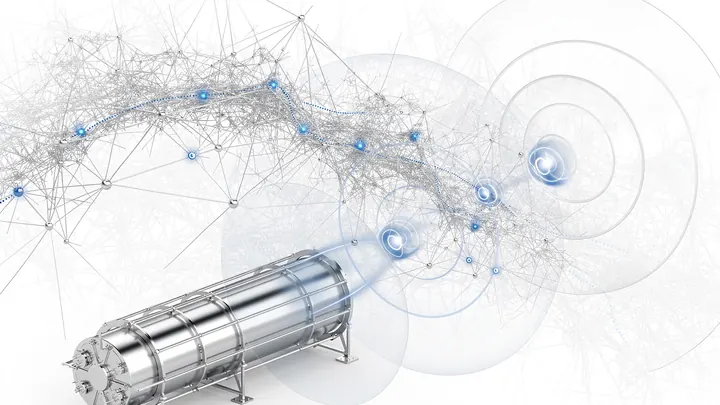
The device generates pairs of entangled photons at a record rate—45 billion per second—consuming just milliwatts of power. The purity of the quantum connection exceeds 96%. Its tiny size and efficiency bring quantum internet, secure satellite links, and ultra-precise sensors closer to reality.
arXiv:2508.14566 · 2025-08-20

How to Braid Atoms to Save a Quantum Battery

Quantum batteries quickly lose energy due to interactions with the environment. Researchers suggest braiding giant atoms together — the leak channels then cancel each other out, allowing useful energy transfer without losses. This is a step toward durable quantum storage devices.
arXiv:2510.22905 · 2025-10-27

Light Gets Even Lighter: A New Upper Limit for the Photon’s Mass

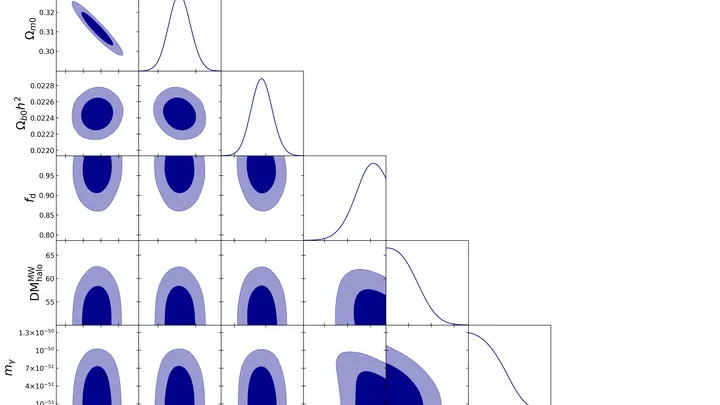
The Universe arranged a race of light beams. Fast radio bursts from distant galaxies made it possible to test: if the photon had mass, blue light would arrive later than red. In reality, the delay is explained only by gas. New mass limit: 5×10⁻⁵¹ kg – light is practically weightless.
arXiv:2511.14163 · 2025-11-18

Synthetic Lattice for a Single Photon

A superconducting qubit and a fast modulator turned frequencies into floors for a single photon, letting it wander randomly, oscillate, or move only forward. This is a step toward compact quantum simulators.
arXiv:2602.13736 · 2026-02-14

Pulsars Hunt Dark Matter: What the Search Revealed

Astronomers used pulsars — ultra-precise cosmic lighthouses — to search for elusive dark matter. If it were made of ultralight wave-particles, they would distort the flawless rhythm of these stars. Years of observations showed no disturbances, but for the first time set bounds for two hypothetical f
arXiv:2605.02172 · 2026-05-04

Cosmic Lightning: How Fast Radio Bursts Illuminate Hidden Baryons

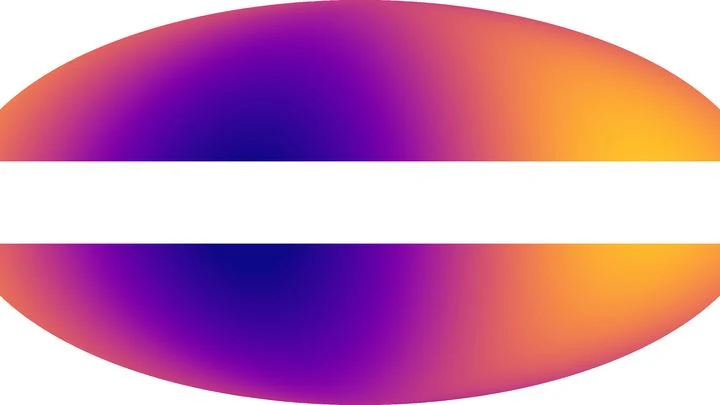
Analysis of 3455 fast radio bursts from the CHIME telescope has mapped electron density fluctuations in the cosmic web. The statistically significant signal at >3σ confirms that residual dispersion measures are not random, but reflect real baryon clumping. The method, which does not require precise
arXiv:2607.04106v1 · 2026-07-05