How to Remove Sky Glow from Galaxy Images express
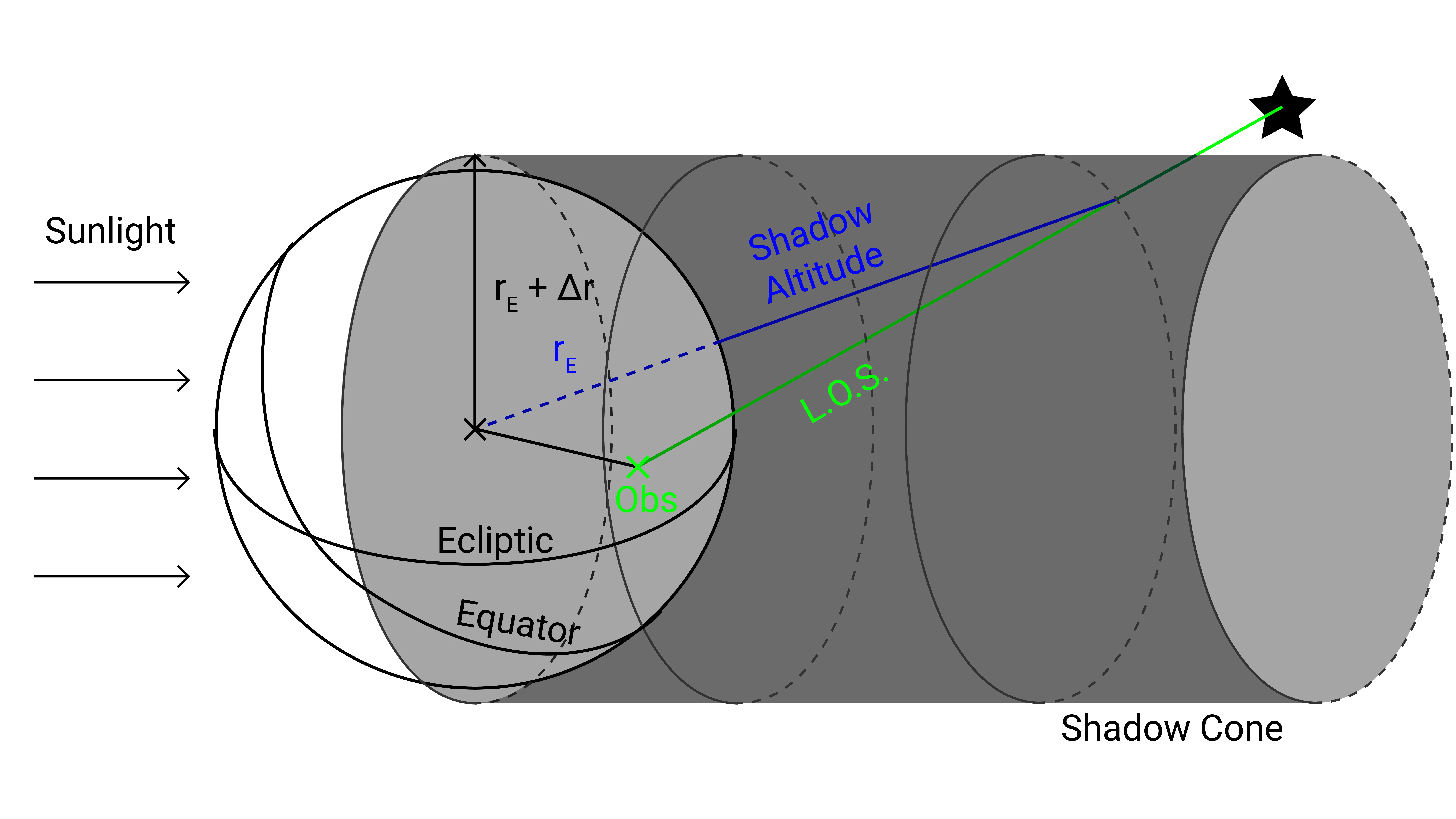
At night, the sky is never completely black. Even far from cities, the upper atmosphere glows faintly: sunlight makes hydrogen atoms emit a reddish glow that astronomers call geocoronal emission. For a telescope, it's like a fogged-up window: it adds extra light and hinders seeing distant galaxies.
It's especially annoying when you need to measure the same hydrogen glow in galaxies themselves — it tells you where stars are born. Previously, astronomers dealt with the interference by simply avoiding the part of the sky where it's strong, or by subtracting it from the spectrum if the galaxy moves at a different velocity. But the new method uses simple geometry: the glow's strength depends on how deep the line of sight goes into the cone of Earth's shadow. Knowing this angle — the "shadow height" — you can predict in advance how much extra light will enter the telescope and subtract it.
The scientists tested the method on data from the SDSS-IV/MaStar survey, where the telescope sometimes looked at empty patches of sky. It turned out that the atmospheric glow varies not only with direction but also slightly depends on solar activity and distance from the Sun. Now astronomers can more reliably study gas in galaxies without worrying that Earth's atmosphere will spoil the picture.
The atmospheric glow is so faint that the eye cannot see it, but it exists even on the darkest night — and it can be photographed with a long exposure.