Popular

Wormhole Shadow: Sharp Angles When Rotating ⚡ экспресс

Original: "On the Cuspy Structure of Rotating Wormhole Shadows"
· Peng Cheng, Ruo-Fan Xu, Peng Zhao
arXiv:2602.14182 · 2026-02-15 · CC BY 4.0 · ⏱ 1 min · General Relativity High Energy
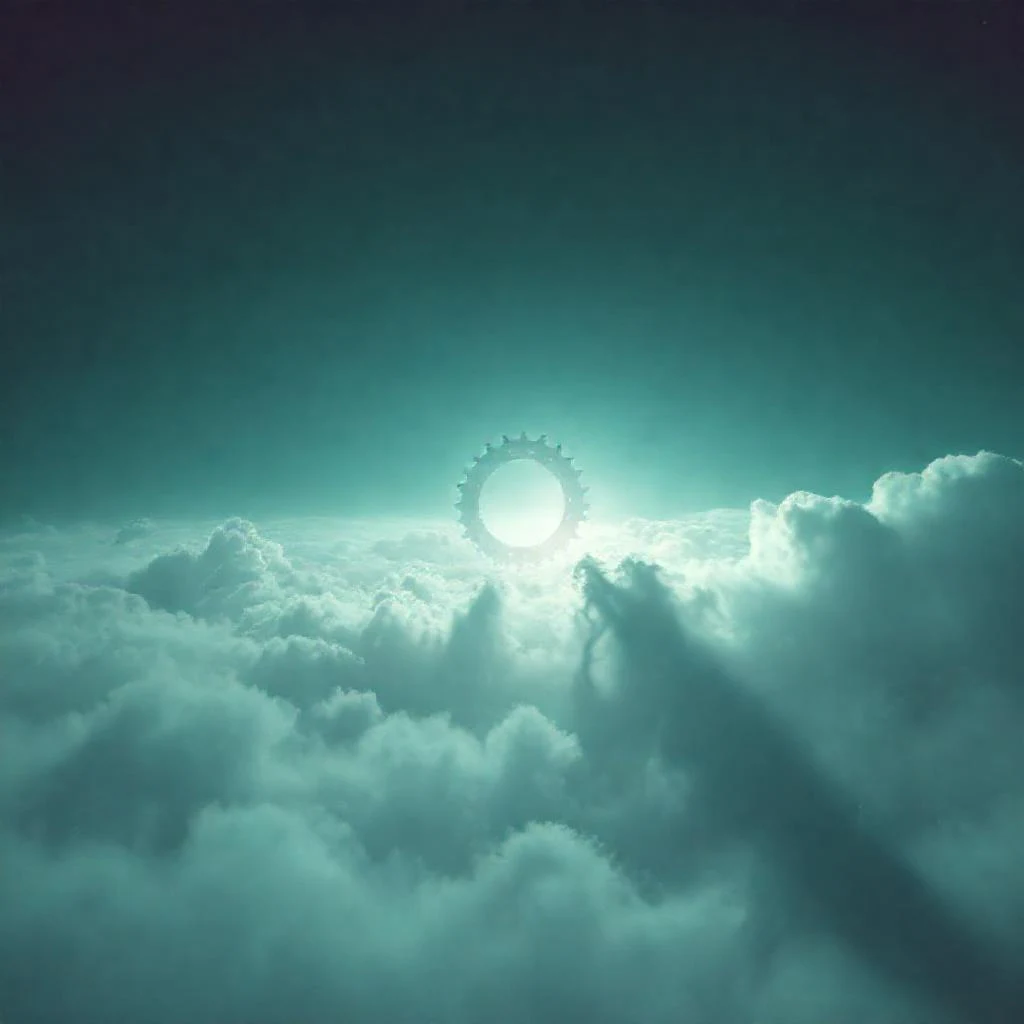
A wormhole’s rotation turns its shadow into something like a gear — with sharp teeth instead of a smooth circle.
Abstract

Scientists studied the shadow of a rotating wormhole (Teo class) with a varying redshift parameter (affects gravitational redshift). As this parameter varies, the shadow boundary develops pointed protrusions — cusps. A critical parameter value was found that triggers the transition from a smooth shape to a cusped one. Depending on rotation and redshift, the shadow can be smooth, cusped, with touching 'ears', or sinking into the throat. This could help distinguish wormholes from black holes in high-resolution images.

Links in the knowledge graph 1

📄 Showing the "Simple" version — "Popular" is not ready yet. Add it to favorites to help prioritize it.

A wormhole is a tunnel through space, connecting distant regions of the Universe. Its shadow against a bright gas background was long thought to be as round as that of a black hole. But for a rotating wormhole (one you could actually traverse), the shape of the shadow might be surprising: the edge becomes jagged, like a gear.

A black hole's shadow stays circular even at furious rotation. A wormhole behaves differently.

If light passing through its throat is strongly 'stretched' (shifting in color toward red), then rotation causes the shadow to develop sharp protrusions. Researchers found a critical threshold: as soon as this stretching reaches a certain value, the shadow abruptly acquires teeth.

Such a 'jagged' silhouette is a key for future telescopes. If instead of a smooth shadow astronomers see a structure with notches, it would point not to a black hole, but to a wormhole.

🎯 Wormholes haven't been discovered yet, but Einstein's equations allow for their existence — just like black holes once were.

🎬 In Interstellar, the journey through a wormhole happened without its shadow — too bad: perhaps it would have looked like a gear.

Scientists
Stephen HawkingJacob BekensteinAlbert EinsteinFritz ZwickyVera RubinBernhard Riemann
Tags
black hole spacetime curvature photometry
Laws
Hawking radiationgravitational lensingBekenstein-Hawking entropyEinstein field equationsStefan–Boltzmann lawequivalence principle
Original: arXiv:2602.14182 · CC BY 4.0 · bridge42worlds