Cosmic Kitchen: Nuclear Pasta in the Depths of Stars express
Long before that, Fritz Zwicky predicted that a supernova explosion gives birth to a tiny neutron star. Years later, Jocelyn Bell Burnell caught its pulses, discovering pulsars. Now we know that inside these stars is a true culinary spectacle: atomic nuclei stretch into spaghetti, layer up like lasagna, and clump into gnocchi. They call it nuclear pasta.
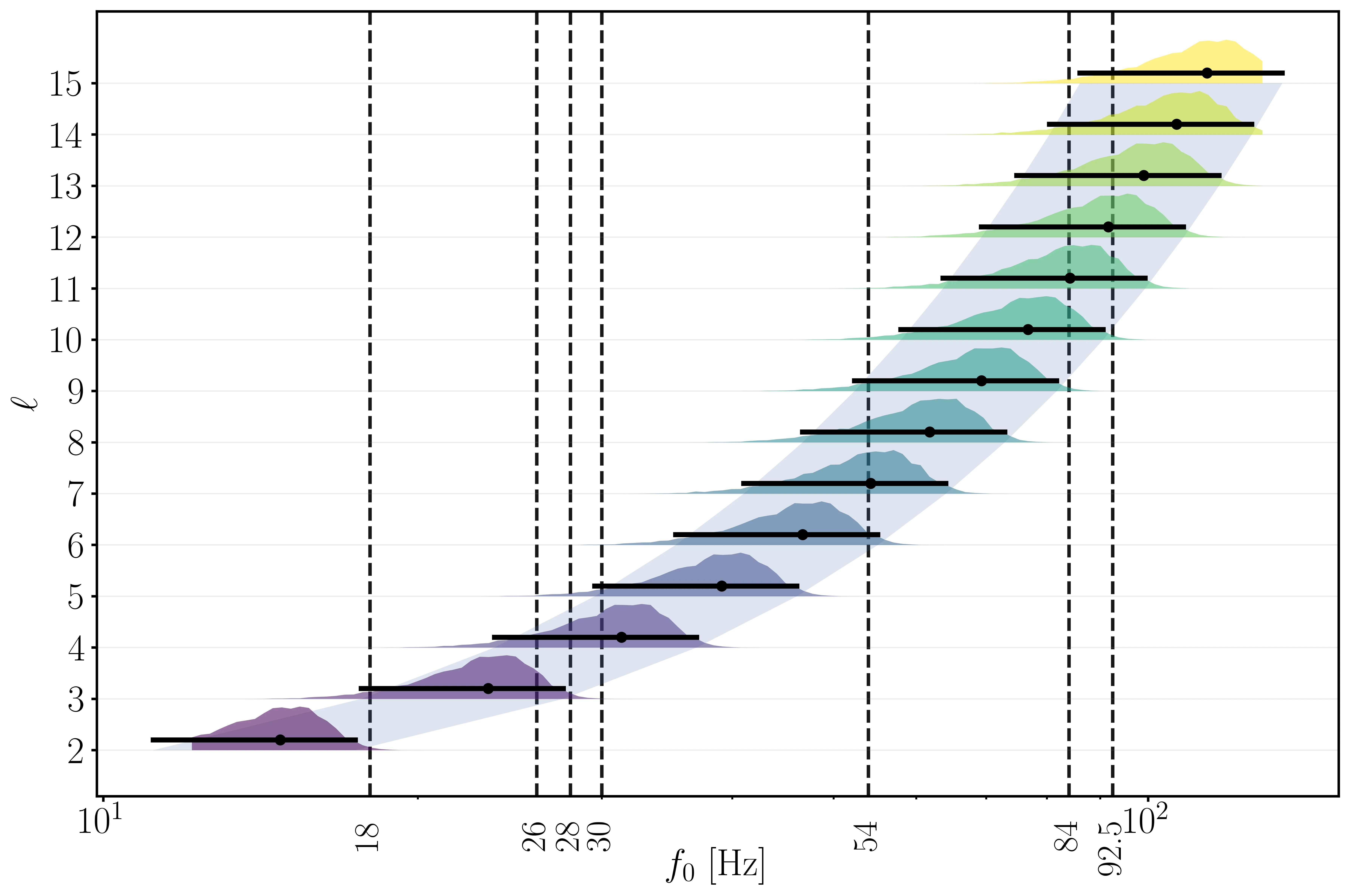
A recent study, combining nuclear models and data on gravitational waves, showed that the transition from round nuclei to strands happens at the exact same density, as if nature follows a recipe. The pasta layer is only 14% of the crust's thickness but packs nearly half its mass. These layers make the star tremble at specific frequencies, and astronomers see this trembling as the flickering of pulsars. For the first time, scientists matched calculated frequencies with real observations and found that the rhythm of the tremors reveals properties of nuclear forces — a sort of stellar seismology.
But the most unexpected twist: this nuclear pasta might explain the mysterious 'glitches' in pulsar flickers, when their pulse suddenly skips a beat. Perhaps the pasta's trembling triggers abrupt shifts that astronomers have been catching for half a century.
Original abstract
as written by the authors arXiv:2602.19125
We investigate the impact of nuclear pasta on crustal structure and torsional oscillations using a Bayesian ensemble of unified neutron-star equations of state based on relativistic mean-field models constrained by nuclear experiments, empirical saturation properties, chiral effective field theory, and multimessenger observations. For each posterior sample, we compute the pasta sequence within a compressible liquid-drop model and quantify the onset density, thickness, and mass fraction of the pasta layers. We show that the appearance and extent of nuclear pasta are primarily controlled by the symmetry-energy slope parameter $$L$$. While spherical and rod-like pasta configurations are present for all equations of state, only a small fraction of the posterior supports slab, tube, or bubble geometries. The transition from spherical nuclei to rods is tightly constrained to occur at a density of $$\rho_{\rm sr} = 0.0588^{+0.0045}_{-0.0065}\,\mathrm{fm^{-3}}$$. We further predict that the nuclear pasta layer occupies a relative radial thickness of $$\Delta R_{\rm pasta}/\Delta R_{\rm c} = 0.140^{+0.025}_{-0.036}$$ and contributes a relative mass fraction of $$\Delta M_{\rm pasta}/\Delta M_{\rm c} = 0.475^{+0.071}_{-0.113}$$. Using the resulting crust models, we present the first quasi-periodic oscillations (QPOs) analysis based on a Bayesian posterior ensemble of neutron-star equations of state and systematically assess their compatibility with observed low-frequency quasi-periodic oscillations. We find that the predicted QPO frequencies are strongly correlated with the curvature of the symmetry energy evaluated at sub-saturation density, $$K_{\rm sym}(\rho_0/2)$$, and that uncertainties in the equation of state translate into a range of angular indices $$\ell$$ consistent with the observed frequencies.
"Nuclear pasta" isn't a figure of speech: it's a precise term. The layers really do resemble spaghetti, lasagna, and gnocchi. But they're so strong that a strand as thin as a human hair could support the weight of a metropolis.