Dyson Spheres Around White and Red Dwarfs: Calculating the Search express
If you build a giant blanket around a star, you get a Dyson sphere. It absorbs all the radiation and glows in invisible heat rays. No such sphere has been seen yet, but astronomers know: to find it, look for this thermal glow.
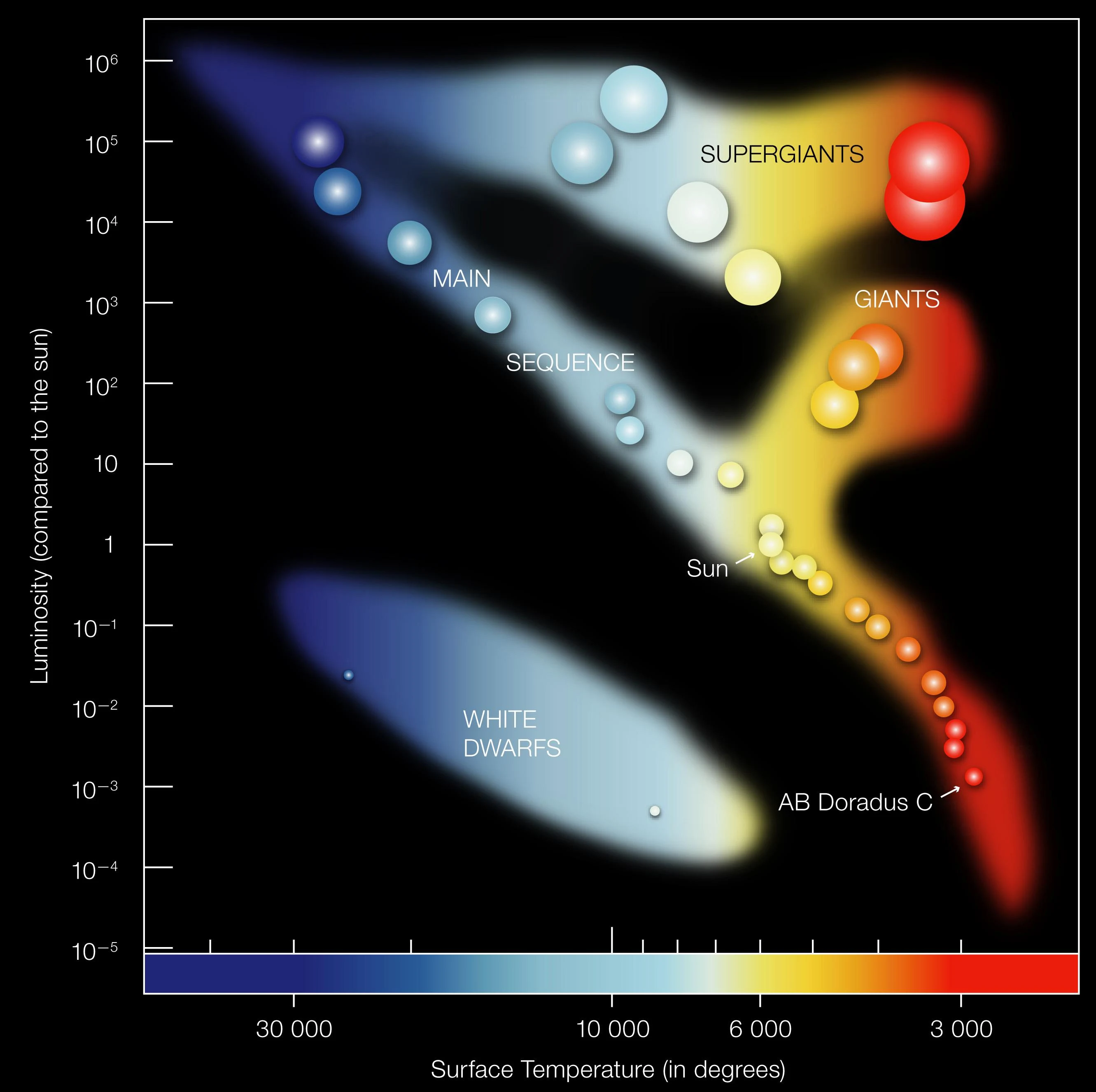
Scientists have calculated how the blanket heats up around two types of stars: white dwarfs (cooled-down remnants of suns, whose nature was first described by Chandrasekhar) and red M-dwarfs (the most common, cool stars). The larger the blanket's radius, the cooler it is — this follows from the law discovered by Planck. An unexpected conclusion: near a dim white dwarf, the blanket will heat up more but glow faintly, while around a bright red dwarf, it will remain barely warm, yet shine with full power.
This can be detected with the James Webb Space Telescope: a Dyson sphere doesn't hide the star, it only shifts its light into infrared — invisible heat, discovered by Herschel. Methods of brightness measurement and spectral analysis will help spot these strange objects and, perhaps, find traces of extraterrestrial intelligence.
Original abstract
as written by the authors arXiv:2602.23270
The construction of Dyson spheres, megastructures designed to capture the total radiative output of stars, can be one of the most compelling techno-signature scenarios for advanced extraterrestrial civilizations. By considering equilibrium temperatures, we investigate the luminosities and fluxes of Dyson spheres built around two promising classes of host stars: white dwarfs and red M-dwarfs. Using radiative balance arguments and representative stellar parameters, we compute the temperature-radius relationship for full energy interception and place these hypothetical structures on the Hertzsprung-Russell (H-R) diagram to assess their observational signatures. Our results show that Dyson spheres around white dwarfs produce cooler and fainter blackbody emissions, peaking in the near- to mid-infrared, while those around M-dwarfs radiate more strongly but at longer wavelengths. In both cases, the equilibrium temperature decreases as R_ D^-1/2, while the total luminosity and observed bolometric flux remain fixed by the stellar output. These findings highlight the astrophysical suitability of low-luminosity stars as Dyson sphere hosts and provide practical constraints for future techno-signature searches using infrared surveys.
If you built a Dyson sphere around the Sun at the distance of Earth's orbit, its surface would have room temperature — about 300 K.
Giant spheres around stars have appeared many times in science fiction, for example, in the series 'Star Trek: The Next Generation' (episode 'Relics').