Dyson Spheres Around White and Red Dwarfs: Calculating the Search express
If you build a giant blanket around a star, you get a Dyson sphere. It absorbs all the radiation and glows in invisible heat rays. No such sphere has been seen yet, but astronomers know: to find it, look for this thermal glow.
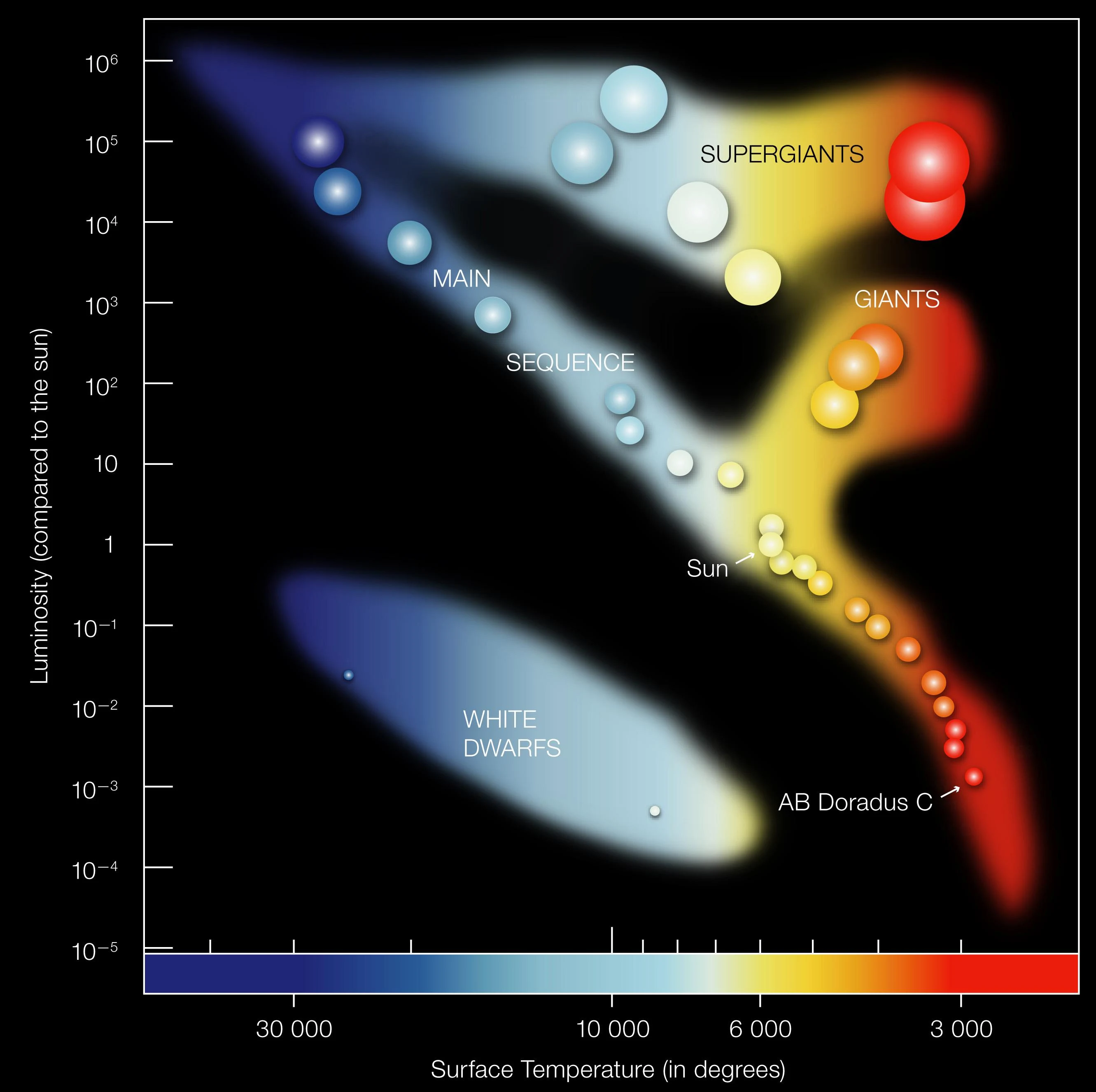
Scientists have calculated how the blanket heats up around two types of stars: white dwarfs (cooled-down remnants of suns, whose nature was first described by Chandrasekhar) and red M-dwarfs (the most common, cool stars). The larger the blanket's radius, the cooler it is — this follows from the law discovered by Planck. An unexpected conclusion: near a dim white dwarf, the blanket will heat up more but glow faintly, while around a bright red dwarf, it will remain barely warm, yet shine with full power.
This can be detected with the James Webb Space Telescope: a Dyson sphere doesn't hide the star, it only shifts its light into infrared — invisible heat, discovered by Herschel. Methods of brightness measurement and spectral analysis will help spot these strange objects and, perhaps, find traces of extraterrestrial intelligence.
If you built a Dyson sphere around the Sun at the distance of Earth's orbit, its surface would have room temperature — about 300 K.
Giant spheres around stars have appeared many times in science fiction, for example, in the series 'Star Trek: The Next Generation' (episode 'Relics').