How to Spin Up Atoms Without Cold or Magnets express
To align particle spins in one direction, physicists usually cool a substance to near absolute zero and place it in a strong magnetic field. That is expensive and bulky.
A new method resembles tuning many spinning tops with a gentle touch: mediator molecules temporarily bind to target atoms and pass on their order. The technique is called SABRE — signal amplification by reversible exchange. In it, hydrogen from a para-gas transfers magnetization to target molecules right in solution, at room temperature.
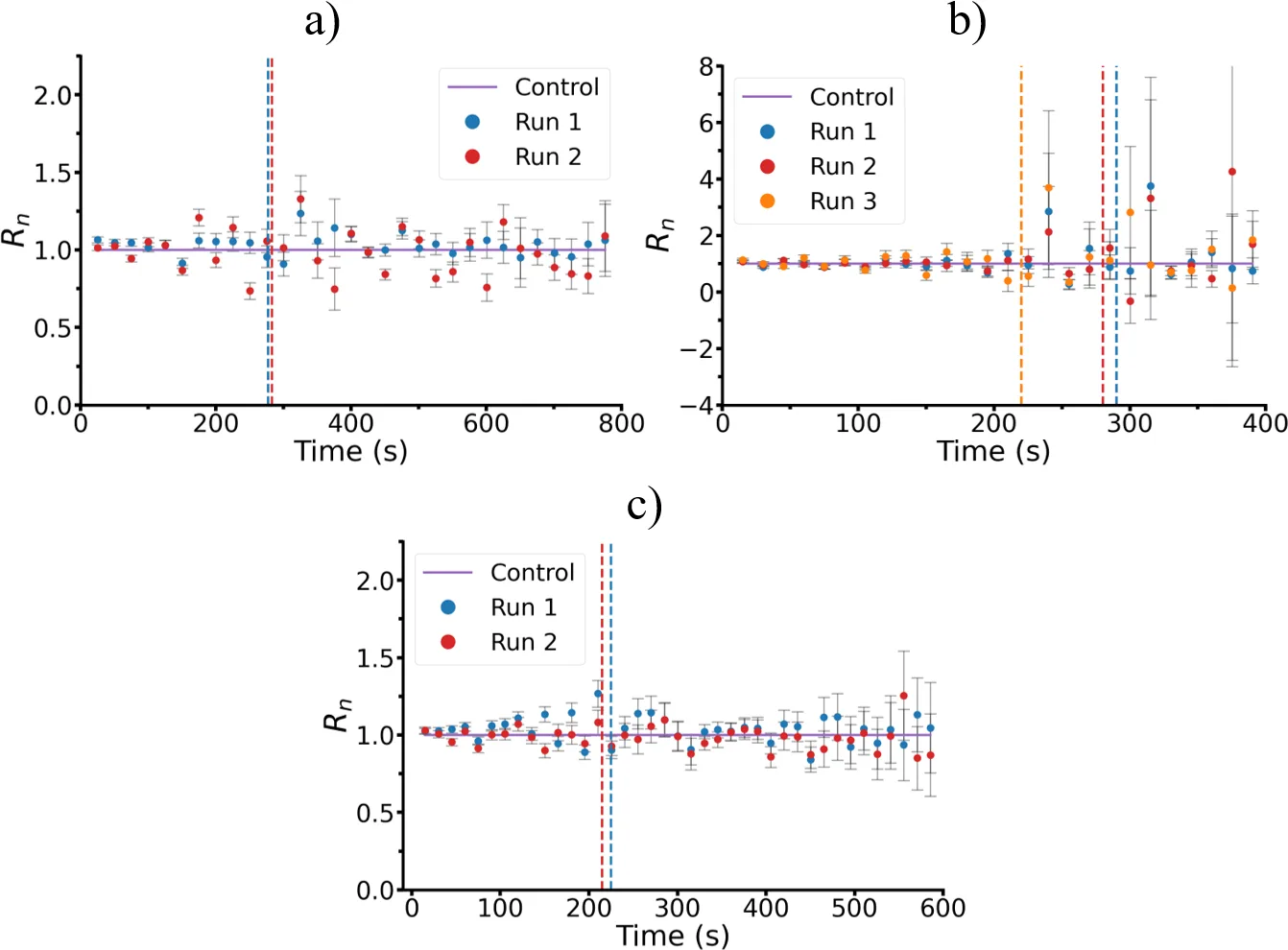
Such resilience matters for experiments where a target sits directly in the particle beam. If the material keeps its polarization under irradiation, it can serve as an active detector medium — for example, a scintillator or a Cherenkov radiator.
The tops keep spinning steadily even under a hail of hits. This means expensive cryostats and magnets might soon be replaced by a simple chemical process.
A dose of 3 kilogray is lethal to humans, but for a solution of polarized molecules it passes almost unnoticed.