Galaxy Lit Up Just 330 Million Years After the Big Bang express
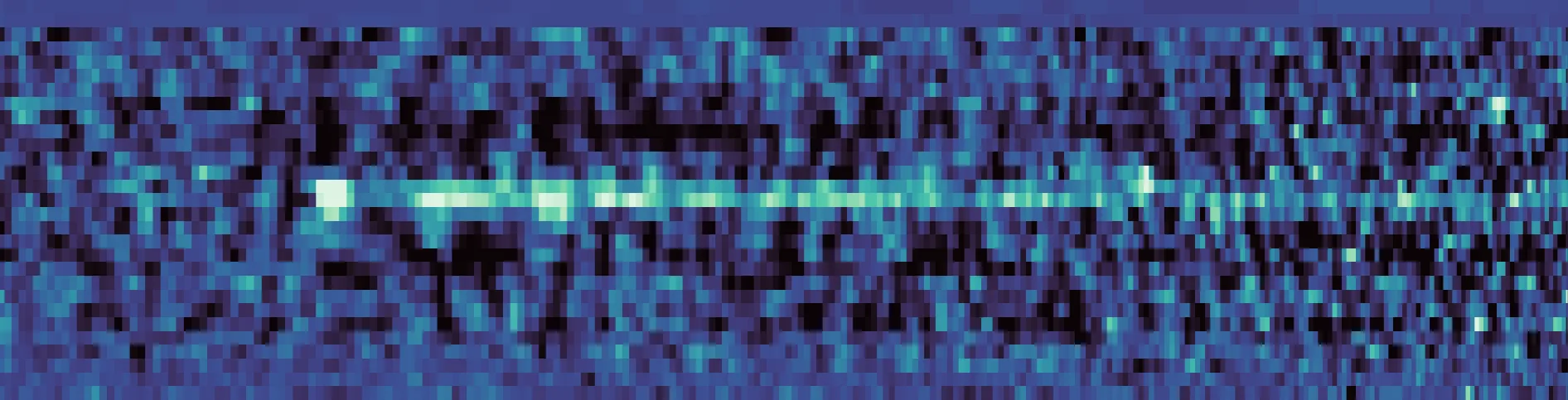
Light from a distant galaxy traveled to us for 13.4 billion years. The James Webb Space Telescope caught it and split it into colors. The spectrum shows a bright hydrogen line, like a fingerprint saying that galaxy GS-z13-1-LA is actively forming stars.
Young hot stars inside the galaxy act like floodlights. They emit ultraviolet rays that strip electrons from surrounding hydrogen atoms. This creates a transparent bubble around the galaxy — a region where the neutral hydrogen fog has already cleared. According to calculations, the bubble is about 0.2 megaparsecs across (roughly 650,000 light-years).
Near GS-z13-1-LA, astronomers spotted 16 more candidate galaxies. Together, they might create an even larger bubble. If so, the galaxy would need less effort, but its "floodlight" still works at the edge of what's possible. This is an important sign: just 330 million years after the big bang, the first galaxies began clearing the universe of fog. Thus ended the dark ages — the era when space was opaque to ultraviolet light.
The James Webb Space Telescope looks into the past like a time machine. Each such distant object is a window into the era when the first lights turned on. GS-z13-1-LA is one of the earliest beacons we've been able to make out.
Light from galaxy GS-z13-1-LA traveled to us for 13.4 billion years — almost the entire age of the universe. When that light set off, Earth didn't exist yet.
In the series Star Trek, ships explore nebulae where gas is ionized by starlight. A similar process, but on the scale of the entire early universe, is described in this work.