Alex J. Cameron

4 articles · 30 co-authors · latest: 2026-04-10
3,351 citations · h-index 31 · 112 papersData: Semantic Scholar

We have retold 4 papers by this author. most often about: nebula, metallicity, turbulence. 30 co-authors across our retellings.

Links in the knowledge graph
Galaxies2026-02-031 minarXiv:2602.02949express
Turbulence in Space: How Clouds Change the Chemistry of Stars
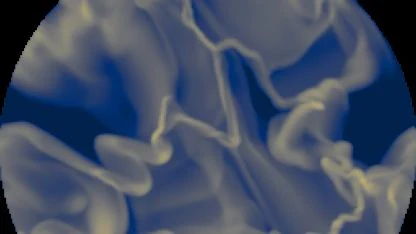
A boiling cauldron: steam rises, water churns, and the temperature varies from point to point. So it is in space: the gas clouds around young stars are not smooth spheres but a seething mixture with vortices and density fluctuations. Astronomers long treated such clouds as homogeneous, but this simplification can skew conclusions.
Galaxies2026-03-131 minarXiv:2603.13471express
Cosmic Neon Sign: Gas Glows Brighter Than Stars
A cosmic neon sign lit up in an incredibly distant galaxy: almost all its light comes from hot gas, and the stars are lost in this glow. The James Webb telescope recorded that the gas, a mix of hydrogen and helium, is so heated that it glows on its own.
Galaxies2026-03-191 minarXiv:2603.18775express
Galaxy Lit Up Just 330 Million Years After the Big Bang
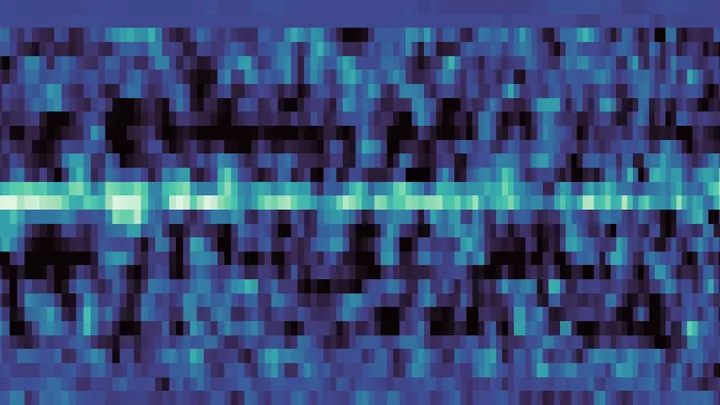
Light from a distant galaxy traveled to us for 13.4 billion years. The James Webb Space Telescope caught it and split it into colors. The spectrum shows a bright hydrogen line, like a fingerprint saying that galaxy GS-z13-1-LA is actively forming stars. Young hot stars inside the galaxy act like floodlights.
Galaxies2026-04-102 minarXiv:2604.09399express
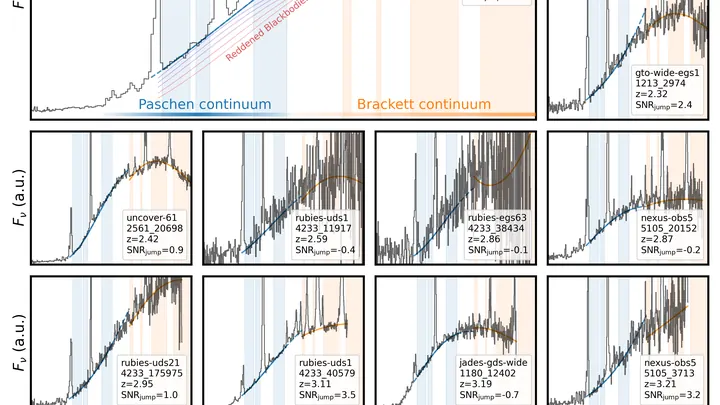
Little Red Dots: The Light That Gives Away Their Secret
Out in the distant cosmos, there are galaxies that astronomers have nicknamed 'little red dots': in images they appear as tiny reddish specks, even though they are mind-bogglingly far away. Their light looks red not because they are cold, but because the expanding universe stretches light waves.