Sandro Tacchella

7 articles · 30 co-authors · latest: 2026-07-22
12,811 citations · h-index 64 · 415 papersData: Semantic Scholar

We have retold 7 papers by this author. 2 of them with a full read. most often about: Hubble Space Telescope, galaxy, expansion of the universe. 30 co-authors across our retellings.

Links in the knowledge graph
Galaxies2026-01-131 minarXiv:2601.08693express
Galaxies2026-03-191 minarXiv:2603.18775express
Galaxy Lit Up Just 330 Million Years After the Big Bang
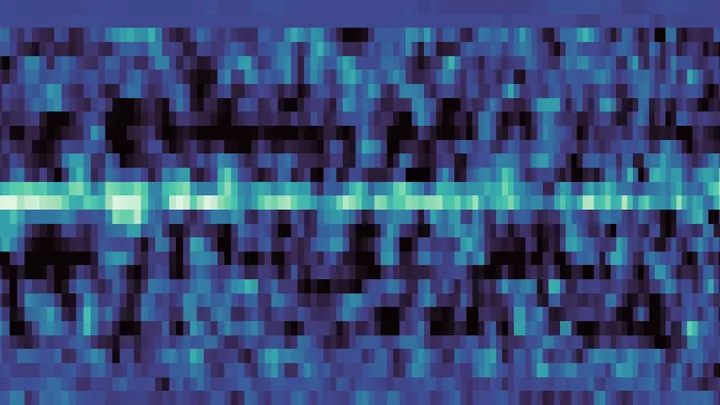
Light from a distant galaxy traveled to us for 13.4 billion years. The James Webb Space Telescope caught it and split it into colors. The spectrum shows a bright hydrogen line, like a fingerprint saying that galaxy GS-z13-1-LA is actively forming stars. Young hot stars inside the galaxy act like floodlights.
Galaxies2026-03-201 minarXiv:2603.20362express
Instrumentation2026-05-172 minarXiv:2605.17546express
How to Assemble a Galaxy in One Step
An artist paints a portrait stroke by stroke, and then someone offers them a flash camera — one click, and it's done. That's roughly the shift from multi-step models to one-step models in generating images of galaxies. Typical neural networks for image synthesis work like a watercolorist: they apply a layer, blur it, add details.
Galaxies2026-06-011 minarXiv:2606.02685express
Webb Telescope Discovered a Cosmic Dust Mill
Using the James Webb telescope, astronomers peered into an ancient quasar — the dazzling heart of a galaxy where a giant black hole sucks in matter. It turns out it doesn't just destroy, but also creates: its powerful outflows and shock waves act like a true cosmic mill.
Galaxies2026-07-063 minarXiv:2607.05509
Globular Clusters: A Palimpsest of Ancient Gas Clouds
Imagine an ancient manuscript, where a new story is written over an old text. Over time, the upper layer wears thin, and lines of the past show through. That’s exactly how globular clusters, the oldest stellar systems in the Universe, are structured, like a palimpsest.
Galaxies2026-07-223 minarXiv:2607.20606
Galactic Exhalation: Neutral Gas Leaves Massive Galaxies in the Early Universe
The JWST spectrograph caught a barely perceptible dip in the spectrum of a distant galaxy — two lines, like shadows cast by cold gas. These are the sodium lines, the very yellow light of streetlamps. Here, at the edge of the visible Universe, they betray the slow exhalation of a galaxy returning matter to space.