Andrew J. Bunker

6 articles · 30 co-authors · latest: 2026-07-25
14,607 citations · h-index 65 · 550 papersData: Semantic Scholar

We have retold 6 papers by this author. 2 of them with a full read. most often about: Hubble Space Telescope, galaxy, expansion of the universe. 30 co-authors across our retellings.

Links in the knowledge graph
Galaxies2026-01-131 minarXiv:2601.08693express
Galaxies2026-03-191 minarXiv:2603.18775express
Galaxy Lit Up Just 330 Million Years After the Big Bang
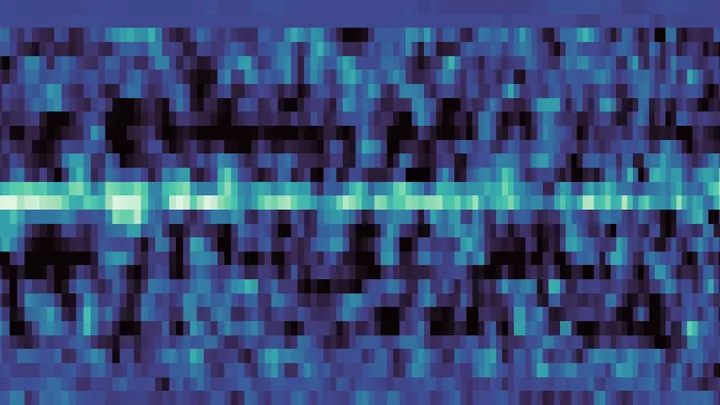
Light from a distant galaxy traveled to us for 13.4 billion years. The James Webb Space Telescope caught it and split it into colors. The spectrum shows a bright hydrogen line, like a fingerprint saying that galaxy GS-z13-1-LA is actively forming stars. Young hot stars inside the galaxy act like floodlights.
Galaxies2026-03-201 minarXiv:2603.20362express
Galaxies2026-06-294 minarXiv:2606.30750
High Energy2026-07-212 minarXiv:2607.18972express
A Bright Flash from the Universe's Youth
The hunter of ancient light, the James Webb Telescope, aimed its mirrors at a tiny patch of sky and caught a strange beacon. The object, with the working name beacon_1420-$$5253_{4770}$$, flashed and faded. At first, it was logged as a candidate for the most distant galaxy, as if we were seeing it just 300 million years after the big bang.
Galaxies2026-07-253 minarXiv:2607.22966
A Chick in a Dust Shell: How a Red Quasar Emerges
In the deep field of JWST, among thousands of galaxies, astronomers zoomed in on the source JADES-GS 209777 – and saw a cosmic chick. Its "shell" is a thick cocoon of gas and cosmic dust that long hid the growing black hole at its center. But at a redshift of 3,711 (1,8 billion years after the Big Bang), the shell began to crack.