Hunting Invisible Particles by Their Tracks in the Spectrum express
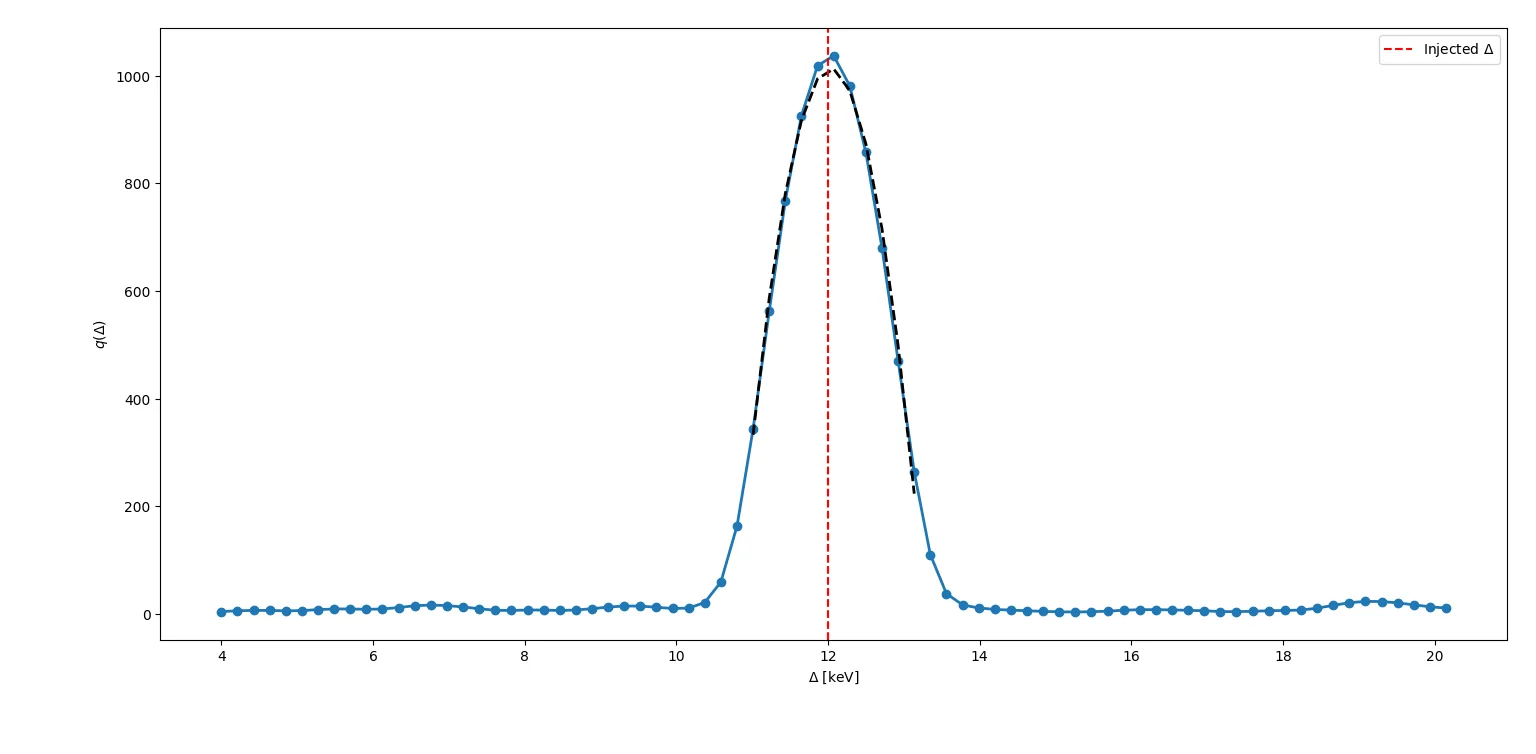
A gamma-ray spectrum looks like a picket fence: each line is the precise energy a nucleus released as a photon. But sometimes ghosts appear in that fence — faint lines shifted by the same amount from the main ones. Such a shift could mean that part of the energy went into creating a light particle we cannot yet see directly.
The authors suggest not staring at individual anomalies but looking for spectroscopic combs: several satellite lines offset from their parents by the same energy step Δ. If such combs show up for different target nuclei, that would be strong evidence for a new particle, not just random noise or a detector artifact.
The experiment requires high-resolution germanium detectors that can tell very close lines apart. Choosing the right target also matters: nuclei with simple structures produce fewer false candidates. This approach could open the door to detecting particles that interact weakly with ordinary matter but are born in nuclear transitions.
Even a single gamma line can be narrower than the gap between neighboring lines — which is why germanium detectors are cooled with liquid nitrogen, so thermal noise doesn't smear the spectrum.
In the TV series Fringe, scientists searched spectra for signals from parallel universes: there, too, they had to separate faint shifts from noise.