How to Hear the Faintest Signal express
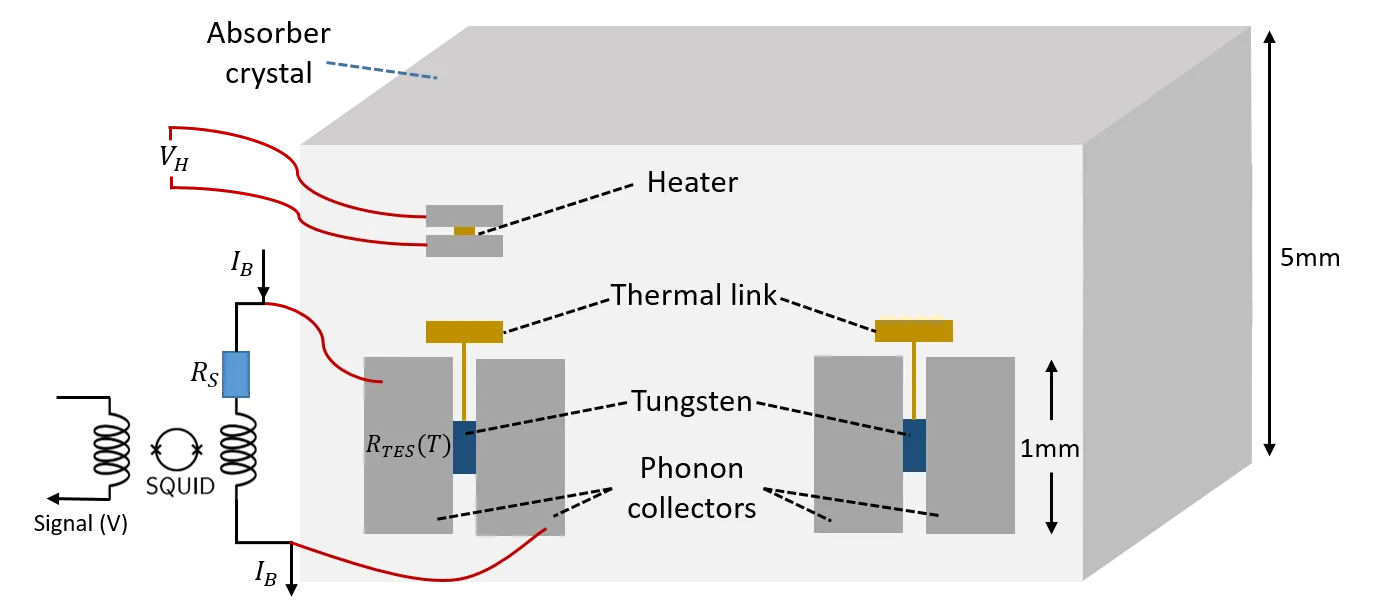
A detector that hunts for rare particles is like an ear trying to catch a whisper in a noisy room. The quieter the signal, the harder it is to tell apart from random noise. In the NUCLEUS experiment, such detectors, cryogenic calorimeters, are cooled to near absolute zero so they can pick up even a faint pulse of heat from a single particle.
To sharpen the instrument's hearing, the scientists used two tricks. First, they swept through many settings and found the one where the signal comes through most clearly. Then they combined readings from two different channels of the same detector, as if listening to a conversation with both ears instead of one. Processing the two signals together helps filter out noise and spot quieter events.
Such a low threshold is a record for detectors based on calcium tungstate. This means that the upcoming NUCLEUS run will be able to search for particles that were previously lost in the noise. Among them, there may be traces of dark matter — the invisible substance that makes up most of the universe.
The cryogenic detector operates at temperatures below -270°C — colder than the surface of Pluto.