Rare events are phenomena that occur very infrequently, making them difficult to detect and study. In physics and astronomy, these can range from the decay of a single atomic nucleus to the collision of two neutron stars or the passage of a gravitational wave. Because they happen so rarely, scientists must design experiments with extremely long observationtimes, large detector volumes, or clever signal-processing techniques to catch them.
History
The study of rare events has a long history, from the discovery of radioactivity in the late 19th century to the detection of neutrinos from the Sun in the 1960s, which required enormous underground detectors to observe just a handful of events per day.
How it works
Detecting rare events often involves building detectors with very low background noise, so that a single genuine event stands out from the constant stream of false signals. Techniques include shielding detectors from cosmic rays, using coincidence detection (requiring multiple detectors to trigger simultaneously), and employing sophisticated statistical methods to identify anomalies. In some cases, quantum techniques can be used to amplify weak signals or filter out noise, making rare events more visible.
In practice
Rare event detection is crucial in fields like particle physics (searching for dark matter or neutrinoless double beta decay), gravitational wave astronomy (detecting mergers of black holes and neutron stars), and even in quantum computing, where identifying rare errors is essential for building reliable systems.
Fun fact
Some rare event searches, like those for dark matter particles, are conducted in deep underground laboratories, such as the Sanford Underground Research Facility in South Dakota, which is located nearly a mile beneath the Earth's surface to shield detectors from cosmic radiation.
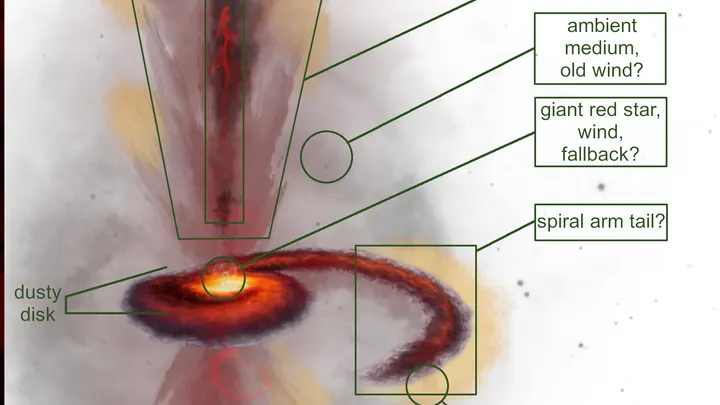
In active galactic nuclei, supermassive black holes are surrounded by a dense ring of dust that acts like a curtain: it hides everything happening at the center. If a star ventures too close to the black hole, tidal forces tear it apart, and the resulting flare is usually visible in optical and X-ray light.
Buried in Antarctic ice, there's a detector the size of a cubic kilometer. It doesn't catch light but ghostly particles — neutrinos. Yet sometimes, a different beast might flash through: a pair of muons born together and flying apart in a wide fan. No known particle of ordinary matter can paint that pattern.
Picking out a single faulty microchip from a million, without any clue what the fault looks like, is a classic needle-in-a-haystack problem. A classical computer would test each chip one by one.
Two stars circle each other like dancers in a slow waltz. This dance is not eternal: the partners gradually draw closer until they collide and merge into a single entity. At that very moment, a red nova is born — a flash that lights up the sky for a few weeks, then slowly fades, enveloped in a dense cloud of dust.
Imagine a tiny coin hidden inside a perfect safe, but the walls are so thin that the coin sometimes slips right through, leaving a barely audible sound. Axions are like those coins — except instead of metal, they're particles, and instead of a safe, they're ordinary matter. They barely notice obstacles, making them incredibly hard to catch directly.
A multitude of atoms can act like a synchronized orchestra: if each emits light in unison with the rest, the flash becomes many times brighter. This is superradiance — a phenomenon well studied in the lab, but almost never sought in space. Now astrophysicists suspect that such collective 'notes' also play out in interstellar space.
In the ocean, sometimes a huge solitary wave appears out of nowhere and then vanishes. Such rogue waves are rare but dangerous. Similar rare and intense spikes occur in other systems, from financial markets to lasers. The problem is that they are hard to predict, let alone trigger on demand.
In the center of galaxy J2344 five years ago, a black hole tore apart a star, and now scorching gas bubbles there — a cosmic “stew pot”. Every 12 hours, giant X-ray bubbles rise in it, and on their ascent, super-hot splashes lasting 5–30 minutes appear.
When a massive star runs out of fuel, it collapses and explodes as a supernova. An instant before the catastrophe, neutrinos — ghostly particles — burst from the core. They rush through the star and interstellar space like the smell of smoke, heralding a fire that will only ignite minutes or even days later.
Detecting a faint signal against a noise background is like trying to hear a distant bell in a storm. Ordinary amplification only makes the din more deafening. Quantum error correction solves the problem in an unexpected way.
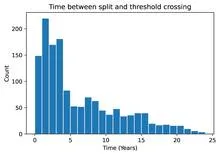
In 1997, the Pacific Ocean warmed so much that corals bleached from Indonesia to the Galápagos, and floods and droughts swept across five continents. Such events, which climate scientists call extreme El Niños, occur every few decades, and to understand how often they will arrive in the future, we need thousands of years of observations.
The galaxy is like a city at night: most windows shine steadily, but sometimes a skyscraper lights up all its lights and then goes dark. Just like that, according to a new hypothesis about planets around alien stars (exoplanet), we might first notice another civilization — by a short but blinding flash that could mark its demise.
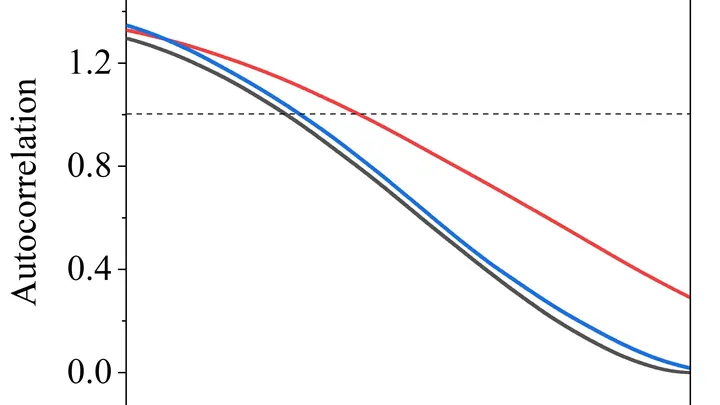
The ocean doesn't always stick to the same schedule. Sometimes the warm El Niño current strengthens, sometimes it weakens, and each regime dictates its own reaction speed to the past. These hidden regimes are like shifts in currents that remember their path with different depths.