Cosmic Blender: How Electrons Outrun Protons express
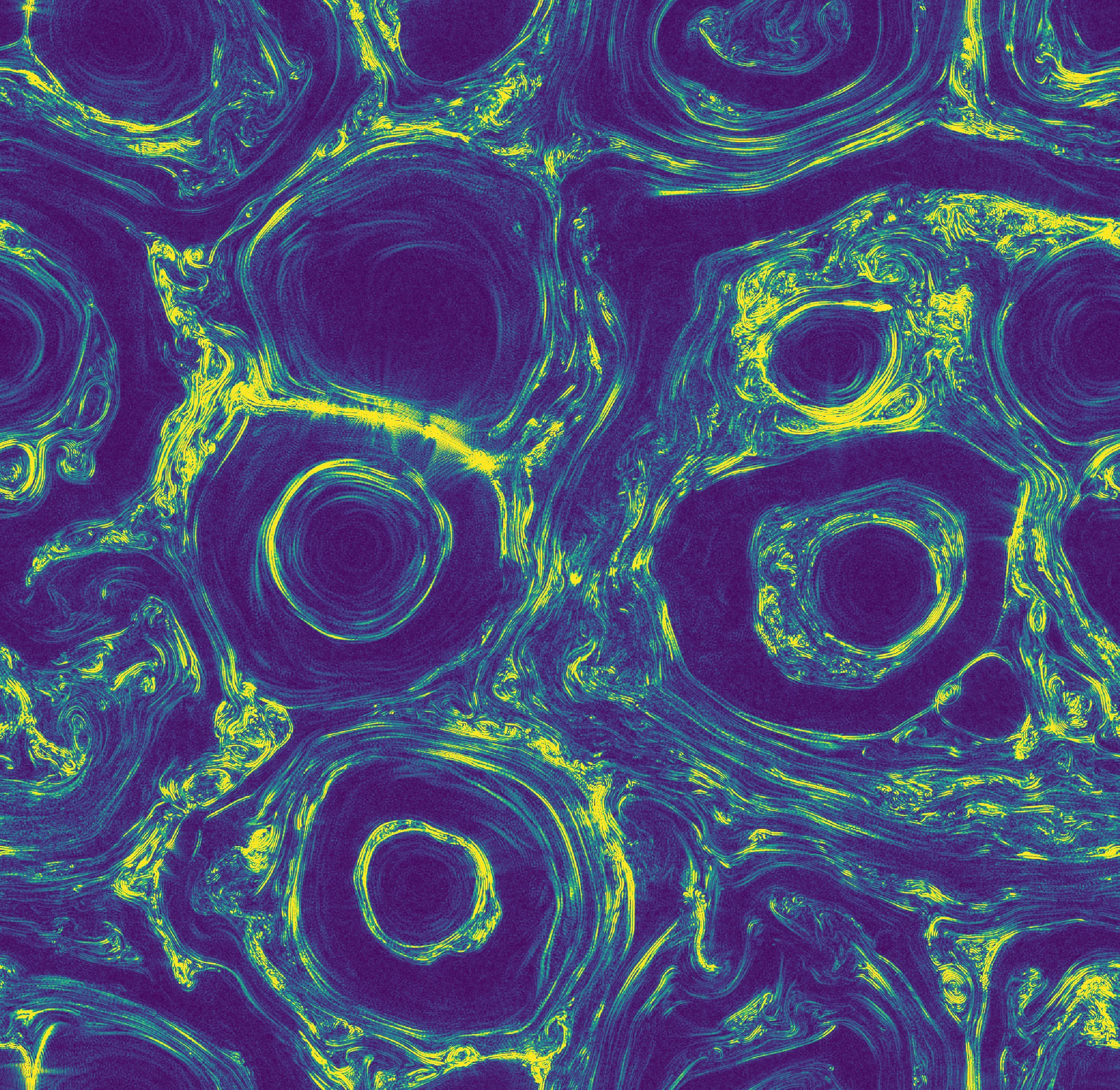
Near black holes and neutron stars, plasma churns like water in a boiling kettle. But this 'kettle' has no walls — only magnetic fields that twist and tear. At the tears, thin sheets form where magnetic field lines reconnect, giving particles a kick like a surfer catching a wave.
Until now, such simulations treated electrons and protons as having the same mass — simpler, but far from reality. This new work is the first to account for the real masses: a proton is 1836 times heavier than an electron. They also added positrons, the antimatter counterparts of electrons, which are born in the hot plasma. It turns out that acceleration doesn't happen just anywhere; it occurs in thin current sheets where the electric field aligns with the particle's velocity. It's like having a tailwind blowing exactly at a runner's back.
This means that in the plasma jets from black holes, the jets, electrons shine brighter than previously thought. Telescopes see this glow, and now it can be linked more precisely to what happens right at the event horizon.
In the plasma near a black hole, an electron accelerates faster than a proton because it is 1836 times lighter, like a cyclist versus a truck on the same hill.