A Giant Cosmic Ring express
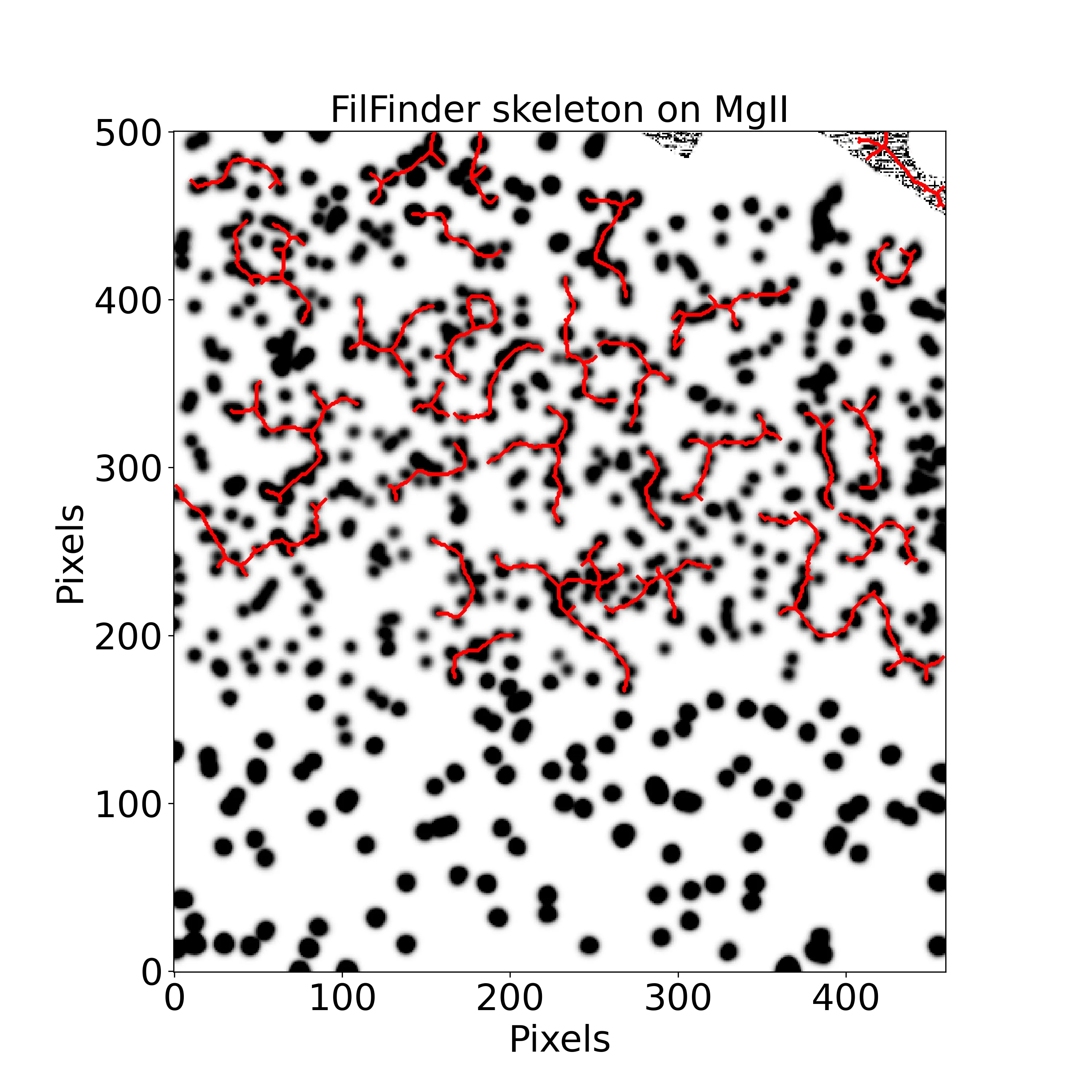
The night sky sometimes throws up riddles that take your breath away. One of them is a ring of galaxies stretching across a third of the horizon. Astronomers have named it the “Giant Ring on the Sky”: a cluster of galaxies stretched into a thin filament and closed into a circle about 400 megaparsecs in diameter. If you lined up 1300 Milky Ways end to end, you'd get roughly the same length.
The ring lies 7 billion light-years away, in a region where two other super-large structures, the Giant Arc and the Big Ring, had already been spotted. The new formation seems to embrace them, linking scattered arcs into a single outline. The left side of the ring splits into two: one path is more elongated, the other almost perfectly circular. It looks like two ellipses superimposed and seen at a slight angle.
Such rings force us to reconsider conventional ideas about the distribution of matter. The standard model says that matter is spread evenly, without sharp contrasts on large scales. But these structures remind us that the cosmic web from which the universe is woven still holds many surprises. And that ring spanning a third of the horizon is just one of its patterns that we have yet to understand.
The diameter of this ring is about 400 megaparsecs. If you were to fly through it at the speed of light, the journey would take more than a billion years.
Such superstructures echo the “Ring” from Larry Niven's novels — except there it was artificial, while here it is crafted by nature itself.