How Chaos Governs the Chemistry of Giants express
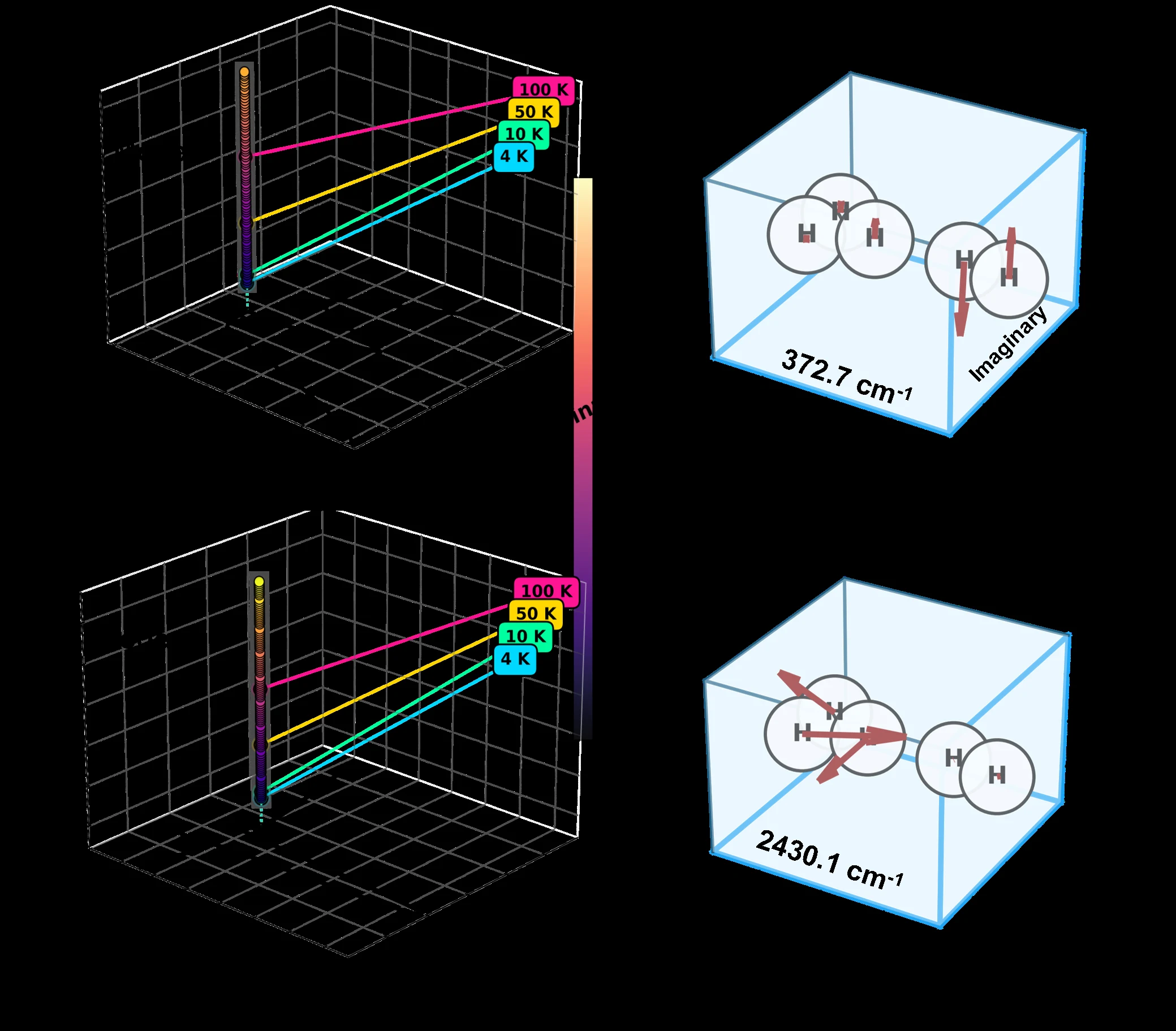
A chemical reaction resembles passing through a turnstile: a crowd creates chaos and gets stuck, while an orderly line moves. In the quantum world, however, when the jostling subsides, the barrier can become ghostly — a particle passes through it as if the turnstile has vanished. This tunneling governs the chemistry of giant planets.
Research has shown: in the transition state, when molecules are about to transform, chaos quiets down. It is then that hydrogen ions seep through barriers, forming molecules critical for Jupiter's atmosphere.
Scientists introduced a "fragility index": it predicts which molecular vibrations return chaos and break the tunnel. The most surprising part: without this brief lull, even the strongest collisions would not trigger the reaction. Thus, in the cold depths of Jupiter, it is the suppression of chaos, not heat, that ignites the auroras.
The H3+ ion is not just abundant in Jupiter's atmosphere — it ignites its auroras.