Pulsars as Dark Matter Detectors: First Limits on Ultralight Particles ✎ express
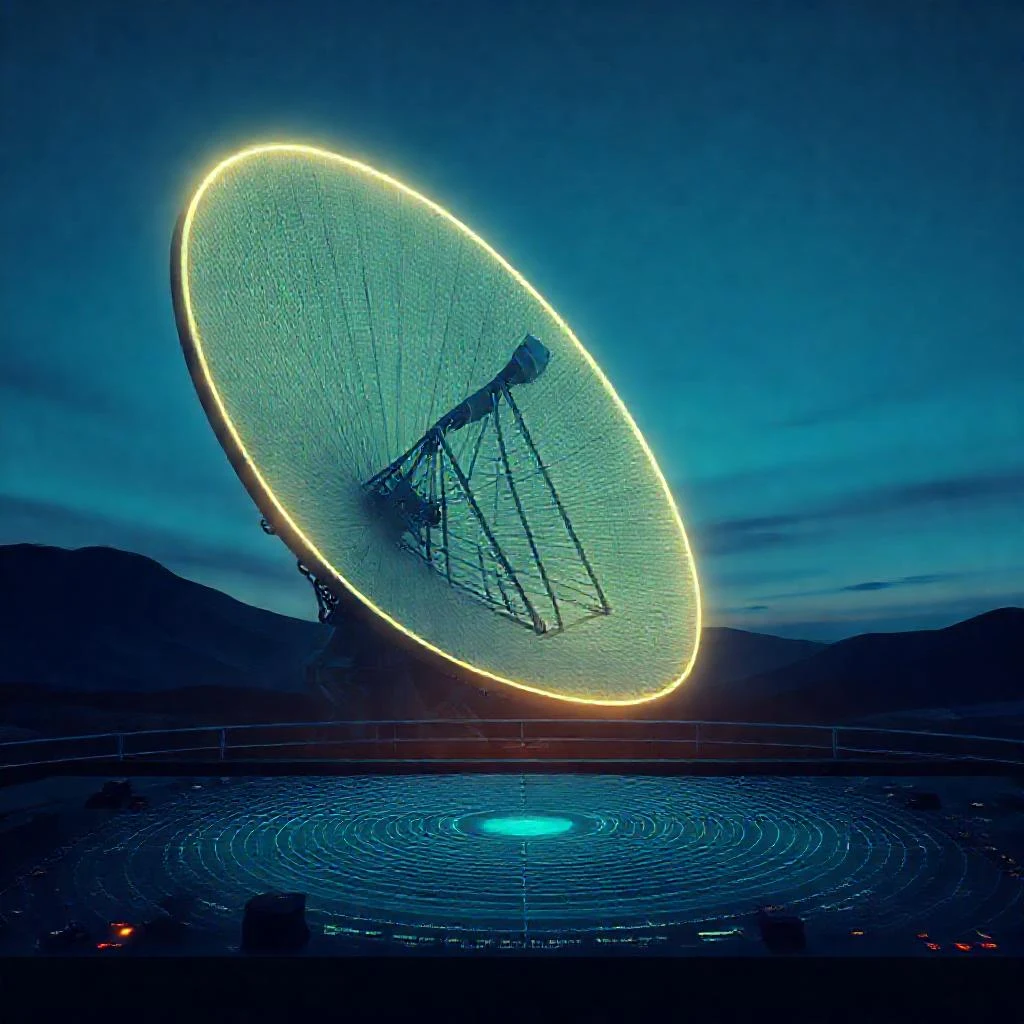
The universe is permeated by an invisible substance, dark matter, whose gravitational influence is obvious, but whose composition remains a mystery. One hypothesis suggests it consists of ultralight particles so light that they exhibit wave-like behavior, forming a kind of cosmic ripple. To detect this ripple, scientists turned to the most stable natural "clocks"—pulsars.
Pulsars are rapidly spinning neutron stars, the remnants of massive stars compressed to city size. Their radio beams, like lighthouse beams, regularly reach Earth, and their periodicity rivals atomic clocks in precision. If a wave of dark matter passed through the space between us and a pulsar, it would cause tiny oscillations in the gravitational field, inevitably affecting the arrival times of the pulses — the rhythm would falter.
Analysis of years of observational data from a network of pulsars found no such deviations. However, this is not a failure but an important step: for the first time, upper limits have been set on the interaction for two specific candidates — ultralight particles (axions or axion-like particles) and dark photons (hypothetical carriers of a new interaction in the dark matter sector).
Ultralight dark matter particles are billions of times lighter than an electron: their mass is so small that their behavior resembles waves more than familiar particles.