A spinning wormhole rings like a bell ✛ ✎ ✦
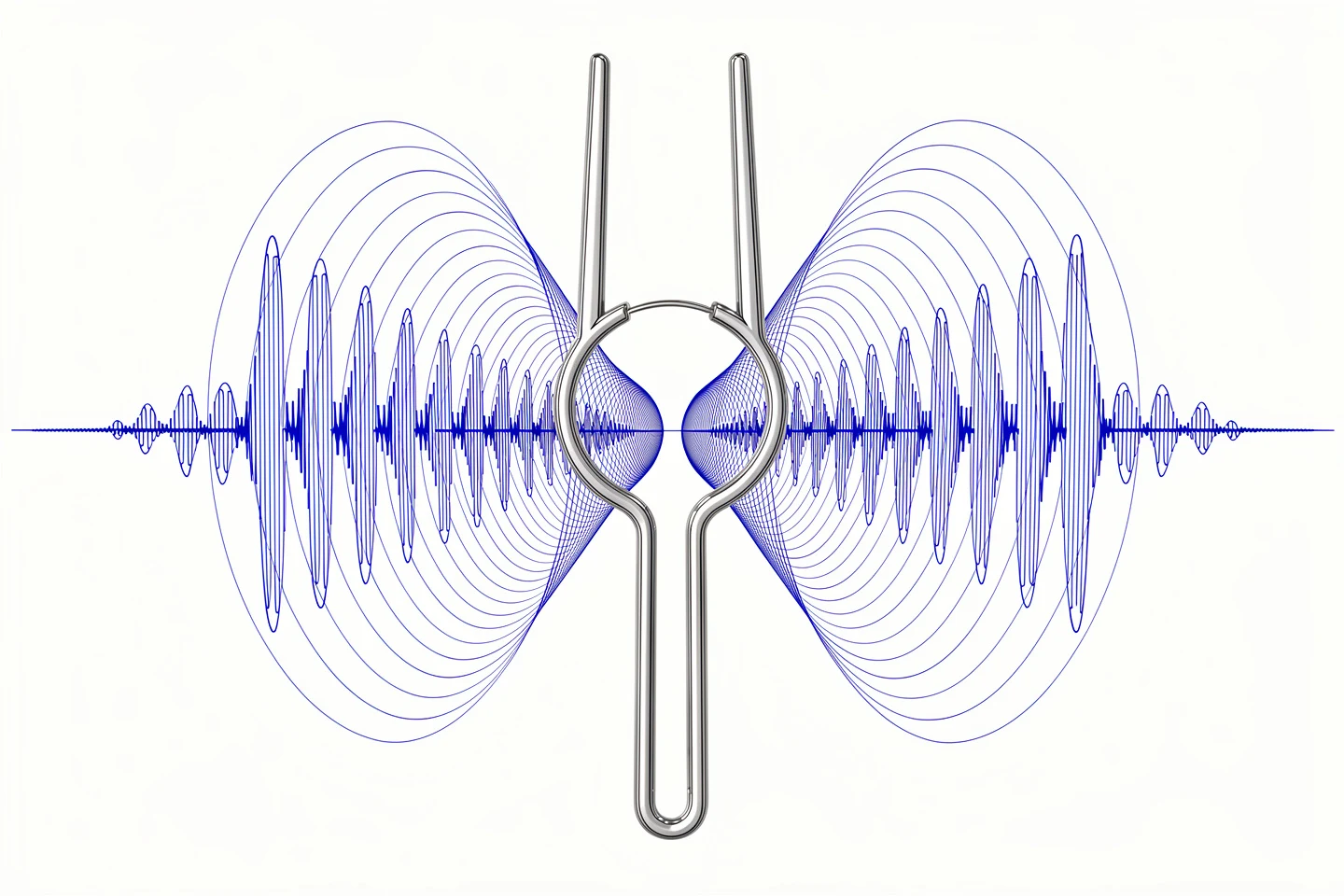
A wormhole is a tunnel through space, allowed by the theory of gravity. If spun, it begins to ring like a bell. The effect was predicted based on the work of Einstein, and developed by Wheeler and Thorne: exotic matter (akin to dark energy) holds the walls, and rotation creates resonance — waves bounce between the barriers of curved spacetime and amplify each other. Thus a unique 'ringing' is born: instead of a smooth spectrum, sharp spectral peaks appear — overtones that reveal the shape of the invisible object. Computer simulations revealed a paradox: the same equations describe excited states of atomic nuclei. The cosmic bell and the microworld ring on the same note. To distinguish such a wormhole from a black hole, its surrounding gas disk helps: radiation that dives into the throat does not disappear forever but returns with a gravitational redshift. Sensitive instruments, such as those aboard the JWST telescope, can already attempt to catch this otherworldly ring.
The same mathematical formulas that describe a wormhole's ringing also govern excited states of atomic nuclei — physics is unified from the microworld to the cosmos.
In fiction, traversable wormholes are familiar: in 'Interstellar', a tunnel like this allows travel to another galaxy, and in 'Contact', it opens a path to distant civilizations.