Lunar detector to hear ancient black holes express
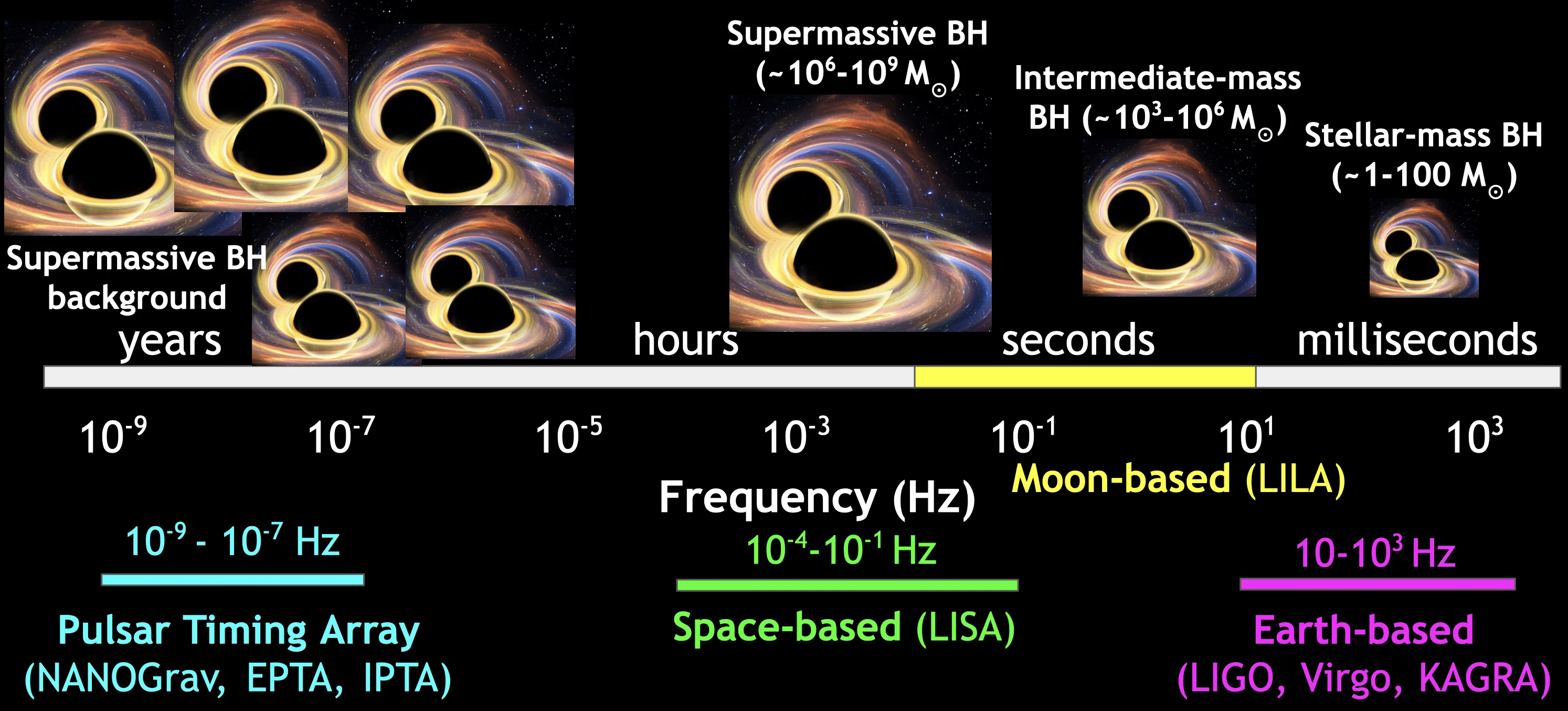
Gravitational waves are ripples in the fabric of space, like circles on water from a thrown stone. On Earth, they are drowned out by traffic, tides, and earthquakes, like a storm beating on a lake, making it impossible to notice faint splashes. The LILA project moves the detector to the Moon, where windless silence reigns. There, even the weakest wave from merging black holes will show up clearly.
The instrument targets intermediate-mass black holes — objects from hundreds to millions of suns, which scientists have yet to see. Their collisions will tell how galaxies grew after the Big Bang. LILA will sense the hum of an upcoming merger months before the finale and send a signal to telescopes around the world. For the first time, the birth of a supermassive black hole will be seen in full detail: from the trembling of space to flashes of light and a shower of particles.
Lunar dust is sharp as glass and scratches mirrors, so engineers designed protective electrostatic shields and even mini cleaning robots.
Sci-fi authors like Arthur C. Clarke long sent observatories to the Moon. LILA fulfills that dream, but captures not light, but the trembling of space itself.