Giant Charged Objects: A Dead End for Dark Energy? ✎ express
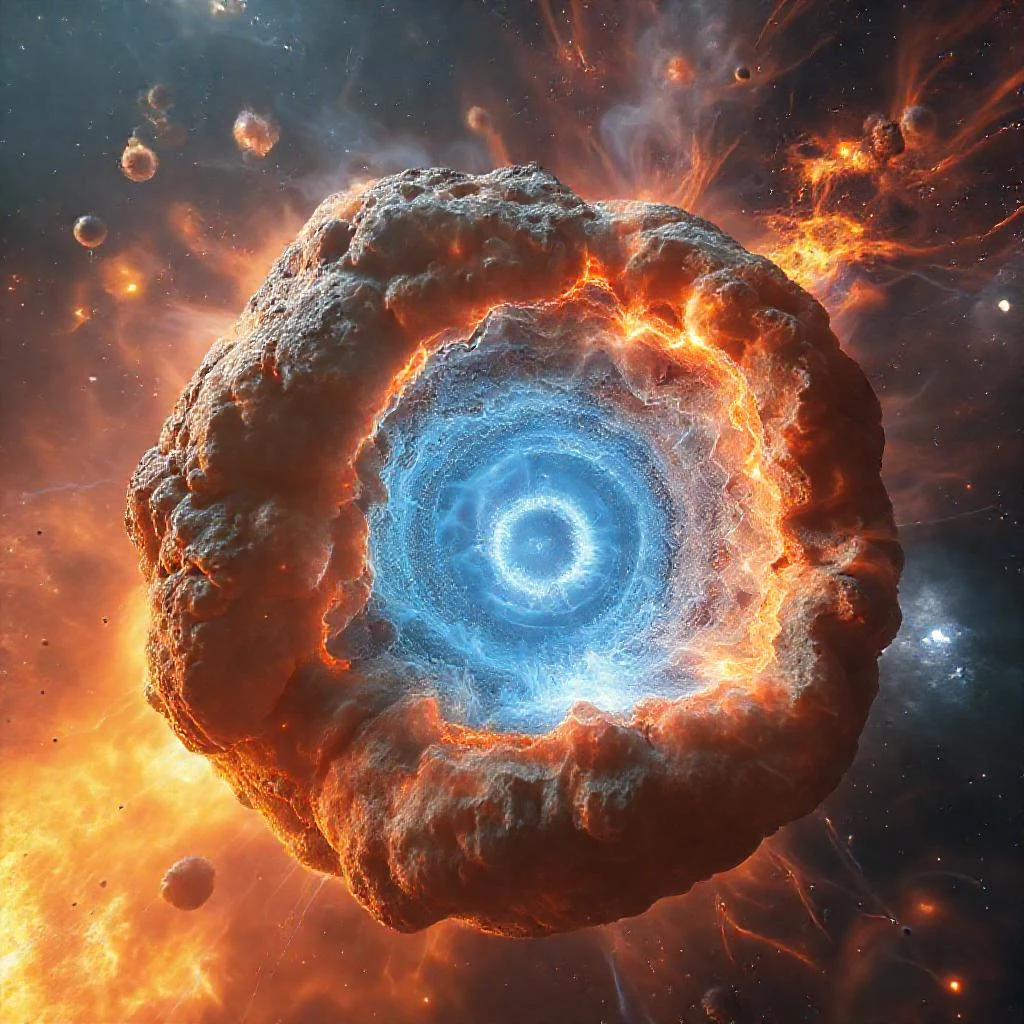
Just after the Big Bang, clumps weighing as much as a trillion Suns and with an electric charge of colossal strength, like trillions of electrified balloons, could have drifted through space. Their mutual repulsion might have pushed galaxies apart, masquerading as dark energy and accelerating the expansion of the Universe. But calculations put a nail in that idea's coffin.
Intergalactic plasma, like a wet palm, instantly wipes away their static. Even if the astrons survived, their repulsion during the Universe's expansion drops many times faster than the density of ordinary matter, and today it's imperceptible. Worse still: with such an enormous charge, the event horizon vanishes — a black hole turns into a 'naked singularity,' where physics breaks down. Searches via Lyman-alpha lines, pioneered by Theodore Lyman, and observations by JWST have found no evidence. Even as clumps of dark matter, astrons don't save the model — the homogeneity of the Universe leaves no room for their operation. Dark energy still defies simple explanations.
At a distance of a million light-years, the electric repulsion between two astrons is comparable to the weight of Mount Everest — enough to accelerate them to a noticeable fraction of the speed of light.