How Super-Strong Light Protects an Atom from Destruction express
A child on a swing: too strong a push and they fly off. Roughly this is how powerful light tears electrons out of an atom. It would seem that the stronger the push, the more certain the destruction. But in the quantum world it is different: when the field strength crosses a certain threshold, the atom suddenly freezes. Its electron cloud stops dispersing and becomes more stable.
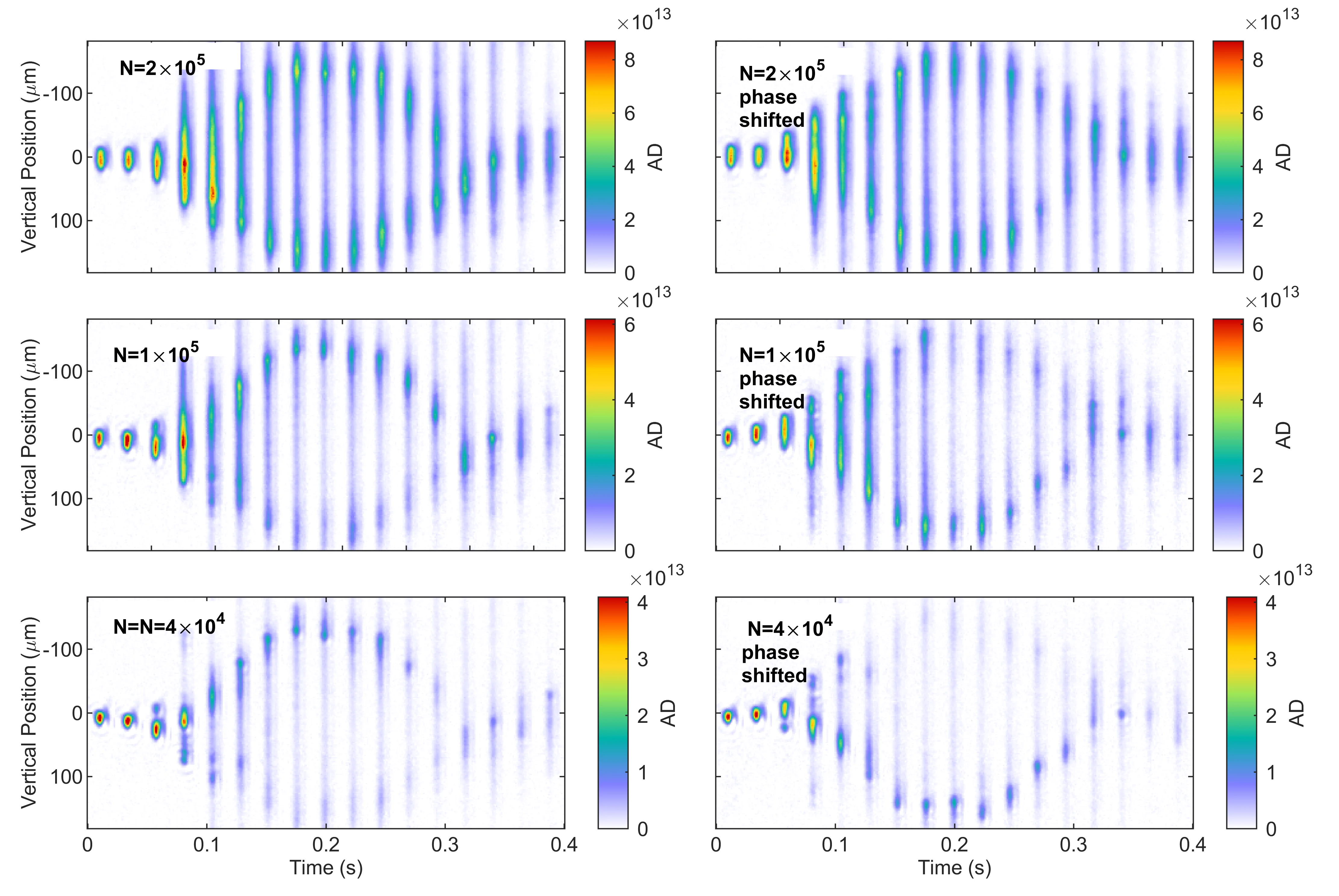
This strange behavior is called stabilization in a strong field. It was predicted back in the 1980s for atoms in laser pulses, but could not be tested: it required extreme powers. Now researchers have circumvented the obstacle by replacing real atoms with ultracold neutral atoms in an optical trap. In this way they simulated the behavior of electrons under the impact of an ultra-intense laser pulse. As a result, physicists directly saw how the wave function (the mathematical description of a particle's state) splits in space.
Surprisingly, the effect persisted even at very low field oscillation frequencies — comparable to the atom's own frequencies and below. Previously it was thought that stabilization required ultra-fast oscillations. The experiment showed that the protective mechanism kicks in over a much wider range of conditions than believed.
The result not only confirms a long-standing prediction of extreme quantum dynamics. It opens the way to studying phenomena that are currently inaccessible to direct laser experiments. Someday this may help us understand how matter behaves near black holes or at the birth of neutron stars — where fields reach unimaginable magnitudes. And then super-strong light, like a gentle push on a swing, will not destroy the atom but hold it in place.
The stabilization effect resembles a situation where a very strong wind does not tear off a roof but rather presses it down onto the house — due to pressure redistribution. In the quantum case, the "pressure" is created by interference of the electron's waves.
In Stanislaw Lem's novel "Solaris," the ocean of a thinking planet could stabilize the orbit of satellites with a force field — much in the same way a strong field stabilizes an atom.