Dark Stars and the Mystery of Red Dots ✛ ✎ ✦
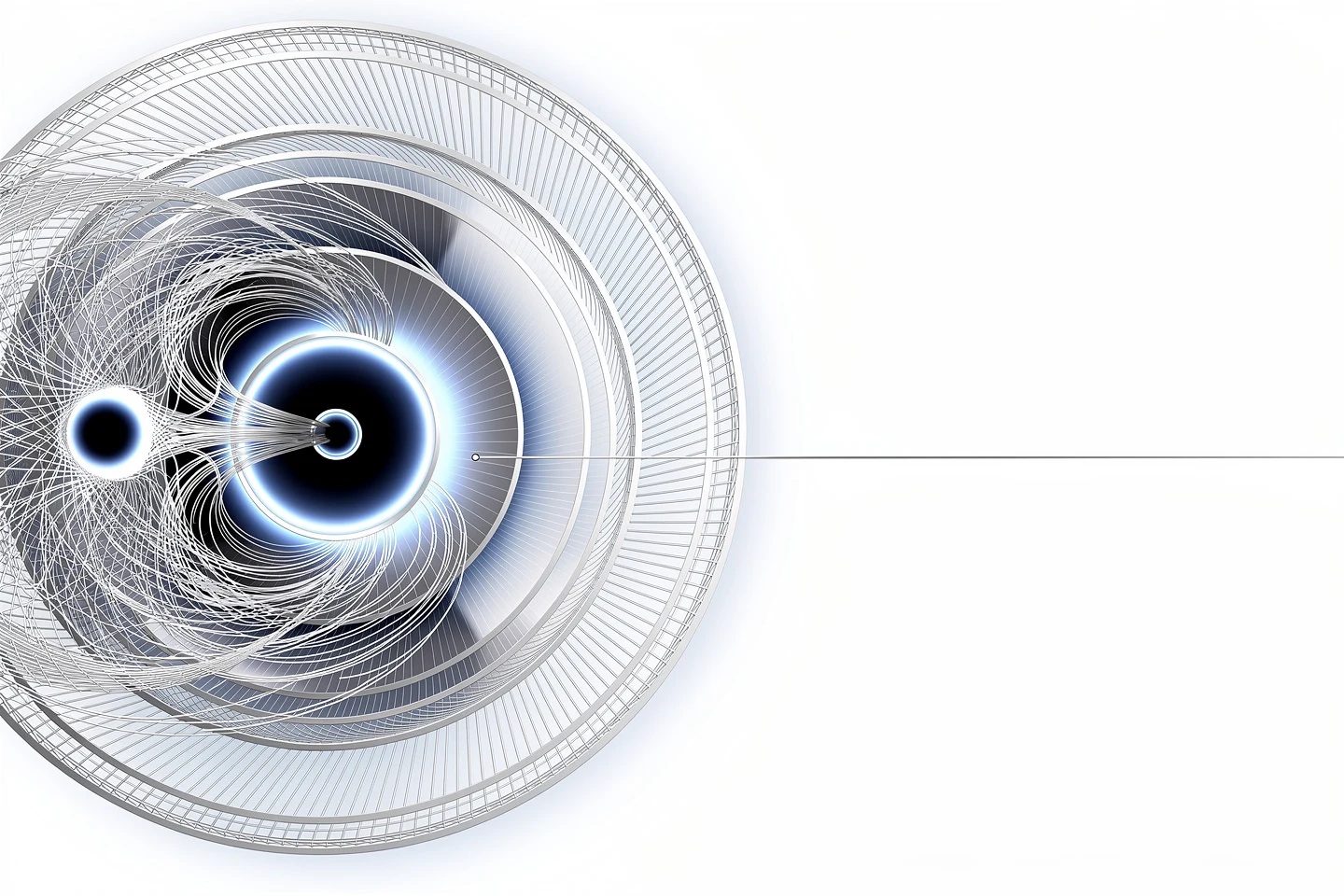
Soon after the expansion of the universe from the Big Bang, the James Webb spotted red dots — compact and dazzling, something no one expected. They are not stars, nor galaxies with quasars. The answer: dark stars — giants that live off dark matter particles (discovered by Vera Rubin) without hydrogen cooling. Losing stability (the threshold found by Chandrasekhar), the star squeezes its core into a black hole, while its shell, like a burst balloon, expands 25-fold and glows red — that's what we see.
This model eliminates the need for special conditions for the first black holes. Analyzing the spectroscopic breakdown and brightness of these shells will hint at dark matter's composition, and the birth of black holes will produce gravitational waves. It's mind-blowing: a star with a few solar masses puffs up to the size of Jupiter's orbit.
If a dark star took the Sun's place, its edge would almost reach Jupiter's orbit, and it would shine solely from invisible particles.