Graphene Makes Current Flow One Way express
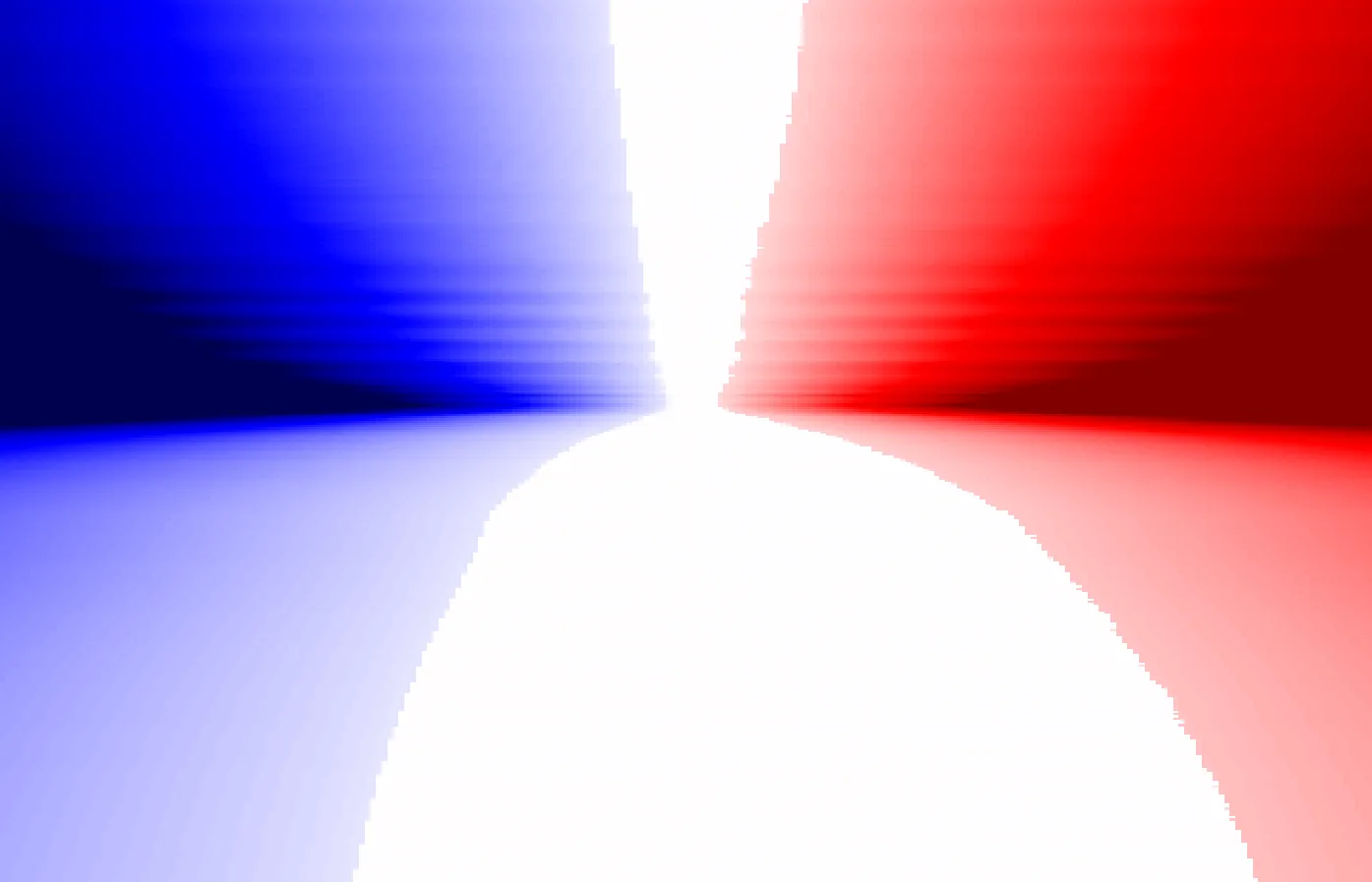
A switch that knows which way to let current flow. That's how a Josephson diode works — a superconducting bridge where current goes willingly in one direction but meets resistance in the other. In the new study, such a bridge was made from graphene — a sheet of carbon just one atom thick.
The effect appeared when a weak magnetic field was applied, just a few millitesla, roughly the field of a fridge magnet. Rectification worked best near the dark fringes of the interference pattern, similar to the ripples from two stones dropped into water. There, efficiency exceeded 20%—a serious number for superconducting electronics.
The theoretical model showed that long-range scattering potentials are to blame. Simply put, inhomogeneities in the graphene itself. Even in an ultra-clean two-dimensional material, tiny defects remain, and they break the mirror symmetry of the junction. Without this breaking, the diode effect would not occur.
The authors suggest that the asymmetry could be controlled with external gates — special electrodes that modify the electric field in the junction. Then the diode would become tunable: turn a knob, and current flows the other way.
Original abstract
as written by the authors arXiv:2606.17673
Josephson diodes are non-reciprocal superconducting devices characterized by different switching currents depending on the current flow direction. They recently attracted considerable theoretical and experimental attention, in view of their possible application as rectifying elements in the field of superconducting electronics, and as probes to investigate symmetry breaking mechanisms in mesoscopic systems. In this work, we show that graphene Josephson junctions provide rectification of supercurrent with an efficiency exceeding 20%. The effect appears applying a mT out-of-plane magnetic field and is enhanced close to the nodes of the Fraunhofer interference pattern. Our theoretical model identifies long-range scattering potentials in the junction as the symmetry-breaking mechanism, which yields supercurrent rectification in highly transparent junctions. While graphene stands as an ultra-clean transmission medium, our work shows that unavoidable residual disorder in a clean two-dimensional system is sufficient to promote this effect. Tailoring of the inversion (mirror) symmetry breaking could be obtained via proper design of external gates.
The Josephson junction is named after British physicist Brian Josephson, who predicted the effect in 1962 as a graduate student. He received the Nobel Prize just 11 years later.