An Underwater Hunter for Earth's Heat express
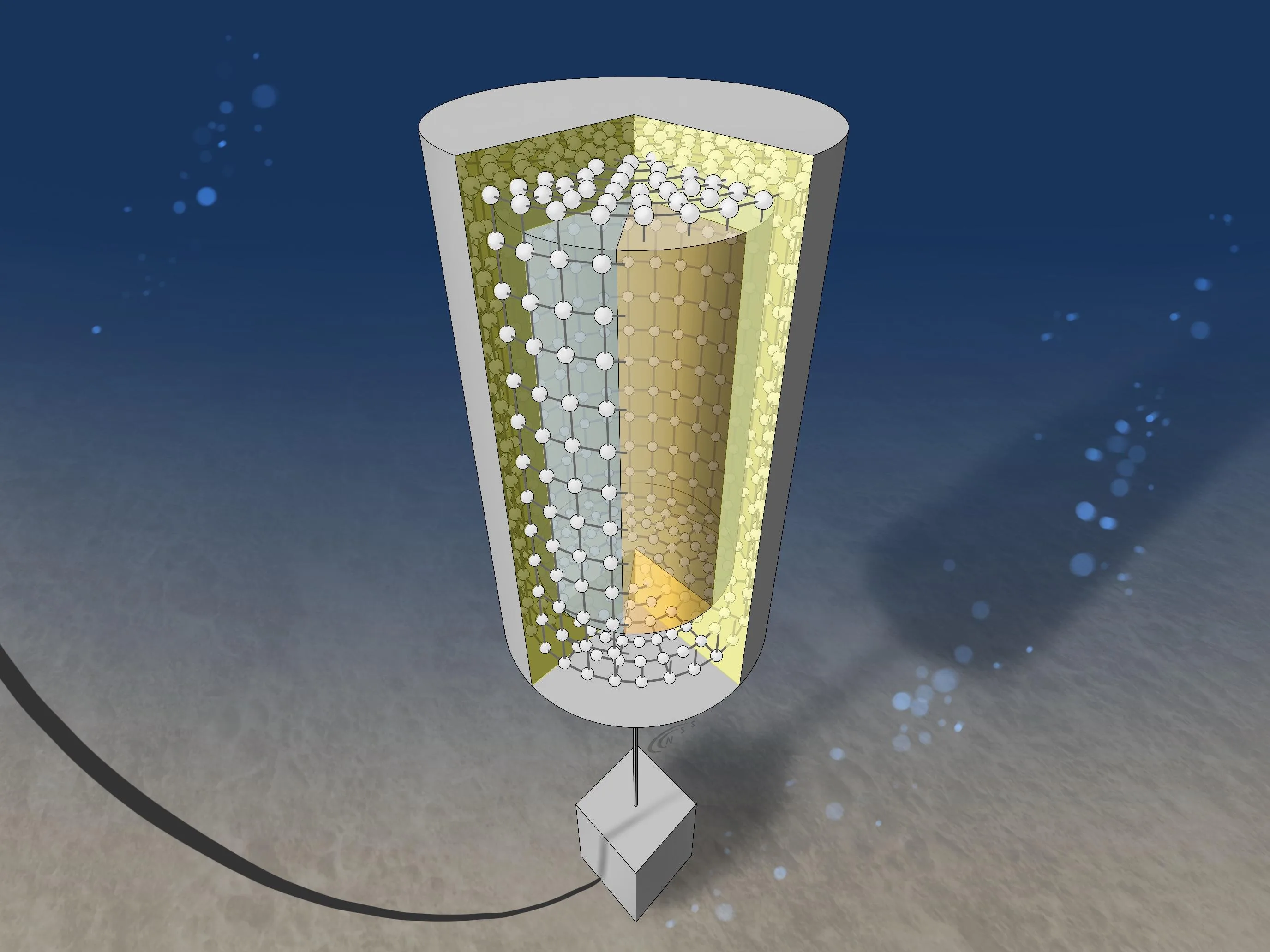
In the depths of the ocean, where light never reaches, a plan is taking shape to capture particles that barely interact with anything. Geoneutrinos, tiny messengers from the scorching mantle, are emitted during the decay of uranium and thorium. Their flux carries information about how much heat lies hidden beneath our feet.
Surface detectors suffer from a powerful background: the signal from the crust drowns out the faint voice of the mantle. The new instrument, submerged kilometers deep in the ocean, uses the water column as a shield. Calculations show that interference will drop by 50–100 times. It's like listening to a whisper in a quiet room instead of a noisy train station.
The authors are already assembling prototypes and testing equipment. In the future, the same setup could serve interdisciplinary purposes — from oceanography to particle physics. The hunter for Earth's heat is just beginning its journey.
A single geoneutrino can pass through the entire planet, barely touching a single atom. To catch even a few, you need detectors the size of a small house.