Invisible Planet: Discovered in Bent Light ✛
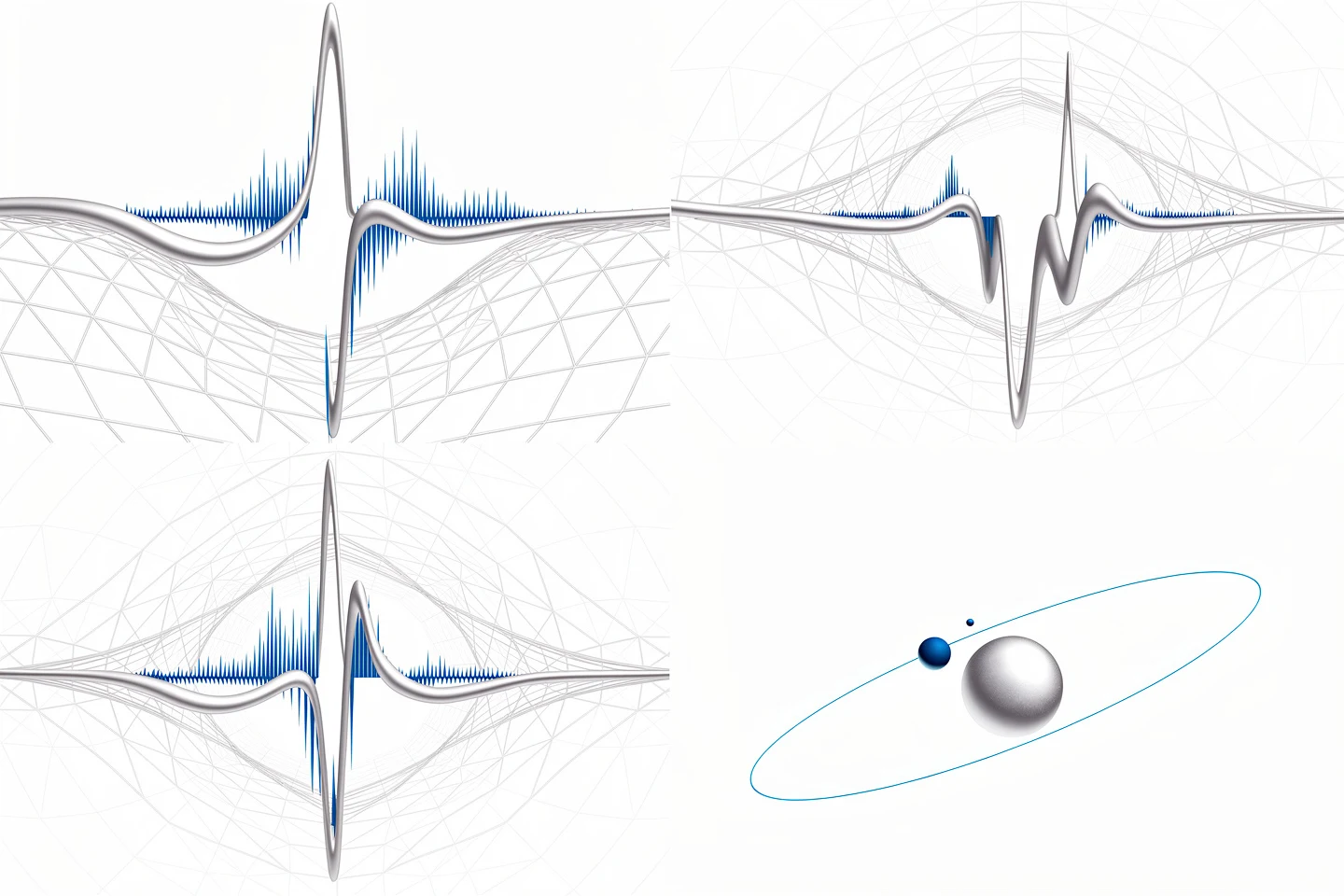
Imagine looking at a distant streetlamp through a clear glass ball. The ball slightly alters the light, making it brighter at times or creating two images. Something similar happens in space: a massive object, like a star, can act as a lens, bending light rays from a more distant star. This effect is called gravitational microlensing. If the lens star has a planet, it adds a tiny but sharp spike in brightness. That's exactly what was noticed in the data from the TESS telescope, which normally searches for exoplanets using a completely different method — the transit method, watching for a planet passing across the face of a star.
The planet was named Gaia23bra b. It turned out to be a true giant: about 2.2 Jupiter masses, orbiting at a distance of about 4 astronomical units from its star — that's four times the average Earth-Sun distance. Such worlds are born far beyond the 'snow line,' where water freezes, and they are very hard to catch with conventional methods. The brightening event itself lasted only a few hours, but TESS took images every 200 seconds and didn't miss it.
The idea of using gravity as a lens isn't new. Back in the 1930s, Fritz Zwicky proposed searching for hidden mass through the distortion of light from distant galaxies. And Karl Schwarzschild developed the mathematics of strong spacetime curvature, without which such calculations would be impossible.
This discovery reminds us that even old observation archives can hide surprises if we re-examine them carefully. By combining data from ground-based and space-based instruments, scientists can now peer into regions of the Galaxy that were previously invisible to planet-hunting. In the future, such finds will help us understand how gas giants form around other stars. They might also shed light on the mysterious dark matter, which is also searched for through lensing, since its distribution affects how often such events occur. Perhaps the Hubble telescope will one day be able to directly image the lens star and its planet. Meanwhile, scientists dream of spectroscopic observations that will reveal the composition of this distant world, born billions of years after the Big Bang.
TESS's 200-second cadence was 70 times faster than typical ground-based surveys, enabling it to record brief light flashes from caustic peaks in just a few hours.