Gaia23bra b: TESS First Finds a Planet via Gravitational Microlensing ✛
Context
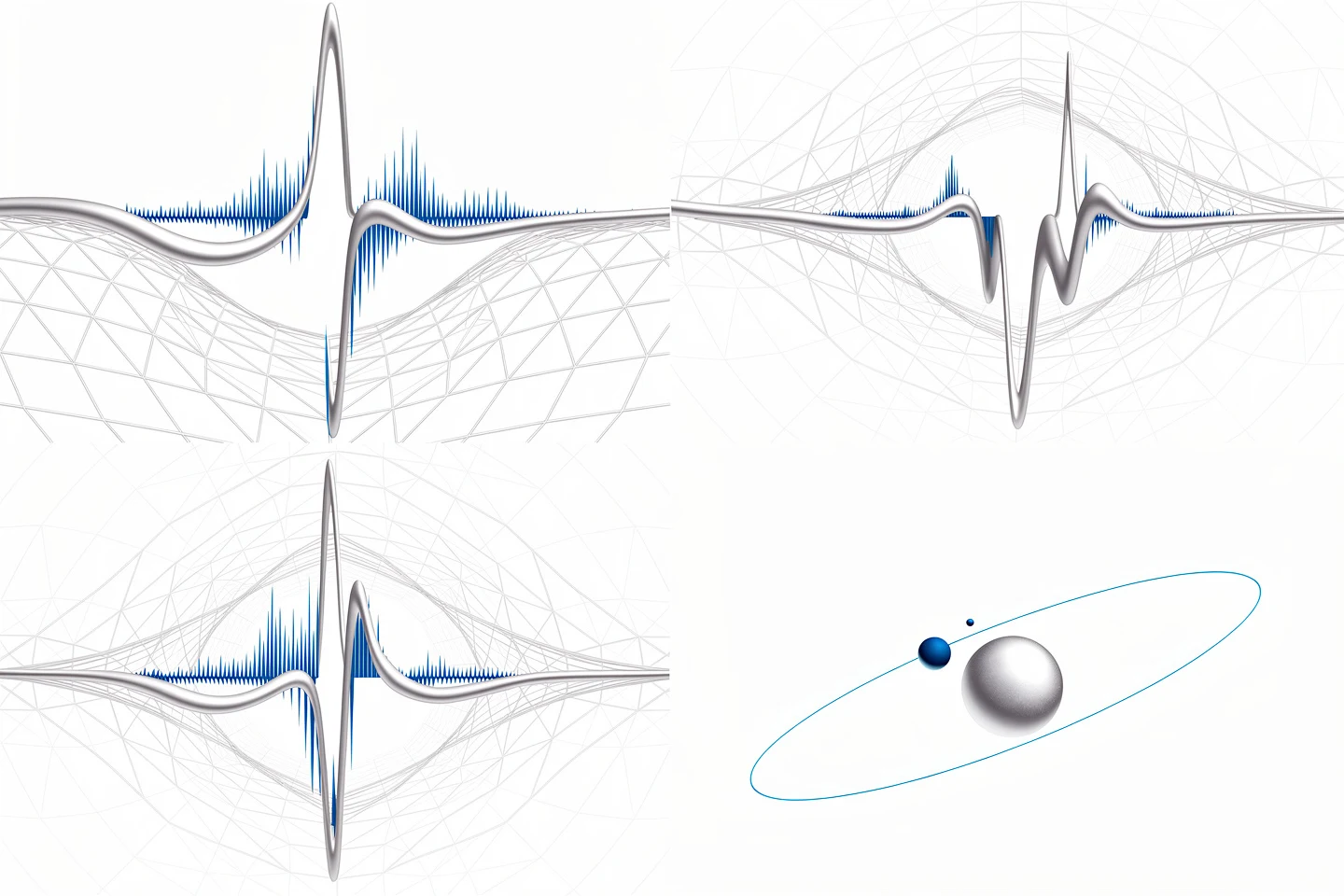
Traditional methods for finding exoplanets — transit and radial velocity — have a fundamental limitation: they are poorly sensitive to planets on orbits wider than Earth's. It is there, beyond the "snow line", that gas giants form, and their population remains almost unexplored. Gravitational microlensing, theoretically substantiated by Fritz Zwicky and later developed for planet hunting, uses random alignments of stars acting as gravitational lenses. This method does not depend on the brightness of the parent star and thus is suitable for detecting cold worlds on Jupiter-like orbits. These distant worlds, formed billions of years after the Big Bang, remain beyond the reach of traditional techniques. However, until recently, microlensing remained the prerogative of specialized surveys like OGLE or KMTNet, targeting the Galactic bulge. The discovery of Gaia23bra b shows that even survey missions like TESS can make unexpected contributions, especially in synergy with Gaia's long time-series data.
Methods
The event Gaia23bra was recorded by the Gaia alert system in April 2023 as a single lens with a smooth light curve. By fortunate coincidence, it fell within sectors 63 and 64 of the TESS survey, which conducted continuous imaging at a 200-second cadence. These data were processed using difference imaging: a reference frame was subtracted from each image, and the residual variable flux was extracted via forced photometry taking into account the point spread function. Then, the Gaia (G-band) and TESS light curves were jointly modeled using the pyLIMA package. Models of a point source, uniform disk, and finally a finite source with limb darkening within a binary lens framework were explored. To estimate the physical parameters of the stars, the pyLIMASS algorithm was employed, combining photometry, Gaia astrometry, isochrones, and model parameters such as the source angular radius ρ and Einstein time tE. The parallax due to the spatial separation between TESS (near-Earth orbit) and Gaia (L2 point) could not be estimated: its formal solution led to an unphysically close lens.
Results
The joint fit revealed a binary lens with mass ratio q = (2.01±0.08)×10⁻³ and normalized projected separation s = 1.153±0.003. These values reliably distinguish the planetary regime from the stellar one: q is below the generally accepted threshold of ~0.01. The source and lens parameters derived by pyLIMASS are: the source star is a late G-dwarf in the thick disk at distance $D_S$ ≈ 12 kpc; the lens star is an early K-dwarf with mass $M_L$ ≈ 0.8 M☉ at distance $D_L$ ≈ 4.7 kpc. Hence, the planet mass $M_p$ ≈ 2.2 Jupiter masses, and the projected separation a⟂ ≈ 4.2 AU. These values place the companion in the super-Jupiter regime on a Jupiter-like orbit. The TESS curve displayed clear caustic peaks, whose shape required accounting for finite-source effects: the normalized source radius ρ = (3.38±0.05)×10⁻⁴, in good agreement with the stellar size estimate. The Einstein crossing time is $t_E$ = 116.8±1.5 days, and the reduced χ² of the best static model is 5.15.
Implications
This finding fundamentally changes the perception of the possibilities of "serendipitous" microlensing. TESS was designed for transit discoveries around bright stars, but its high temporal resolution proved invaluable for resolving fast caustic features that elude ground-based networks. Moreover, the event is located in the plane of the Galaxy, far from the bulge — a region rarely used for systematic surveys but where, as recent work shows, lensing events occur frequently. The success of Gaia23bra b confirms that the synergy of high-cadence photometric monitoring and long-term observations opens a new channel for the mass search for planets in previously inaccessible parameter spaces and across different Galactic populations.
Future development
After the Gaia mission concludes in early 2025, its role in long-term monitoring could be partially taken over by the Vera C. Rubin Observatory (LSST), whose deep survey with a cadence of about three days will provide both high sensitivity and coverage of the Galactic disk. Paired with TESS (or the future Roman), this will allow systematic detection and characterization of microlensing planets outside the bulge. Future spectroscopic observations will be able to refine the metallicity and age of the lens, further constraining models. Additionally, Roman, slated for launch in 2026, will be the first mission where microlensing is one of the primary goals. Its continuous survey of the bulge with a 12-minute cadence is expected to detect hundreds of planets, while concurrent ground-based observations (OGLE, KMTNet) will provide parallax measurements and break the mass-distance degeneracy.
Impact
This result will impact a wide range of fields: from the population statistics of exoplanets (filling the gap at wide orbits) to the dynamics of the Galaxy (probing the hidden mass of the disk via lensing). For space missions, it serves as a practical proof of concept for a multi-instrument approach.
Next steps
The immediate task is to obtain high-resolution images of the system, for example with Hubble, in order to spatially resolve the lens and source by 2030, allowing direct measurement of proper motion and definitive determination of the lens mass. In parallel, analysis of other events from the TESS–Gaia archives is expected to search for new candidates.
Key open problems
This discovery is directly connected to the unresolved problem of giant planet formation and migration. Microlensing is one of the few tools capable of probing the population of planets beyond the snow line, where, according to models, intense migration occurred in the early Solar System. Moreover, each new planet in the Galactic plane adds statistics for understanding the content of dark matter — possible massive compact halo objects (MACHOs) that are also sought through lensing.
The knowledge machine's view
This section is addressed to the author of the paper and their colleagues. Neighbouring works were found by meaning-based search across our archive, not by word overlap. We do not review: we show the field around the work.
What the work does
In their work on Gaia23bra b, the authors discovered a giant planet with a mass of ~2.2 Jupiter masses on an orbit of ~4.2 AU around an early K-dwarf, using joint modeling of Gaia and TESS light curves of the microlensing event Gaia23bra. They showed that survey missions such as TESS can contribute to the search for cold exoplanets, traditionally conducted by dedicated surveys.
Where its strength is
The strength of the work lies in demonstrating that TESS data, not originally intended for microlensing, can be used to detect and characterize planets beyond the snow line, extending the method's coverage to the entire sky.
Where it could go next
- Nearby in the archive there is an analysis of the discovery of four cold giants via microlensing, discussing the statistical properties of such planets' population. It might be interesting to compare Gaia23bra b's parameters with this sample and discuss constraints on the frequency of cold giants.based on: Cosmic Drops: How Gravity Revealed Four New Cold Giants arXiv:2607.04594v1
- The archive also contains a paper on gravitational lensing by a black hole capturing light from distant nebulae. Although the object is different, the approach to analyzing light curves with finite source size might be useful and adaptable for future TESS events.based on: Black Hole Lens Catches Light from Distant Nebulae arXiv:2608.00688v1
Worth trying
- Investigate whether parallax can be extracted from joint Gaia and TESS data for other events where the lens is not as close, to avoid unphysical solutions.
- Apply TESS difference imaging photometry to archival data to search for missed microlensing events in fields not covered by OGLE or KMTNet.
- Compare the sensitivity of TESS and future missions (e.g., Roman) to planets on wide orbits, using Gaia23bra as a benchmark.
Why this may matter
Expanding the search for cold exoplanets to the entire sky using survey missions could significantly increase the statistics of giant planets beyond the snow line, which is important for testing theories of planetary system formation.
Nearby works in our archive
- A Sun-Sized Lens Searches for Life Around Distant Starssimilarity 0.69
- Black Hole Lens Catches Light from Distant Nebulaesimilarity 0.66
- Cosmic Drops: How Gravity Revealed Four New Cold Giantssimilarity 0.65
- Space Tuning Fork: How Satellites Catch Gravitational Wavessimilarity 0.64
- A Bright Flash from the Universe's Youthsimilarity 0.64
- Earth's Shadow Hunts for Alien Probessimilarity 0.64
The closest work in the archive sits at 0.69 by meaning — the usual level for our corpus.
Original abstract
as written by the authors arXiv:2607.01853v1
We report the discovery of Gaia23bra b, the first gravitationally bound microlensing planet detected by the Transiting Exoplanet Survey Satellite (TESS). Initially flagged as a single-lens event by the Gaia Science Alerts system, Gaia23bra was serendipitously observed by TESS over two consecutive sectors. During those TESS sectors, the light curve of the event displayed caustic-crossing features characteristic of a binary-lens event. Joint modeling of Gaia and TESS photometry with pyLIMA, supplemented by stellar parameter inference using pyLIMASS, suggests a K dwarf ($$M_L = 0.79^{+0.19}_{-0.17}\,M_\odot$$) hosting a Jovian planet with $$M_P = 1.63_{-0.38}^{+0.42}\,M_{\rm Jup}$$ at a projected separation of $$a_{\perp,\min} \approx 4.8\,\mathrm{AU}$$. This result underscores the synergy between high-cadence photometry and long-baseline monitoring for robust microlensing characterization. Its location along the Galactic Plane highlights TESS's unexpected capacity for microlensing science through its all-sky coverage and its potential to detect planets in regions beyond the Galactic Bulge.
TESS's 200-second cadence is about 70 times higher than the typical cadence of ground-based microlensing surveys (one data point per night), which allowed detailed tracing of the shape of caustic peaks, each lasting only about 5 hours.
Key numbers
- Planet mass: 2.2 Jupiter masses
- Projected separation: 4.2 AU
- Lens mass: 0.8 M☉
- Distance to source: 12 kpc
- Einstein time: 117 days