The Elusive Wind of the Universe: Why It's So Hard to Catch ✛ ✎
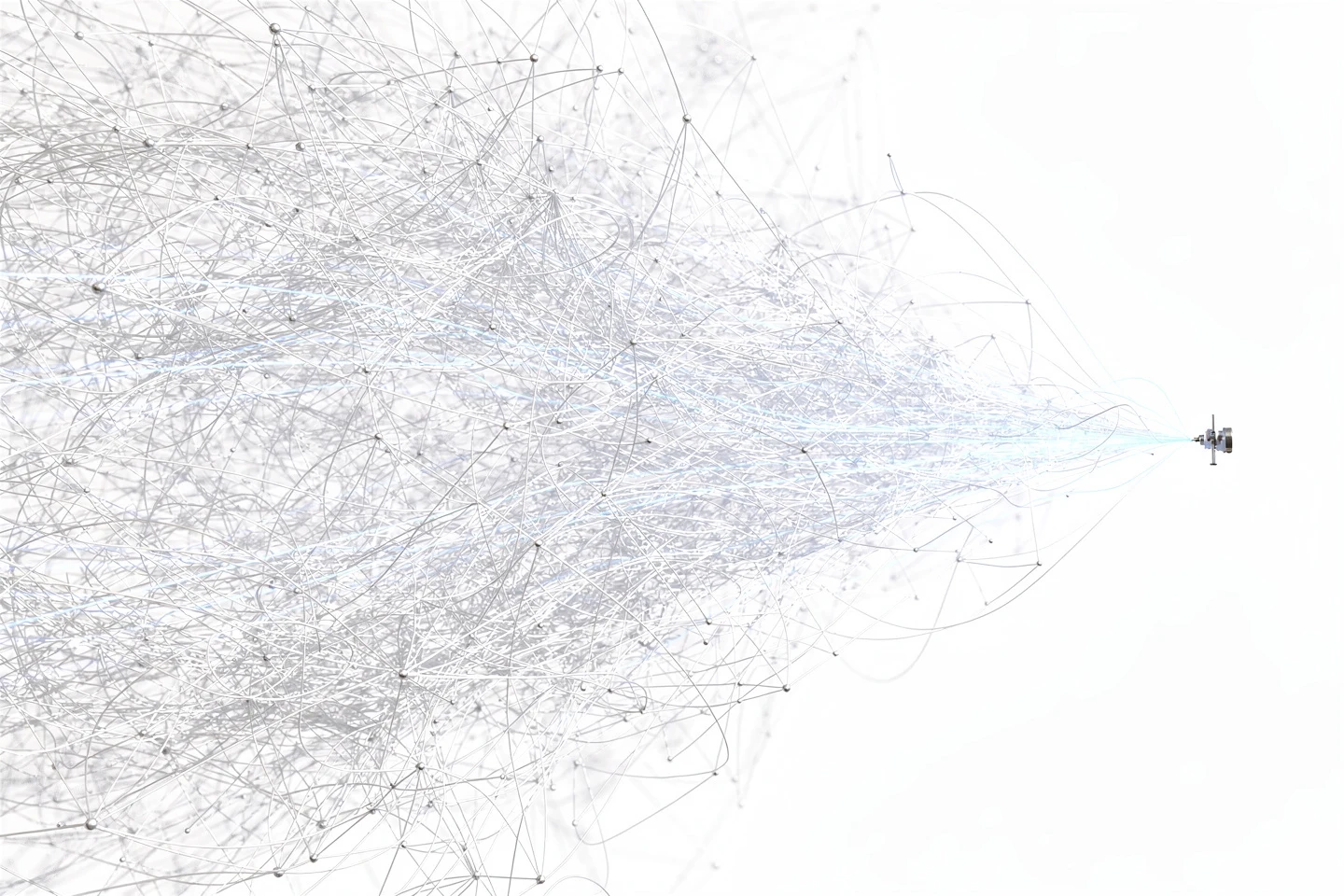
Back in the last century, Georges Lemaître and Edwin Hubble showed that the Universe is expanding after the Big Bang, and Ralph Alpher explained how the first substances came to be. At that time, a sea of neutrinos was born — incredibly light particles that pass right through planets and us, like ghosts. Today, scientists want not just to detect this ancient 'glow,' but to capture its 'wind:' together with Earth, we rush through the neutrino cloud at a speed of 370 kilometers per second, and the oncoming flow should be slightly denser. Imagine: you're in a dark room where a dim bulb barely glows — its light is spread almost evenly. Noticing from which side it's a thousandth of a percent brighter — that's how delicate the task is.
A new calculation has shown: to catch this wind, you'd need 100,000 times more data than simply detecting the background. If neutrinos behaved like Dirac particles (one hypothesis), the difference in signal would be about 0.1%, and if like Majorana particles (another idea) — a thousand times less. That's like trying to hear a whisper at the other end of a stadium during a concert. These numbers mean that future instruments must be incredibly precise — similar to those that detect gravitational waves from distant black holes, or like the Hubble Space Telescope, but for neutrinos. Without suppressing all noise to minute fractions of a percent, the signal will simply be lost. By the way, dark matter — another mystery — could clump neutrinos together, making the wind a bit stronger, but that's still just a theory. Scientists use spectroscopy — a method akin to breaking light into colors, to distinguish the desired signals from interference.
If neutrinos were slightly heavier, their wind could literally be felt — it would sway a hypersensitive pendulum with an acceleration of billionths, like sand blowing off a starry beach.
This idea echoes science fiction: in Olaf Stapledon's novel 'The Eye of the Storm,' cosmic particle streams alter the fates of civilizations.