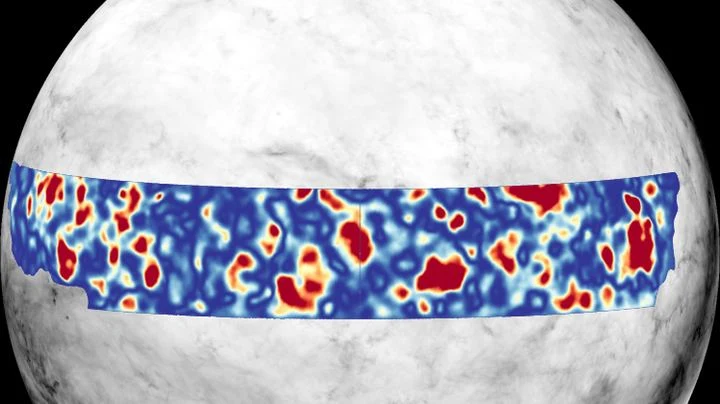
Cosmic microwave background (CMB) measurement refers to the observational techniques used to map the faint relic radiation left over from the Big Bang, which fills the entire universe. This radiation, first detected in 1965, is a near-perfect blackbody spectrum at a temperature of about 2.725 K. Precise measurements of its temperature and polarization anisotropies across the sky provide a wealth of information about the early universe, including its age, composition, geometry, and the seeds of large-scale structure.
History
The CMB was predicted by George Gamow and others in the 1940s and discovered accidentally by Arno Penzias and Robert Wilson in 1965. Subsequent missions like COBE (1989), WMAP (2001), and Planck (2009) have mapped it with increasing precision.
How it works
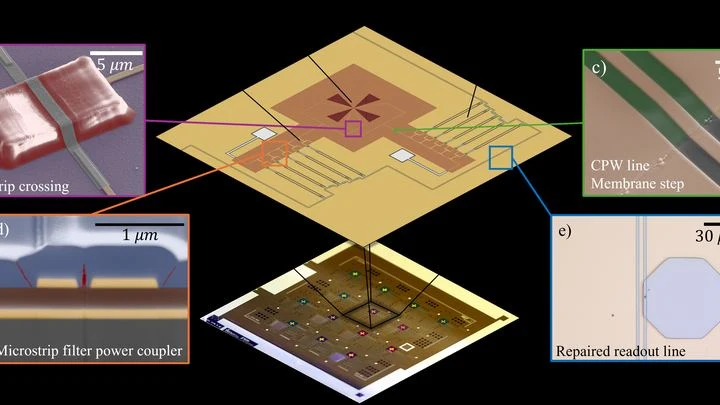
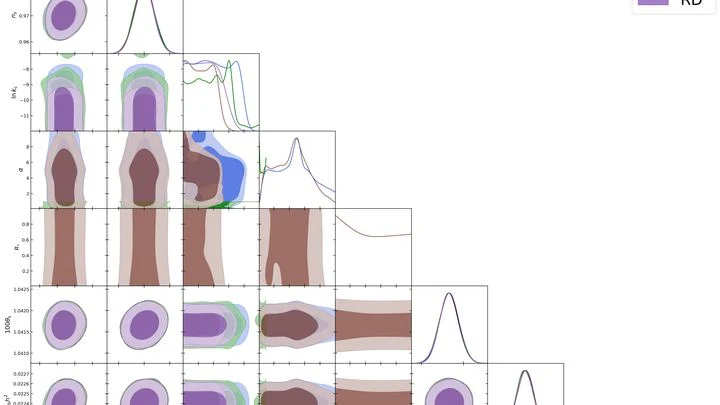
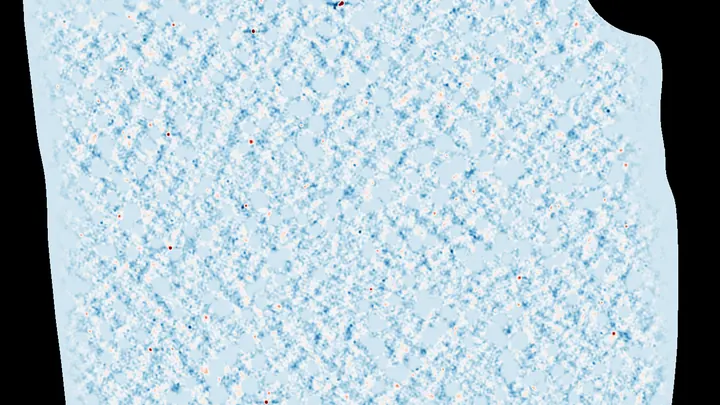
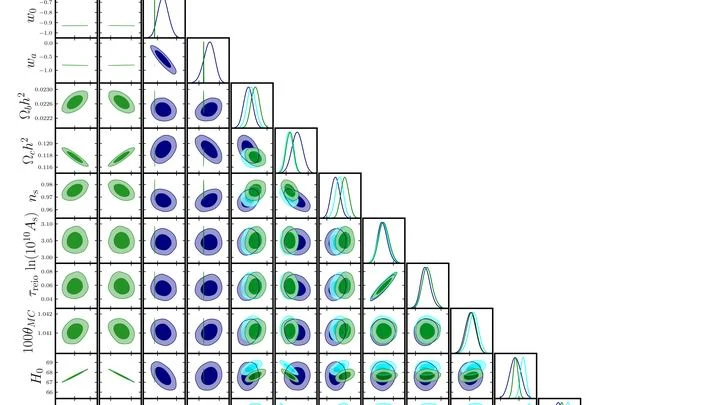
CMB measurements are performed using ground-based, balloon-borne, and space-based telescopes equipped with sensitive bolometers or superconducting detectors that operate at sub-kelvin temperatures to minimize noise. These instruments scan the sky at multiple microwave frequencies to separate the CMB from foreground emissions like galactic dust and synchrotron radiation. By analyzing the angular power spectrum of temperature and polarization fluctuations, cosmologists can extract cosmological parameters such as the Hubble constant, the density of dark matter and dark energy, and the spectral index of primordial fluctuations. The measurements also reveal the signature of inflation through the polarization pattern (B-modes).
In practice
CMB measurements are the cornerstone of modern precision cosmology, constraining the standard model of cosmology (ΛCDM) and guiding theories of the early universe, including inflation and the nature of dark matter and dark energy.
Fun fact
The CMB is so uniform that its temperature variations are only about one part in 100,000, yet these tiny fluctuations are the seeds from which all galaxies and clusters formed.
Eight sky maps taken by different detectors of the Planck telescope resemble eight road atlases of the same city drawn by different cartographers. Each atlas is rotated by its own angle: one cartographer held the tablet slightly tilted, another slightly turned. If you overlay the atlases, the streets won't align. But if you know how each atlas is rotated, you can align them perfectly.
Imagine looking at a distant mountain range through morning fog. The peaks' outlines are blurred, and if the fog is patchy, some slopes fade more than others. That's roughly how astronomers see the ancient light of the universe, which has been traveling to us for 13.8 billion years.
This light was born when the universe was just 380,000 years old, long before the first stars.
Boiling milk develops a trembling skin. By watching its movements, you can guess the strength of the fire beneath the pot and the fat content of the milk. In a similar way, astrophysicists peer into the ancient microwave radiation — the oldest light that has reached us from an era when the universe was only 380,000 years old.
Cosmologists are facing a curious situation: two reliable tools draw slightly different maps of the same universe. One tool is the map of ancient light (the cosmic microwave background), and the other is the map of galaxy distribution. They broadly agree, but in details they diverge.
The universe is like a vast invisible scaffold. We don't see it directly, but we know it's there: galaxies and clusters hold together thanks to it. This scaffold is dark matter. The most popular version says it is "cold," made of heavy, slow-moving particles.
264 kilometres per second — that's how fast the Solar System hurtles through the cloud of dark matter. Its existence was given away by galaxies: they spun too fast to be held by visible mass, and Vera Rubin was first to suspect a hidden scaffolding.
380 thousand years after the Big Bang, the universe cooled enough for light to decouple from plasma. That cosmic microwave background still pervades space, like the first chord of a symphony, the echo of a fiery beginning.
The James Webb Space Telescope peered into an era when the universe was less than a billion years old and spotted strange objects—'little red dots.' These are black holes with masses of millions of suns, but in very compact, chemically pristine galaxies. Standard scenarios can't grow such heavyweights that early.
In the first seconds after the Big Bang, the Universe left us not only light but also something far more elusive — the relic neutrino background. This echo of creation permeates every cubic centimeter, yet we barely notice it.
Cosmology is like an orchestra where different sections suddenly start playing out of sync. Measurements of the universe's expansion rate (the Hubble constant) from the early and late universe give different numbers.
The cosmic microwave background is the petrified light of the first moments. Shortly after the Big Bang, microscopic quantum fluctuations were stretched by inflation to the scales of galactic superclusters.
From childhood, we're used to thinking of space as infinite and isotropic. But Einstein and Lemaître were already asking: could the Universe be closed in on itself, like a Möbius strip or a 3-torus?
A hum resonates across the universe. It is not sound, but a trembling of space itself — the gravitational wave background. It is produced by pairs of supermassive black holes circling each other at the centers of distant galaxies. Each pair is like a bass instrument in a vast orchestra.
In 2015, detectors caught a gravitational wave for the first time — a ripple in space that traveled from merging black holes. Since then, such signals have become a new window into the universe for astrophysics. But gravitational waves can do more: they carry the imprint of the very theory of gravity.
The Universe at 700 million years old was a noisy construction site, just beginning to light up. Telescopes caught a signal from that distant epoch: the galaxy REBELS-25, massive and full of stellar fuel.
An old photograph taken at the moment of the universe's birth has been carrying its light to us for nearly 14 billion years. This snapshot is the cosmic microwave background, the cooled echo of the Big Bang. It captures the tiny inhomogeneities from which galaxies later grew.
A compressed spring can sit for years without moving. It seems frozen forever, but inside the metal, atoms slowly rearrange, and one day the spring clicks, settling into a new, more relaxed position.
The cosmic microwave background is the afterglow of the Big Bang, which we see at millimeter wavelengths. But it also has a long-wavelength tail extending into the radio range.
Black holes come in lightweights, born from dying stars, and supermassive ones at galactic cores. The missing intermediate link had been hiding. Fast radio bursts, cosmic signals lasting milliseconds but carrying the energy of days of sunlight, helped crack the case. Think of these bursts as cries from the depths of the universe.
Moving clumps of galaxies and invisible dark matter create wakes in the afterglow of the Big Bang, like boats stirring a pond. This wake, the moving lens effect, is so subtle it shifts the light’s temperature by only a few millionths of a degree: comparable to detecting a candle’s heat from across a continent.
The Universe is structured like a sponge: there are dense regions packed with galaxies and gas, and giant pores — cosmic voids. These voids occupy most of space, but their contents have remained a mystery because matter there barely reveals itself.
Now astronomers have 'felt' the voids using fast radio bursts — super-powerful pulses from distant galaxies.
A huge pond, with ripples spreading from two heavy stones circling each other. The stones draw closer, the ripples become more frequent and stronger, and soon the stones will collide. Gravitational waves are like those ripples, but not on water — in the very fabric of spacetime.
At the very heart of the Milky Way, something is continuously glowing in gamma rays. This light is special: its energy is exactly 511 thousand electronvolts. Such energy is produced when an electron meets its antimatter counterpart, a positron, and they annihilate, leaving behind a flash of light.
When the first stars ignited, their ultraviolet light began stripping electrons from hydrogen atoms. The universe transformed from a neutral fog into transparent plasma. This process, cosmic reionization, proceeded unevenly: slowly at first, like a fire catching in damp wood, then faster as the flames spread through dry tinder.
Light from a distant star, passing through the atmosphere of planet K2-18b, left unusual "fingerprints" in its spectrum. Astronomers spent 420 hours collecting this light with the James Webb Space Telescope and split it into colors, like a rainbow.
Light that has traveled to us for nearly 14 billion years is like an old photograph whose details emerge with careful processing. The cosmic microwave background (the afterglow of the Big Bang) holds the imprint of the universe's first moments, but its signal is faint and distorted.
The universe is like an ocean, where waves of different lengths roll onto the shore. The longest waves are the giant fluctuations in the distribution of matter that we see in the cosmic microwave background. Standard theory says such waves should exist on all scales.
Light from the earliest epoch of the universe has been traveling toward us for billions of years. On its way, it passes by enormous galaxy clusters. Their gravity slightly bends this light, just as a shop window distorts the view of the street behind it. As clusters grow, the bending becomes more noticeable. This effect is known as the Rees-Sciama effect.
In the frozen desert of Antarctica, the SPT-3G telescope peers deep into the universe. Its target is the ancient microwave radiation left over from the Big Bang. But on its way to us, this radiation passes through giant galaxy clusters filled with scorching gas.
At the South Pole, where the air is dry and transparent to millimeter waves, stands a telescope that looks not at stars but at the oldest light in the universe. This light is the cosmic microwave background — the radiation left over from the Big Bang, filling the entire sky.
Dark matter may not be particles but black holes from the Big Bang era. In the early Universe, which was like a swirling batter, they were like heavy lumps — barely moving, they gathered surrounding matter and spun it into the swift galaxy flows astronomers observe today.
Any device, from a toaster to a smartphone, heats up when operating. This is the inevitable result of energy conversion — there's always a heat trace left, like a hot stove burner after cooking.
According to the Big Bang theory, developed by Georges Lemaître, the Universe began from a hot dense point and then rapidly expanded — an inflation proposed by Alan Guth. Echoes of that time reach us as a faint glow — the ancient light.
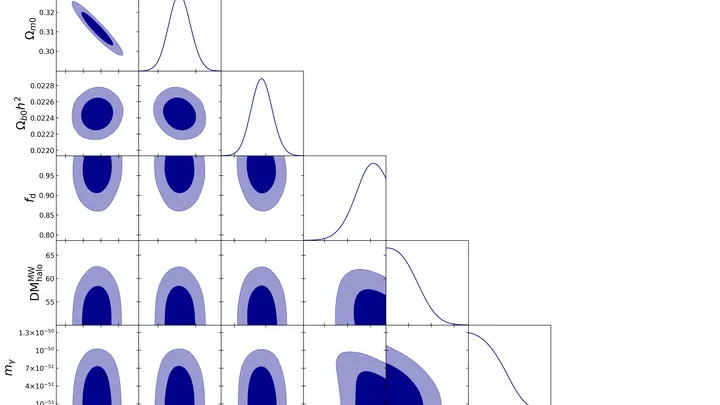
Fast radio bursts are brilliant cosmic flashes that, like a starting signal, set off a race of radio waves across the universe. Astronomers used them as a natural laboratory to test whether the photon, the quantum of light and the carrier particle of the electromagnetic interaction, has mass.
The Universe after the Big Bang was almost perfectly homogeneous. Almost, because tiny density perturbations stretched by inflation became the seeds of galaxies. But what if these same perturbations could give birth not only to stars but also to black holes?