How Galaxies Without Dark Matter Sift the Invisible ✛
In the galaxy NGC 1052 DF2, stars move very slowly — just 8 kilometers per second. That happens when there's almost no invisible mass, which we call dark matter, around. Usually, like glue, it holds galaxies together, but here it seems to have been shaken out.
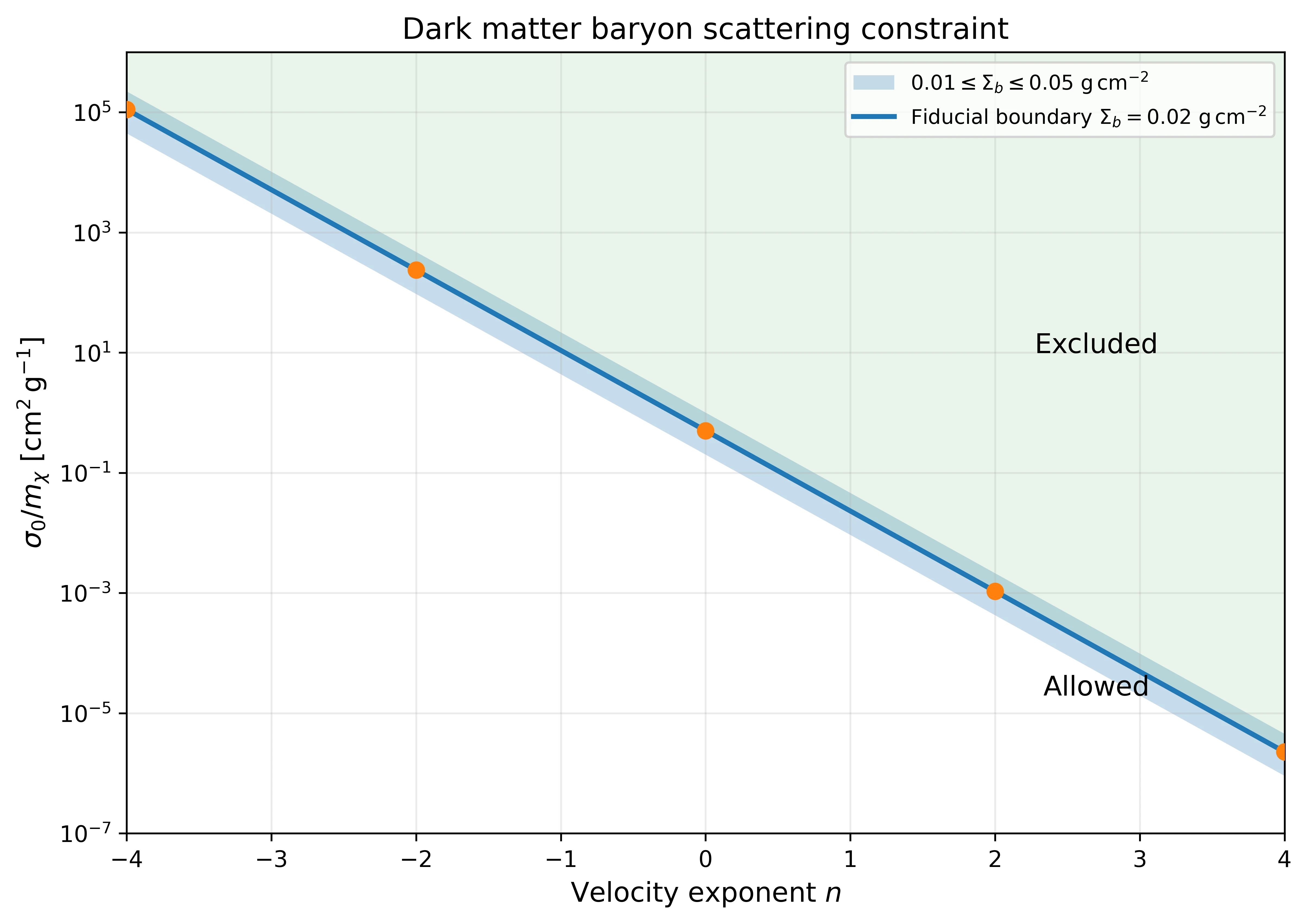
Galaxy collisions act like a sieve. Ordinary matter slows down and clumps together on impact, while the invisible stuff slips through. If dark matter stuck strongly to baryons, it wouldn't separate. But since we see 'empty' galaxies, the stickiness must be very weak. Scientists calculated: even if just a tiny fraction of dark matter (about 0.5%) could cling, that's already ruled out by observations.
Such galaxies are not just cosmic rarities. They are natural laboratories where nature itself has set up an experiment to separate substances, and all we have to do is measure what passed through the sieve.
In the galaxy NGC 1052 DF2, the stellar velocity dispersion is only about 8 km/s, as if all the mass were provided by the stars themselves, with no dark matter halo.