How Dark Matter Reshapes Black Holes express
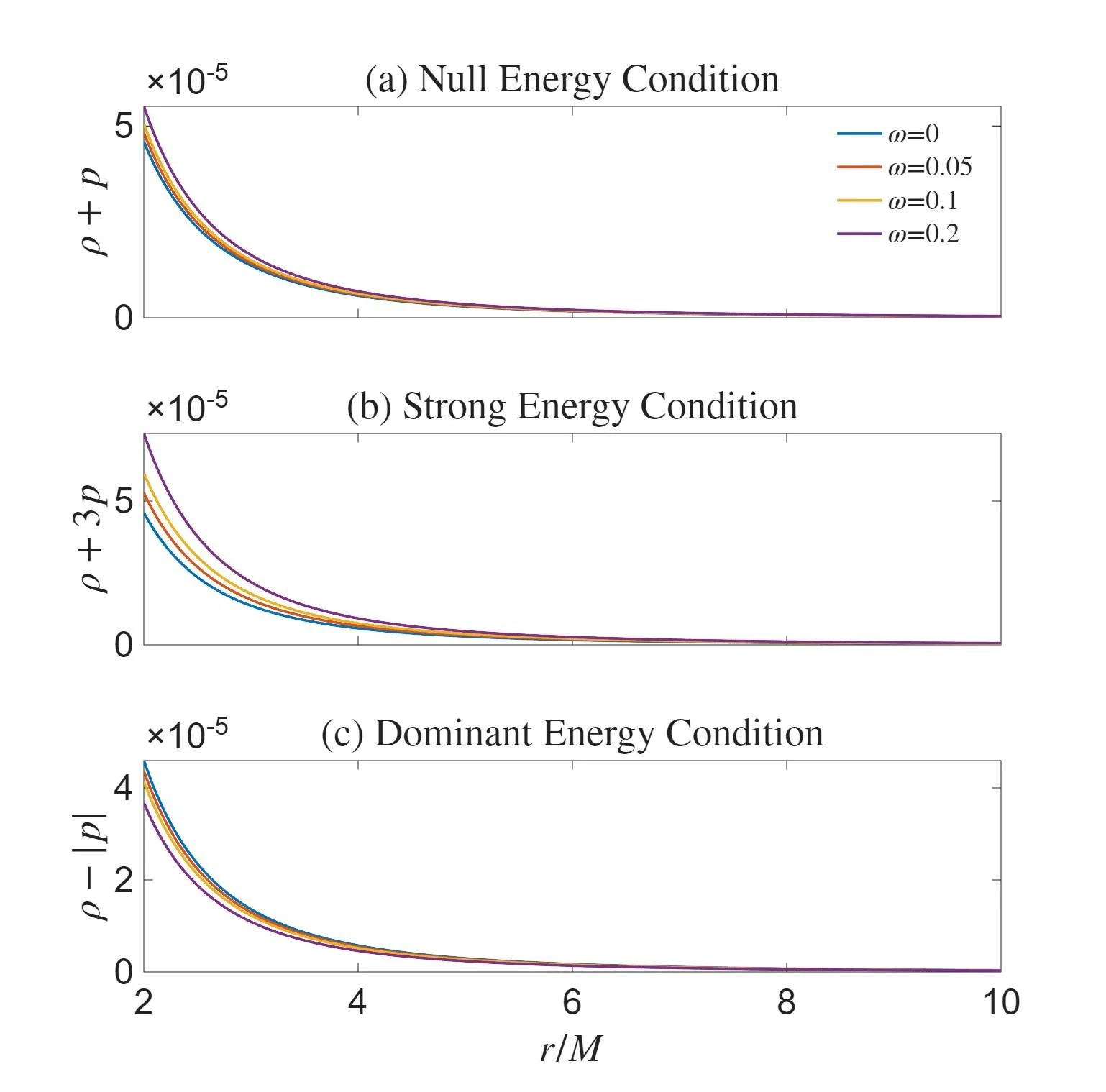
An invisible scaffold holds galaxies together, keeping them from flying apart. This is dark matter — matter that doesn't shine and barely interacts with ordinary stuff. Astrophysicists have long debated what it's made of. In a new study, they tested three leading candidates: an anisotropic perfect fluid, a homogeneous medium with constant pressure, and a Bose-Einstein condensate with a complex equation of state.
Each option wraps around a black hole differently, altering its gravitational field. The authors calculated how key orbits shift in each case: the event horizon, the photon sphere (where light travels in circles), and the shadow: that dark silhouette photographed in 2019 by the Event Horizon Telescope.
Comparing with the actual image of the shadow of galaxy M87* imposed strict constraints. The constant-pressure model survived only in a narrow corridor, the Bose-Einstein condensate showed smooth deviations, and the anisotropic fluid was nearly indistinguishable from a regular black hole without dark matter. Thus, the geometry of curved spacetime becomes a tool for sorting hypotheses about invisible matter.
The shadow of M87* is seen from Earth at an angle of 42 microarcseconds — roughly like a coin on the Moon as seen from Earth.
In Vernor Vinge's novel A Fire Upon the Deep, dark matter turns out to be a thinking medium, and black holes are its communication nodes.