Atoms in a Sticky Trap Measure Radio Waves Without Coils express
A radio receiver the size of a palm can measure signal power more accurately than expensive lab benches. Inside, there are no coils or antennas, just a glass head and a cloud of rubidium atoms cooled to near absolute zero. The atoms float in the crossing of laser beams, held not by magnets but by the force of light, like a midge in a drop of syrup.
The trapped atoms are transferred into a special Rydberg state — the electron flies far from the nucleus, making the atom a giant by atomic standards. Such an atom becomes extremely sensitive to electric fields. An incoming radio wave slightly changes its energy, and some atoms escape the trap: this is recorded by a camera. Previously, similar sensors required bulky magnetic coils that distorted the measured field. Here, the head is made of a dielectric, like window glass, and the field passes through it unharmed.
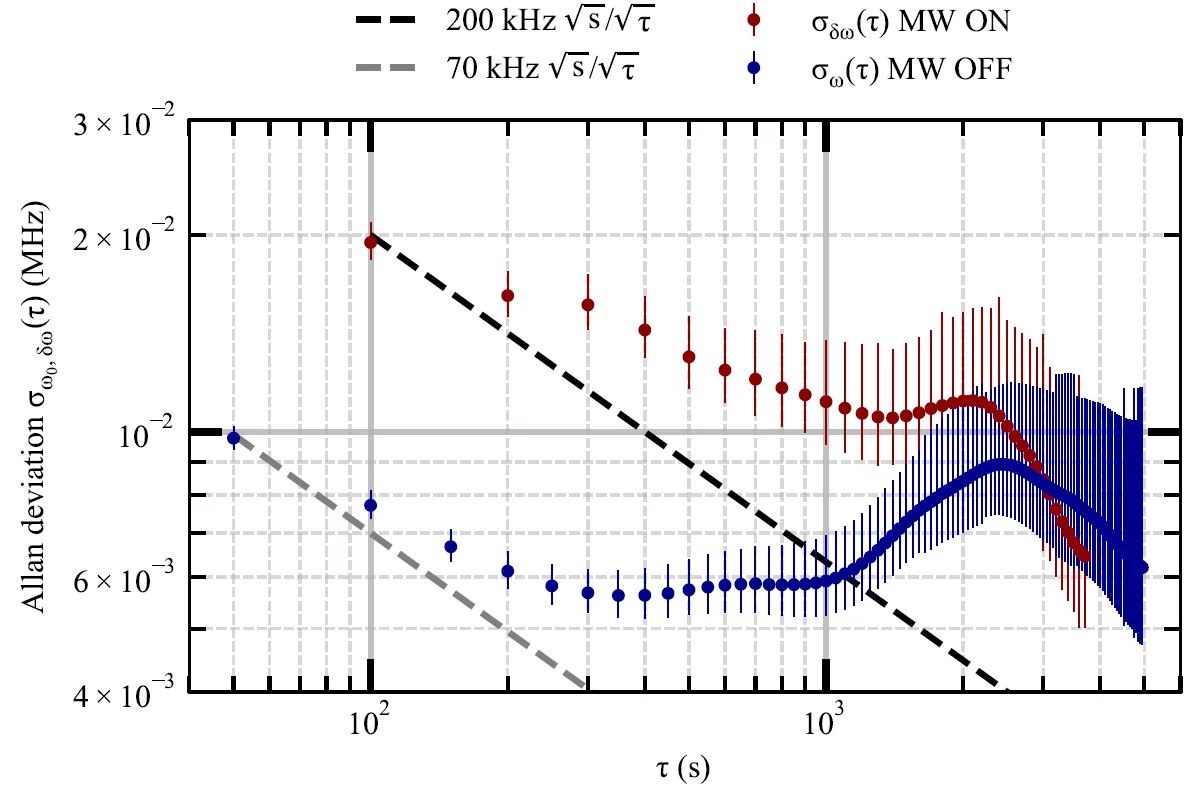
The absence of metal also brought another advantage: the cooling and excitation lasers can be switched faster than in a magnetic trap. The atom-loss signal became ten times narrower in frequency, as if the needle of a scale stopped trembling. This allowed power measurements without external calibrators, with a drift of less than 1% over tens of minutes. The platform paves the way for compact quantum navigators and gravimeters, where cold atoms are already replacing pendulums and gyroscopes.
Rydberg atoms are so large that a single atom can be bigger than a virus: its diameter reaches hundredths of a millimeter.
Such sensors resemble the tricorder from Star Trek — a portable scanner that analyzes fields and matter on the fly.