Hunting Solar Axions in Liquid Xenon express
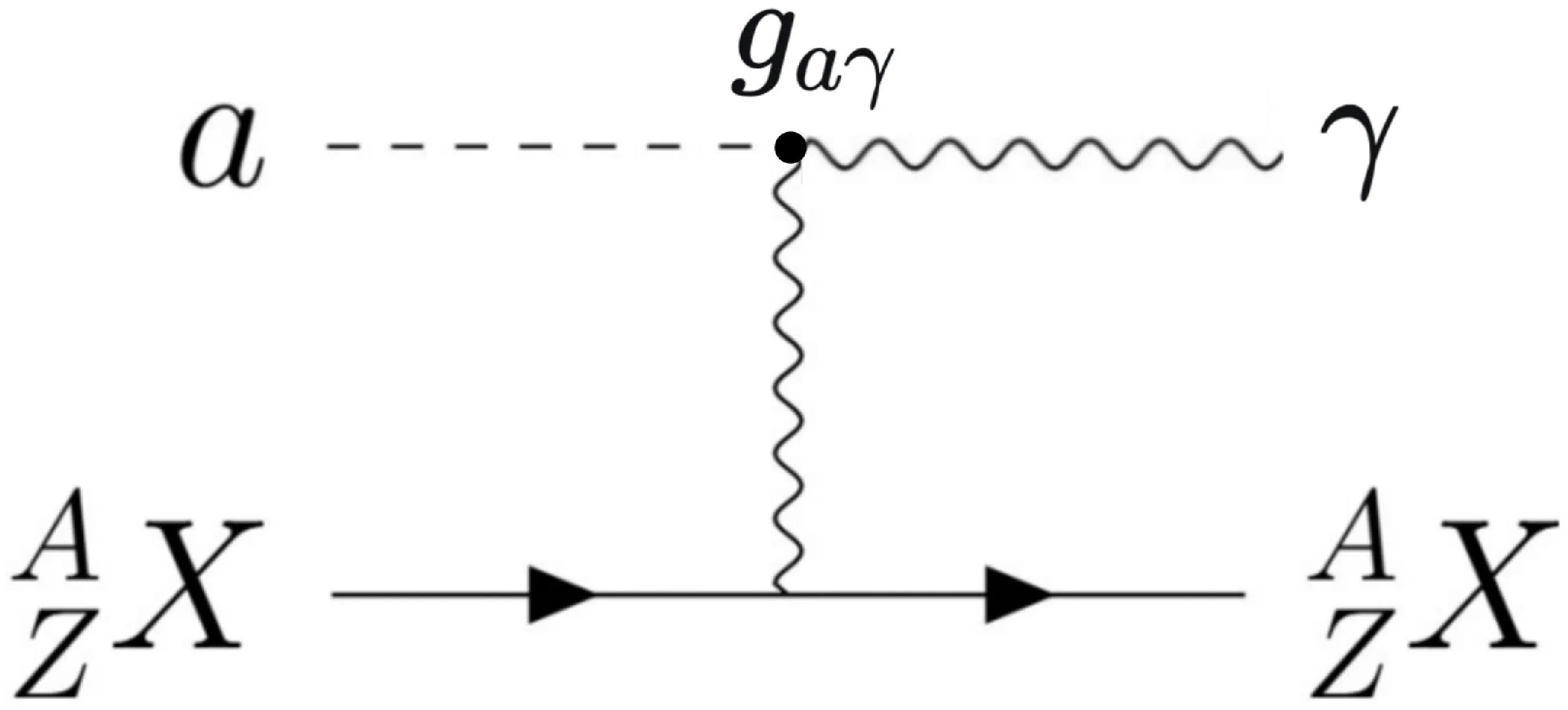
Inside the Sun, reactions can produce light, almost undetectable particles called axions. One such reaction yields axions with an energy of 5.49 MeV, as if each one carried the energy of a tennis ball moving at 100 km/h. These particles pass freely through Earth, but occasionally they might collide with a xenon atom.
When an axion enters a tank of liquid xenon, it can transform into a pair: an electron and its antiparticle, a positron. The probability of this transformation rises sharply if the axion mass is close to twice the electron mass. Xenon is chosen for a reason: the heavier the atom, the better the chance of catching an axion, because the probability scales as the square of the nuclear charge.
Future liquid xenon detectors, such as XENONnT and LZ, could accumulate enough data over several years of operation. With an exposure of 200 ton·years, the sensitivity to the combination of coupling constants would reach 1.59×10⁻¹⁴, and with 1000 ton·years, 7.12×10⁻¹⁵. This is better than current limits from the neutrino detector Borexino and comparable to future giants like JUNO and Hyper-Kamiokande.
If axions exist and couple to photons, the sensitivity to the combination of constants could reach 6.76×10⁻¹² GeV⁻¹ at 200 ton·years and 3.02×10⁻¹² GeV⁻¹ at 1000 ton·years. This would allow testing a wide class of theoretical models and possibly seeing the imprint of the axion field for the first time.
The axion is named after a brand of laundry detergent because it was supposed to 'clean up' a problem in the theory.
In the novel 'The Three-Body Problem', Liu Cixin mentions axions as a possible channel for alien communication — almost undetectable but all-pervading.