Xenon is a heavy, colorless, and odorless noble gas that is present in trace amounts in Earth's atmosphere. It is one of the rarest elements on Earth, but it has found a remarkable range of uses in modern physics and technology. In the context of the provided titles, xenon is highlighted as a medium in which rubidium atoms diffuse particularly slowly, a property that is useful for precision measurements and quantum experiments. More broadly, xenon is a key ingredient in detectors for dark matter and in ion engines for spacecraft.
History
Xenon was discovered in 1898 by British chemists William Ramsay and Morris Travers, who isolated it from the residue left after evaporating liquid air. Its name comes from the Greek word 'xenos,' meaning 'stranger,' reflecting its rarity and inertness.
How it works
Xenon's usefulness in physics stems from its high atomic number (54) and its ability to be easily ionized. In dark matter detectors, a volume of liquid or gaseous xenon is used as a target: when a particle (such as a hypothesized weakly interacting massive particle, or WIMP) collides with a xenon nucleus, it produces a flash of light and a release of electrons, which are both detected to infer the particle's properties. In ion engines, xenon atoms are ionized and then accelerated by electric fields to produce thrust, providing a highly efficient propulsion method for deep-space missions.
In practice
Xenon is used in dark matter detectors (e.g., XENON1T, LUX-ZEPLIN), in medical imaging as an anesthetic and in MRI contrast agents, and in ion thrusters for satellites and space probes.
Fun fact
Xenon is so rare that it makes up only about 0.0000087% of Earth's atmosphere, yet it is used in some of the most sensitive detectors ever built to search for dark matter.
A billiard ball hangs in midair. Tiny peas shoot at it from a blowgun. Each hit is barely perceptible, but if the ball is very light and barely trembles from heat, you can make out individual nudges. That's essentially the setup: a glass sphere the size of a bacterium levitates in a vacuum while a narrow beam of xenon atoms flies at it.
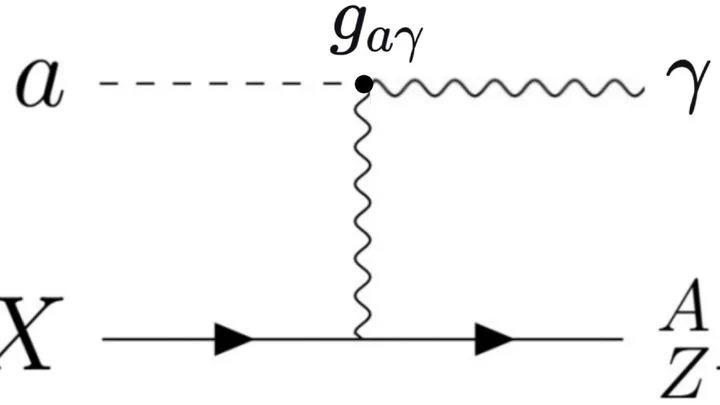
Inside the Sun, reactions can produce light, almost undetectable particles called axions. One such reaction yields axions with an energy of 5.49 MeV, as if each one carried the energy of a tennis ball moving at 100 km/h. These particles pass freely through Earth, but occasionally they might collide with a xenon atom.
Dark matter — the invisible architect of the universe, holding galaxies from flying apart. Thanks to the pioneering work of Fritz Zwicky and Vera Rubin we know: ordinary matter in the cosmos is just a negligible impurity. But what lies behind this dark matter?
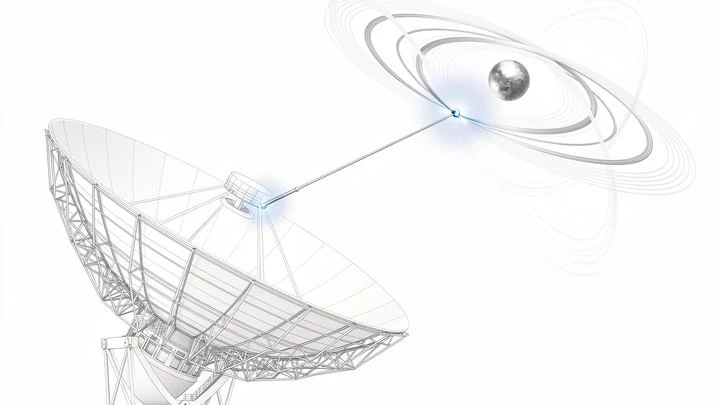
An ocean permeates all of space, yet remains invisible to us. This ocean is dark matter, and the waves on its surface are particles called axions. They are so light and elusive that they pass through Earth without noticing it. But if these waves crash against a shore made of a special material, they might leave a trace — a tiny electric current.
A giant city of thousands of galaxies is shrouded in an invisible cloud of scorching gas. This gas is like the air in a room: it can be calm, or it can churn with drafts. Astronomers aimed the latest X-ray "thermometer" at such a city — the cluster Abell 1795—and measured how fast the gas moves there.
The story began with a puzzle: in the 1930s, Fritz Zwicky noticed that clusters of galaxies behave as if an enormous invisible mass is hidden within them. Half a century later, Vera Rubin confirmed that stars on the outskirts of galaxies rotate too fast to be held by visible matter alone.
Dark matter has eluded direct observation so far, even though its gravity holds galaxies together. One hypothesis: it’s made of axions — ultra-light particles predicted by theory.
The Universe is structured like a sponge: there are dense regions packed with galaxies and gas, and giant pores — cosmic voids. These voids occupy most of space, but their contents have remained a mystery because matter there barely reveals itself.
Now astronomers have 'felt' the voids using fast radio bursts — super-powerful pulses from distant galaxies.
In 1987, astronomers saw a supernova flare up in a neighboring galaxy — the Large Magellanic Cloud. It was a rare gift: the explosion was close enough to catch not just light but also neutrinos, those nearly undetectable particles that pass straight through Earth.
A world that for years refused to show its face. Planet GJ 1214 b is exactly such a case. It is larger than Earth but smaller than Neptune, and its dense envelope made the atmosphere invisible to telescopes: starlight passed through it without leaving clear traces. But astronomers' persistence and a new sensitive instrument provided the first clue.
In a dark room, an invisible lamp flashes. Its light is unlike anything familiar: it has no steady brightness, only rare but powerful bursts. This is bright squeezed vacuum — a state of light with no ordinary wave but strong quantum fluctuations. It is with such light that physicists bombarded xenon atoms.
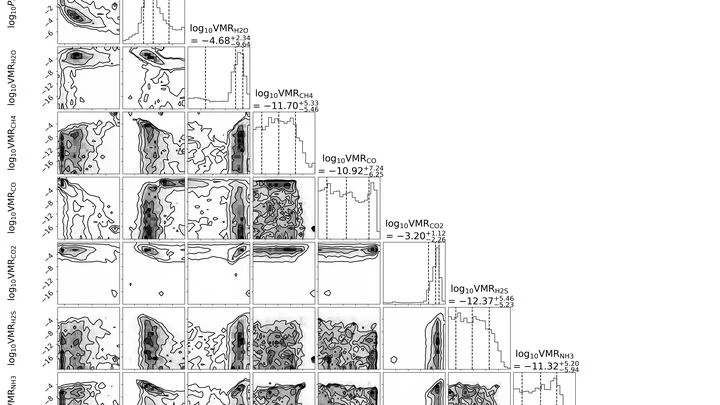
Light from a distant star, passing through the atmosphere of planet K2-18b, left unusual "fingerprints" in its spectrum. Astronomers spent 420 hours collecting this light with the James Webb Space Telescope and split it into colors, like a rainbow.
Deep in the Swiss Alps, there is a vertical shaft that plunges 800 meters down, like two skyscrapers stacked on top of each other. A railway tunnel runs nearby, and trains thunder through it every day. But inside the shaft, it is as quiet as a library at night.
A dark matter detector is like a room where you're trying to hear a whisper while static electricity crackles nearby. This crackle is produced by radon atoms — a radioactive gas that seeps out from materials and air.
In the dark chamber of the detector, argon waits. When an invisible particle (say, a dark matter candidate) flies through, it gives the argon nucleus a gentle shove. The nucleus is knocked out of place, and charges are born around it. Exactly how many charges is no trivial question: physicists use that number to tell what kind of visitor dropped by.
Light in semiconductors is born from pairs of charges, an electron and a hole, that attract each other like a magnet to a fridge. Such a pair is called an exciton. If you add one more charge to the pair, you get a trion — a trio of three particles.
Dark matter is the invisible glue that keeps galaxies from falling apart. Back in the 1930s, Fritz Zwicky suspected its existence, and in the 1970s Vera Rubin proved that without it, stars would fly apart.