Consciousness is the state of being aware of and able to think about one's own existence, thoughts, and surroundings. It encompasses subjective experience, self-awareness, and the ability to perceive and respond to the environment. Despite being a fundamental aspect of human experience, consciousness remains one of the most challenging phenomena to define and study scientifically.
How it works
The mechanisms of consciousness are not fully understood, but it is generally believed to arise from complex neural processes in the brain. Theories such as integrated information theory and global workspace theory attempt to explain how synchronized activity across different brain regions might give rise to unified conscious experience. However, no single mechanism has been conclusively identified.
Four old maps were lying in different desk drawers. Each one marked genes linked to cellular aging, but the maps did not match: different names, different scales, different legends. A scientist hunting for a gene to test had to cross-check them by hand, at the risk of missing an important mark.
SenSASP stitched those maps into one.
The meditating brain is an orchestra, and attention is the conductor. When you're focused on your breath, all instruments play in harmony. But suddenly, a thought-cello plays a false note: that's mind wandering. An experienced conductor doesn't panic: they instantly catch the dissonance and gently guide the orchestra back to the main melody — the breath.
In the grand orchestra of the universe, every instrument has its own rhythm. Electrons in an atom make quantum leaps in femtoseconds, neurons in the brain exchange signals in milliseconds, and a human needs tenths of a second to become aware of the 'now.' Physicists have long sought the conductor…
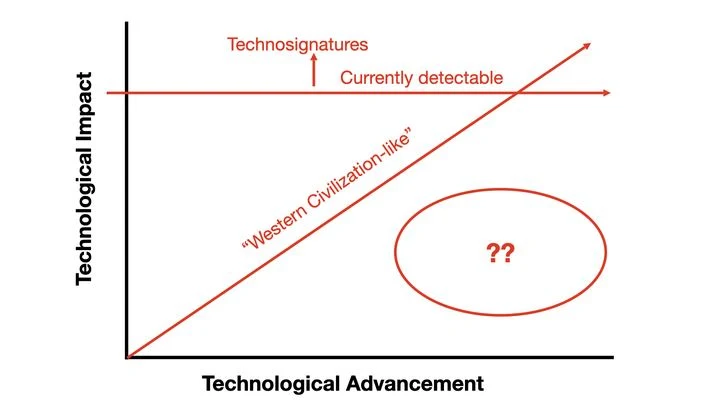
Studying distant exoplanets, scientists look for signs of life — for instance, water and carbon — and signs of technology: radio signals, megastructures. But between these clues there is a yawning gap. If intelligence hasn't created machines or they've vanished, we won't notice it.
The Drake Equation is an attempt to guess the number of intelligent civilizations in our Galaxy. It’s like counting finished cakes in an unknown bakery: you know the ovens (stars), the baking sheets (planets), and the baking time. But were eggs added to the batter? Western science, relying on a single earthly recipe, considers them a rare ingredient.
In the 1990s, philosopher John Searle devised a thought experiment: a person sits in a room and, without knowing Chinese, follows instructions to produce correct answers in Chinese. From the outside, it seems they understand the language, but inside, it's just mechanical rule-following.
Every morning you pick up the same mug, but the coffee tastes either bitter or just right. It's not about the coffee, and not about your character. Inside us, an invisible panel with dozens of sliders is constantly shifting: fatigue, hunger, anxiety, hormone levels.
The quantum world plays a strange game with causality. If in everyday life salt is always added to soup before serving, here the ingredients end up in the bowl at the same time, and the chef doesn't remember the order. Physicists asked: can we measure this 'recipe'? The answer is no.