The Most Sensitive Compass for Hunting Invisible Particles ✛ ✦
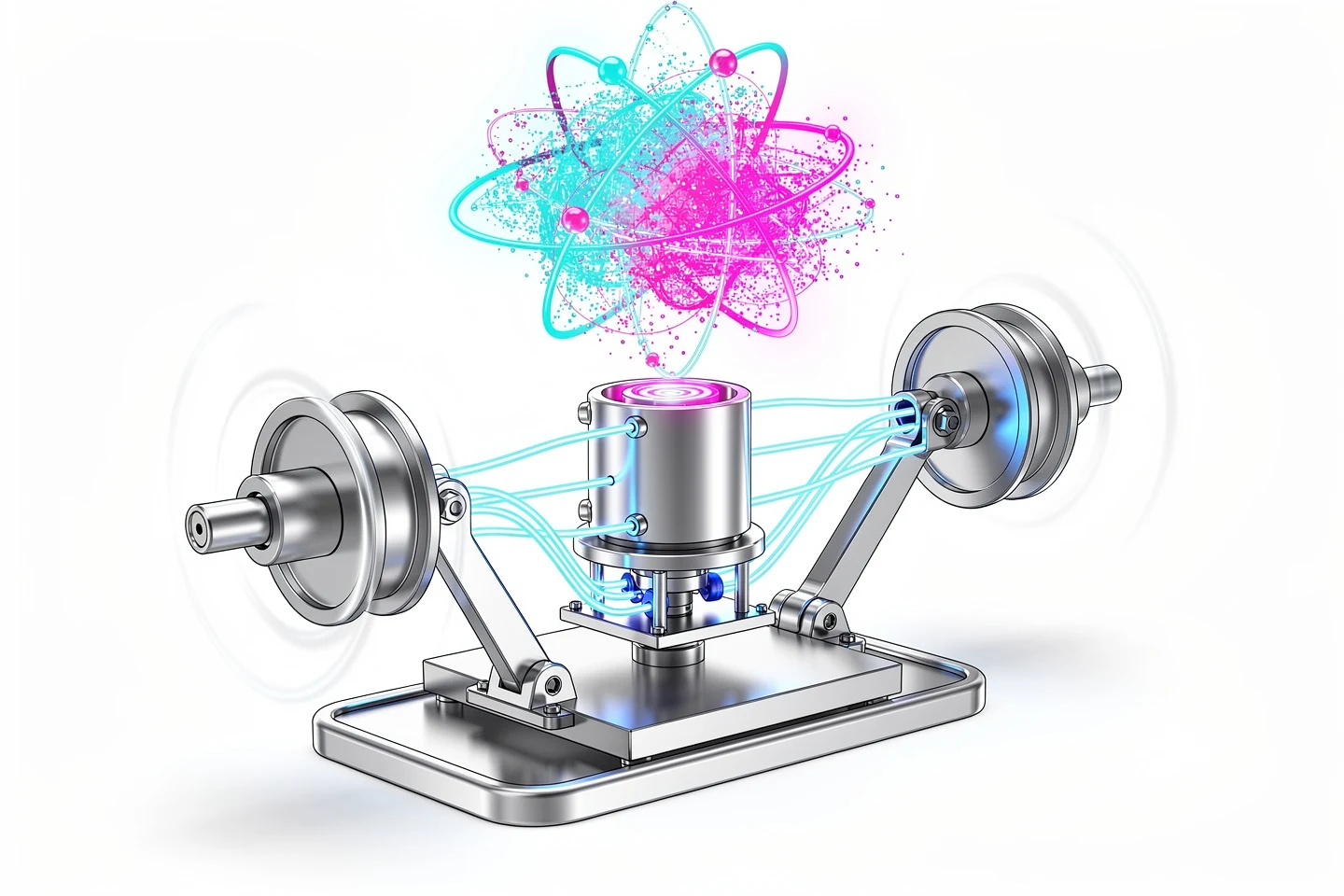
Dark matter is the invisible scaffolding of galaxies. Its particles, like axions, can generate tiny magnetic fields without ordinary symmetry. Scientists built a quantum compass: inside it, gas atoms act like billions of hypersensitive magnetic needles, read out by a laser. The particle source was spinning lead blocks — lead is dense and generates them efficiently. The main enemy was vibration; they suppressed it 700-fold, as if calming a compass's sway in a storm. The device reached a sensitivity a billion times below Earth's magnetic field. They used quantum measurement techniques and expertise from gravitational-wave observatories. The result: constraints on dark matter forces became 1,000 times tighter. This ruled out many models of the Standard Model — the theory of all particles. Dirac predicted such forces; Pauli and Feynman laid the foundations of quantum field theory. Now such compasses will aid spectroscopy and quantum computers.
The lead blocks spun three times a second — like a lazy fan blowing a stream of invisible particles. And reducing vibrations 700-fold is like calming a compass by removing every last jitter.