Vortons: Invisible Rings of Dark Matter express
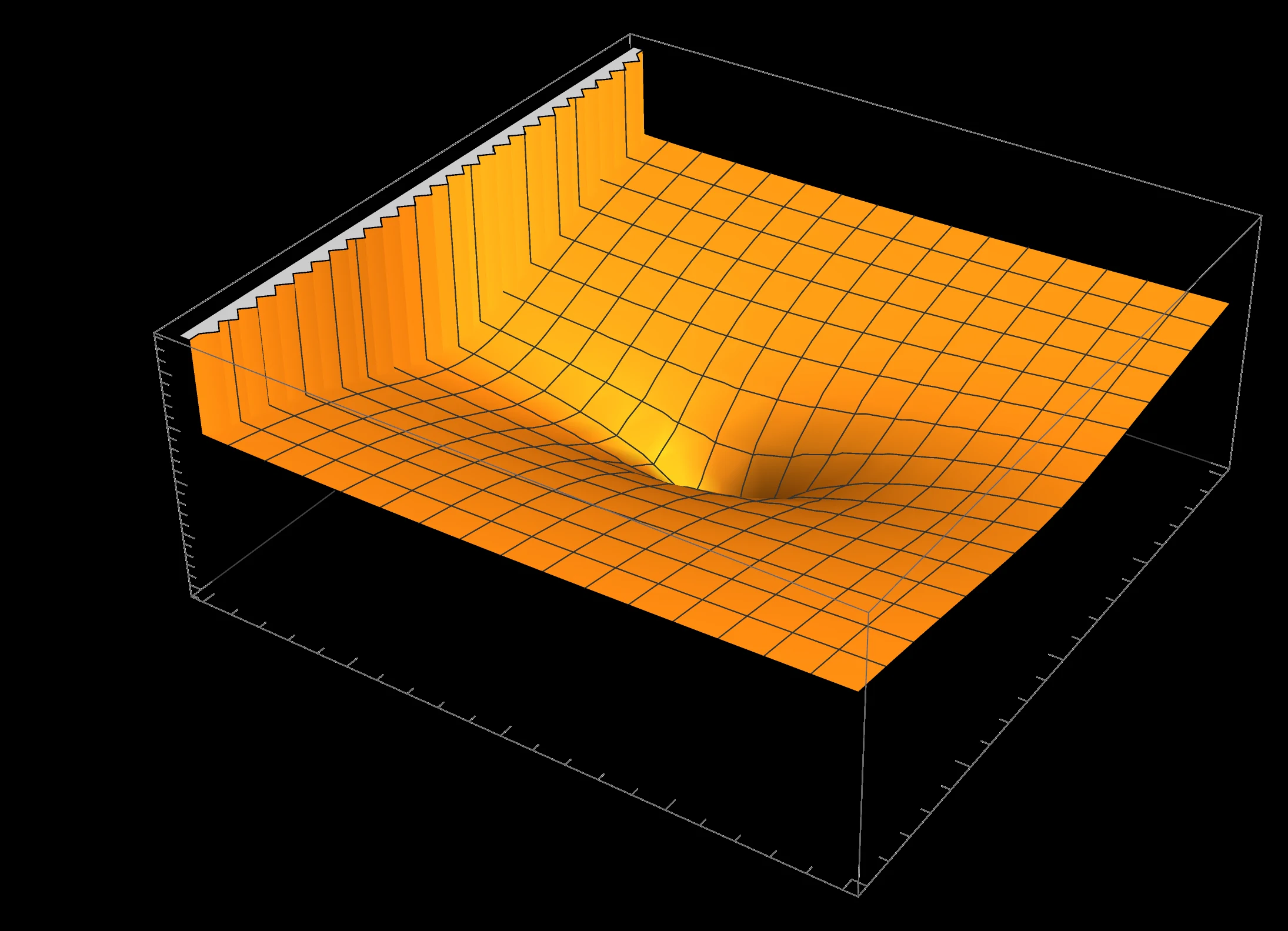
Vortons are invisible cosmic hoops, closed loops of curved spacetime. Thinner than an atom but heavier than stars, these Big Bang relics spin like giant carousels, churning everything around them. Einstein's equations describe how particles dance near such a hoop: paths twist into spirals or dart chaotically. Even light changes direction, revealing the ghostly ring.
A special effect is frame dragging: the spinning hoop drags nearby bodies along, making their axes swirl like an invisible corkscrew. At its very edge, the hoop displays properties considered more exotic than those of black holes. Unlike them, vortons don't absorb light: they only distort it, like a giant invisible lens; a distant star might suddenly multiply into several ghostly twins.
Such properties make vortons ideal candidates for dark matter, long sought by Vera Rubin and Fritz Zwicky. By observing distortions in the light of distant stars, astronomers hope to catch these invisible hoops, and perhaps prove that dark matter isn't made of particles at all.
A cosmic string is billions of times thinner than an atom, yet a kilometer of it weighs as much as a mountain. Passing through Earth, it wouldn't hit a single particle, merely causing the planet to tremble imperceptibly.